
























The administrative shifts driven by the Department of Government Efficiency, established under Elon Musk in January 2025, have triggered deep operational challenges across the United States federal workforce. Following widespread job cuts that eliminated tens of thousands of positions alongside strict mandates for in-person work and zero-based budgeting, federal agencies are grappling with deteriorating infrastructure. The General Services Administration, which manages the federal government's real estate portfolio and information technology services, was among the first organizations affected by these policies, initiating plans to sell off hundreds of public buildings while navigating severe internal disruption.
Unsanitary Conditions and Workplace Safety Concerns
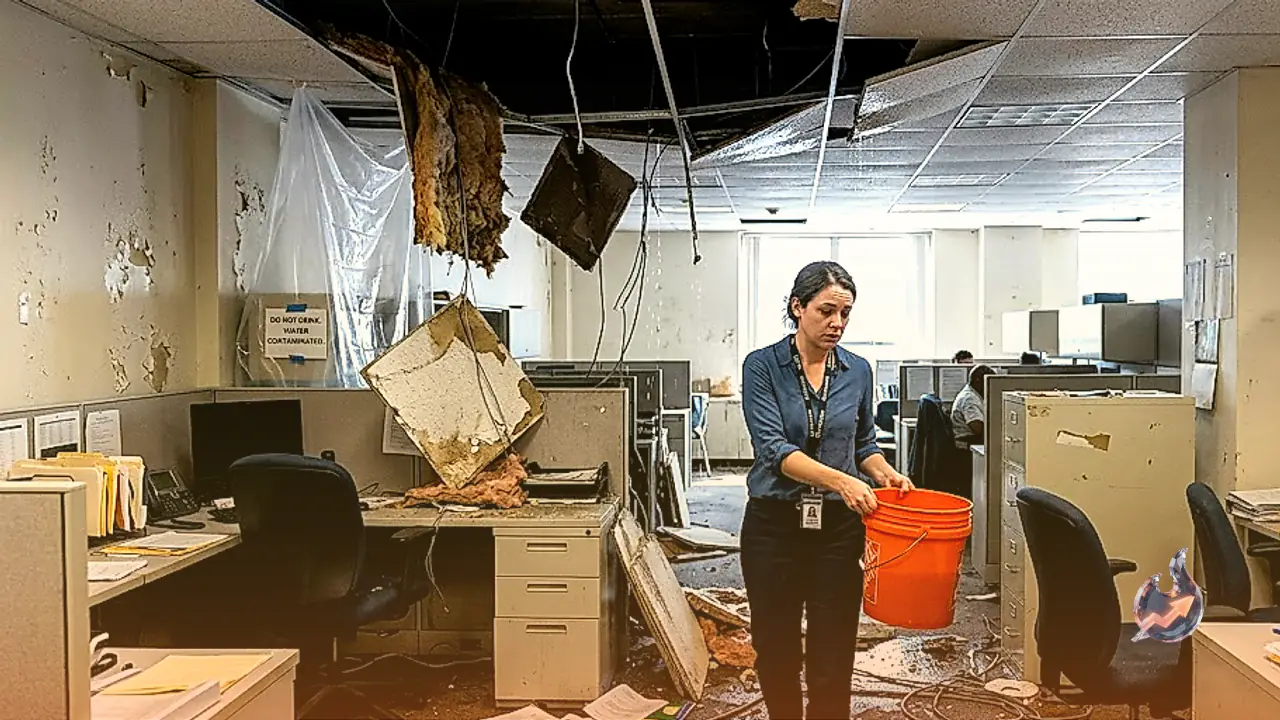
Physical conditions inside the temporary workspace assigned to federal personnel have sparked intense concern among staff members. Inside a third-floor men's restroom, a portion of the ceiling caved in, scattering drywall and structural debris directly over a toilet fixture and leaving a large opening overhead. Pest control traps in the facility also contained dead mice. While employees noted that vermin issues have historically occurred across older government properties, the structural ceiling collapse pushed worker frustration to a critical point.
Water safety inside the facility has also emerged as a pressing issue. Signs posted near water bottle refill stations explicitly instruct employees to run the water for 5 to 10 seconds without their bottles attached, waiting until the stream turns clear before filling up. Reflecting on the environment, one anonymous employee stated, "We’ve all been through a lot, but this really made me finally understand that they don’t care about us." The employee added that staff members are left questioning what might collapse next, wondering whether they must inspect restroom ceilings before entering or if the building's drinking water is genuinely safe to consume.
Relocation Timeline and Building Consolidation
The operational disruption at the agency comes amid complex real estate reshuffling. Leadership at the General Services Administration, including administrator Ed Forst, instructed employees that they would be operating out of the Office of Personnel Management building through December 2028. This move was necessitated by major, ongoing renovations at the agency's primary headquarters located at 1800 F Street.
However, the temporary Office of Personnel Management facility has been designated for accelerated disposition, a strategy aimed at executing a rapid property sale. According to an official press release from the General Services Administration, these measures form part of a broader government-wide mandate to minimize underutilized floor space and consolidate the federal real estate footprint. Paradoxically, exactly one year after enforcing major workforce reductions, the agency announced plans to hire approximately 400 new employees into its ranks.
Broader Status of Government Restructuring
Neither the General Services Administration nor the Office of Personnel Management immediately responded to requests for comment regarding the maintenance deficiencies or workplace safety protocols. Meanwhile, the leadership structure surrounding these initiatives has continued to evolve.
Although Elon Musk has stepped back from his public position within the Trump administration, figures affiliated with the Department of Government Efficiency remain active across federal agencies, continuing to push austerity policies and artificial intelligence integration. Simultaneously, several key personnel associated with the efficiency initiative have transitioned back to the private sector, taking on roles in artificial intelligence development, data center infrastructure, and advanced manufacturing sectors.