






















In today's digital era, a smartphone is no longer merely a device for telephonic conversations. It serves as a personal digital vault containing net banking credentials, UPI payment applications, confidential photos, official documents, and sensitive personal contacts. Consequently, misplacing or losing a mobile phone presents severe financial risks and privacy concerns. To mitigate these dangers, the Department of Telecommunications (DoT) under the Government of India launched the 'Sanchar Saathi' portal—a centralized digital infrastructure designed to track and recover missing devices. According to official data from July 2026, the portal facilitated the recovery of 77,692 lost or stolen mobile phones across the country within a single month. This marks the first time monthly device recoveries have crossed the 75,000 milestone. Furthermore, between April 2025 and July 2026, monthly recovery numbers witnessed an impressive 201 percent surge. Understanding the underlying technology of Sanchar Saathi, how IMEI tracking functions across telecom networks, and how citizens can utilize this service is essential for every smartphone user.
The Role of IMEI as a Unique Digital Identifier
The operational framework of the Sanchar Saathi portal relies fundamentally on the International Mobile Equipment Identity, widely known as the IMEI number. Every mobile handset possesses a unique 15-digit IMEI code that acts as an exclusive hardware fingerprint, distinct from any other device globally. Typically, this number is printed on the physical packaging box of the phone, the purchase invoice, or the retail receipt. If the handset is in your possession, dialing *#06# on the phone's keypad instantly displays the IMEI number. However, if the device is lost or stolen, users need not panic about remembering the code, as it can be easily retrieved from the original purchase bill or retail box. In the central database, this IMEI number allows the system to identify precisely which physical hardware unit has been reported missing or stolen.
Immediate Protocol Following the Loss of a Mobile Phone
When a mobile phone is misplaced or stolen, taking swift preventative action is critical to protect sensitive personal data. The immediate priority must be to contact your telecom service provider (such as Airtel, Jio, Vodafone Idea, or BSNL) to temporarily block or deactivate the SIM card. Deactivating the SIM ensures that unauthorized individuals cannot receive One-Time Passwords (OTPs) or intercept calls for banking and messaging services. Simultaneously, users should secure their bank accounts, UPI apps, and personal social media profiles by updating access credentials.
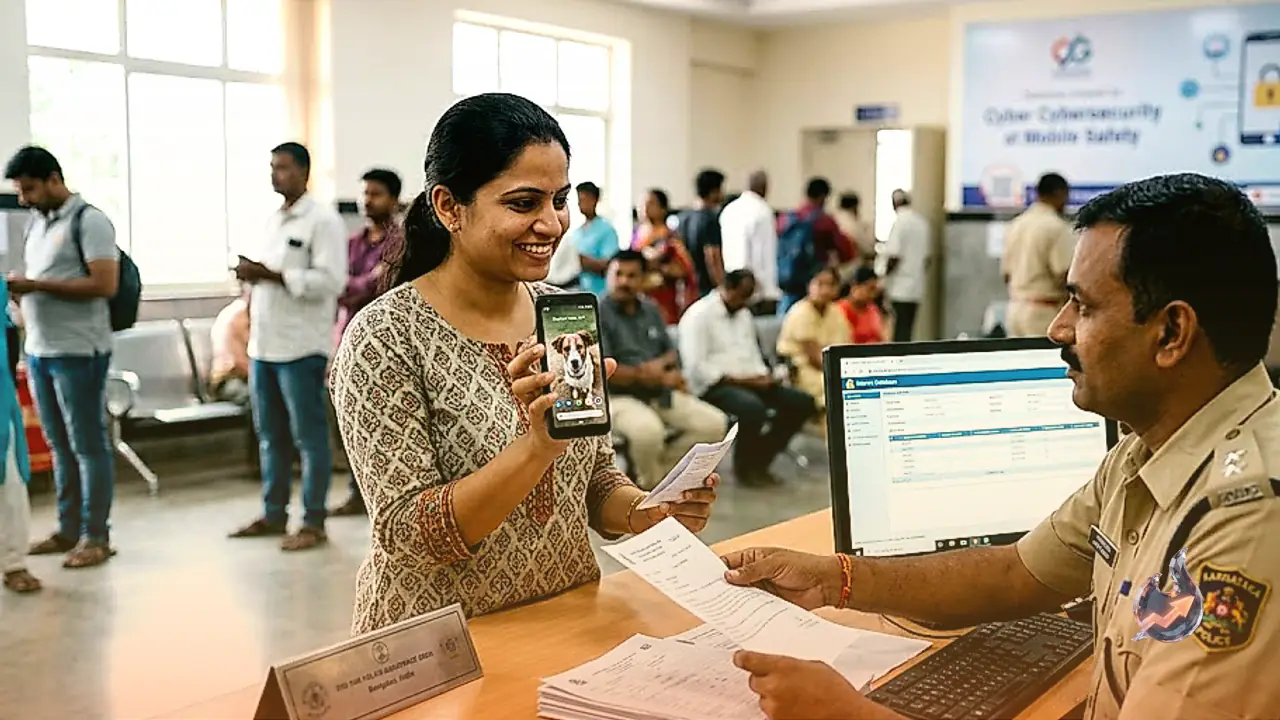
The subsequent mandatory step is lodging an official police complaint or filing a missing report at the local police station or through state online police portals. Obtaining an official police complaint reference is a mandatory prerequisite for using the Central Equipment Identity Register (CEIR) module on the Sanchar Saathi portal. This official documentation initiates the formal process to block the lost handset across Indian telecom networks and trigger tracking mechanisms.
The CEIR System: Network Blocking and Tracking Dynamics
The Central Equipment Identity Register (CEIR) serves as a centralized government repository of device identities across all operational mobile networks in India. Once a citizen uploads their police complaint and IMEI credentials to the Sanchar Saathi portal, the CEIR system flags the specified IMEI number as blocked across all Indian mobile network operators. Consequently, the blocked handset becomes incapable of accessing cellular services, rendering it unable to make or receive voice calls, send SMS messages, or utilize mobile data within the country.
Even if an unauthorized person inserts a new, active SIM card into the stolen device, the handset remains blocked from accessing cellular networks. However, blocking the IMEI does not imply immediate physical recovery of the handset. Blocking restricts unauthorized network usage while providing investigative frameworks the opportunity to monitor and trace the device's location whenever it attempts cellular communication.
How Stolen Devices Are Detected Even After SIM Replacement
A common query arises regarding how a stolen phone can be traced if the offender discards the original SIM card and inserts a new one. Mobile cellular networks operate by authenticating two distinct identifiers whenever a device connects to a cell tower: the subscriber's SIM identity and the physical handset's IMEI number. While swapping out the SIM changes the subscriber identity, the hardware IMEI number remains permanently fixed to the mobile device.
The moment a blocked IMEI attempts to establish a connection with any cellular tower using a new SIM card, the network infrastructure instantly recognizes the flagged hardware identifier. Because the IMEI is registered as lost or stolen in the central database, automated alerts trigger within the system. Technical details—including the new SIM number, cellular tower location, and timestamp—are automatically compiled and dispatched to law enforcement agencies and the registered device owner.
Multi-Agency Coordination and Transparent Citizen Updates
According to the Ministry of Communications, whenever a new SIM card is detected inside a blocked handset, the details of the new subscriber and tower location are immediately shared with investigating police officers. The Sanchar Saathi portal functions not just as a reporting tool, but as an integrated multi-agency coordination framework. Once law enforcement traces the device location, automated updates regarding the designated police station and case progress are communicated to the citizen via SMS, email, and the online portal dashboard.
This multi-tiered transparency allows device owners to remain informed about the status of their complaint. Behind the scenes, the Department of Telecommunications' (DoT) Digital Intelligence Unit (DIU), regional DoT offices, telecom service providers, and local state police departments collaborate seamlessly to execute device tracing and recovery operations.
Post-Recovery Unblocking and Essential Factory Reset Protocols
Once law enforcement successfully recovers the lost phone and restores it to its rightful owner, the citizen can visit the Sanchar Saathi portal to submit an unblocking request. By providing the original request ID and completing verification, the IMEI number is removed from the network blacklist, restoring full cellular functionality to the handset.
Following physical recovery, the Ministry strongly advises users to perform a complete 'Factory Reset' before resuming regular use of the device. Because the handset was previously in unauthorized custody, there is a risk that malicious applications, spyware, or unauthorized software may have been installed. Executing a factory reset completely purges the device's storage, ensuring that the smartphone is restored to a clean, secure state for safe daily operation.
Prerequisites for Submitting a Report on Sanchar Saathi
Prior to submitting a missing phone report on the CEIR module of the Sanchar Saathi portal, citizens should gather the following necessary documents and details:
- The 15-digit IMEI number of the mobile device (both IMEI numbers for dual-SIM devices).
- The original purchase invoice, retail bill, or valid proof of ownership.
- A copy of the police complaint or FIR reference number filed with local authorities.
- Identity proof of the owner and an operational alternative mobile number for OTP verification.