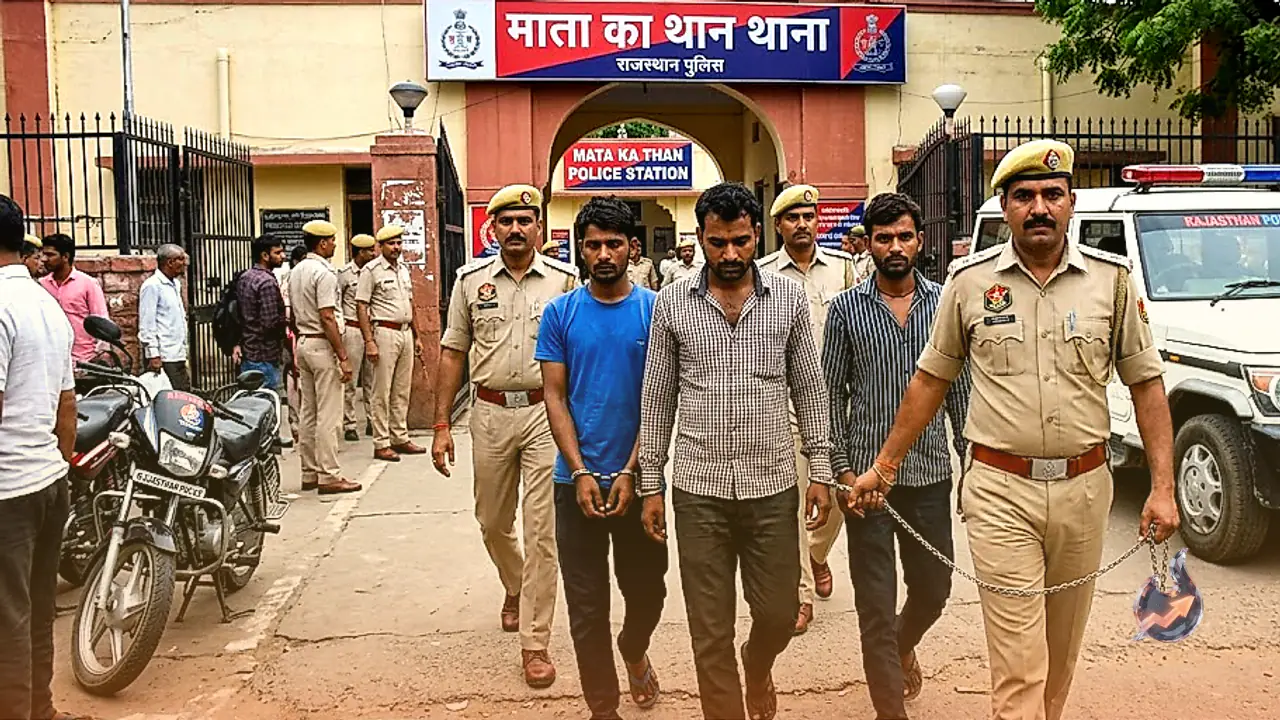























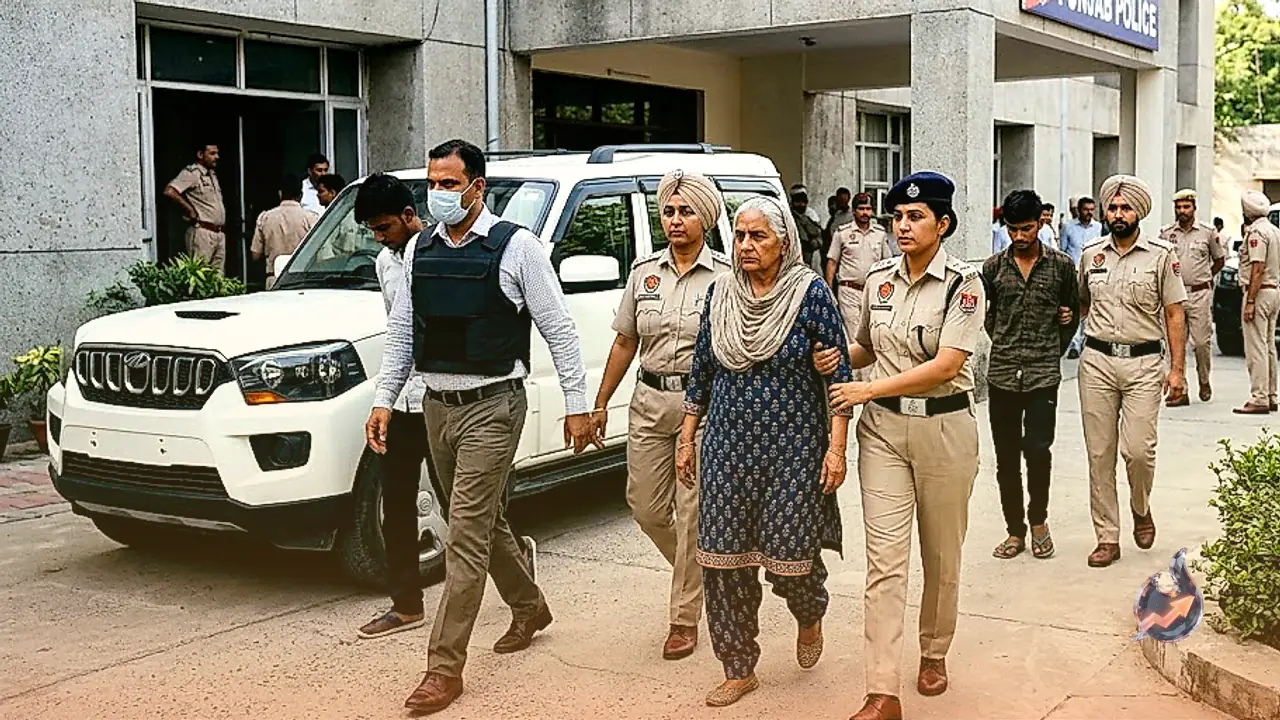

Law enforcement agencies in Punjab have achieved a major breakthrough in the investigation of the August 21 hand grenade explosion that rocked a village near the India-Pakistan border in the Ramdas police station jurisdiction of Amritsar district. A joint tactical operation conducted by the Amritsar Rural Police and the State Investigation Team (SIT) culminated in the arrest of three primary suspects. The apprehended individuals include Sukhwinder Kaur, the mother of Babbar Khalsa International (BKI) linked terrorist Happy Pashian, along with two local youths who executed the explosive strike on the ground. Meanwhile, Happy Pashian's sister, Kirandeep Kaur, managed to evade capture and remains at large as specialized police units carry out targeted raids to trace her whereabouts.
Foreign Conspiracy Masterminded from Singapore
Providing details of the probe, Deputy Inspector General (DIG) of Border Range Harmanbir Singh Gill stated that the plan was orchestrated from overseas. Forensic evidence and intelligence gathering revealed that a close associate of Happy Pashian named Sandy, currently residing in Singapore, allegedly masterminded the entire operation. According to police officials, the conspiracy involved recruiting vulnerable, jobless local youths by offering them substantial financial rewards to execute the high-risk attack on the specified target.
YouTube Video Guidance and the Monetary Deal
The two arrested operatives responsible for throwing the explosive device have been identified as Jagroop Singh and Vishwaspreet Singh. Investigation into their background indicated that both individuals were schoolmates at the Dharowali educational institution, having completed their studies up to the 12th standard, and were currently unemployed. The handlers had agreed to pay a total sum of 1 lakh rupees to the duo for committing the crime. However, prior to the execution of the assault, they received an advance payment of only 30 thousand rupees. In a startling disclosure during interrogation, the accused confessed that having no prior familiarity with munitions, they relied on online instructional videos on YouTube to understand how to remove the safety pin and hurl the hand grenade effectively.
Roots in Local Sarpanchi Feud and Previous Firing Incident
The comprehensive investigation has highlighted that the terror act was deeply intertwined with a long-standing local political dispute. A intense rivalry concerning village governance and Sarpanchi elections had been brewing for approximately 3 to 4 years between the Pashian family and the residents of the target village area. Tensions escalated sharply about 3 to 4 days prior to the grenade throwing incident when an altercation occurred between the victim group and Kirandeep Kaur, resulting in open aerial firing. Following this violent clash, Sukhwinder Kaur, Kirandeep Kaur, and Sandy in Singapore joined forces to plot the retaliatory grenade attack.
Cross-Border Weapon Smuggling from Pakistan
A critical dimension uncovered during the preliminary investigation pertains to the origin of the ordnance used in the offense. Police verified that the hand grenade thrown at the location had been smuggled into Indian territory from Pakistan through illegal border channels. Investigators are currently mapping the exact supply chain and identifying the conduits responsible for transporting the military equipment across the international border. Following their production before the judicial magistrate, Jagroop Singh, Vishwaspreet Singh, and Sukhwinder Kaur were remanded to police custody for 5 days to facilitate deeper interrogation regarding the arms smuggling network.
Legal Extradition Moves for Singapore-Based Operative
To bring the key overseas conspirator Sandy to justice, Punjab Police has formally initiated the legal procedure for his extradition from Singapore. Simultaneously, intelligence gathering and operational search efforts have been intensified to capture the absconding Kirandeep Kaur. Investigative agencies are continuing to analyze whether the attack was exclusively driven by local village enmity or if it formed part of a larger, coordinated terror module designed to destabilize the border state.