




















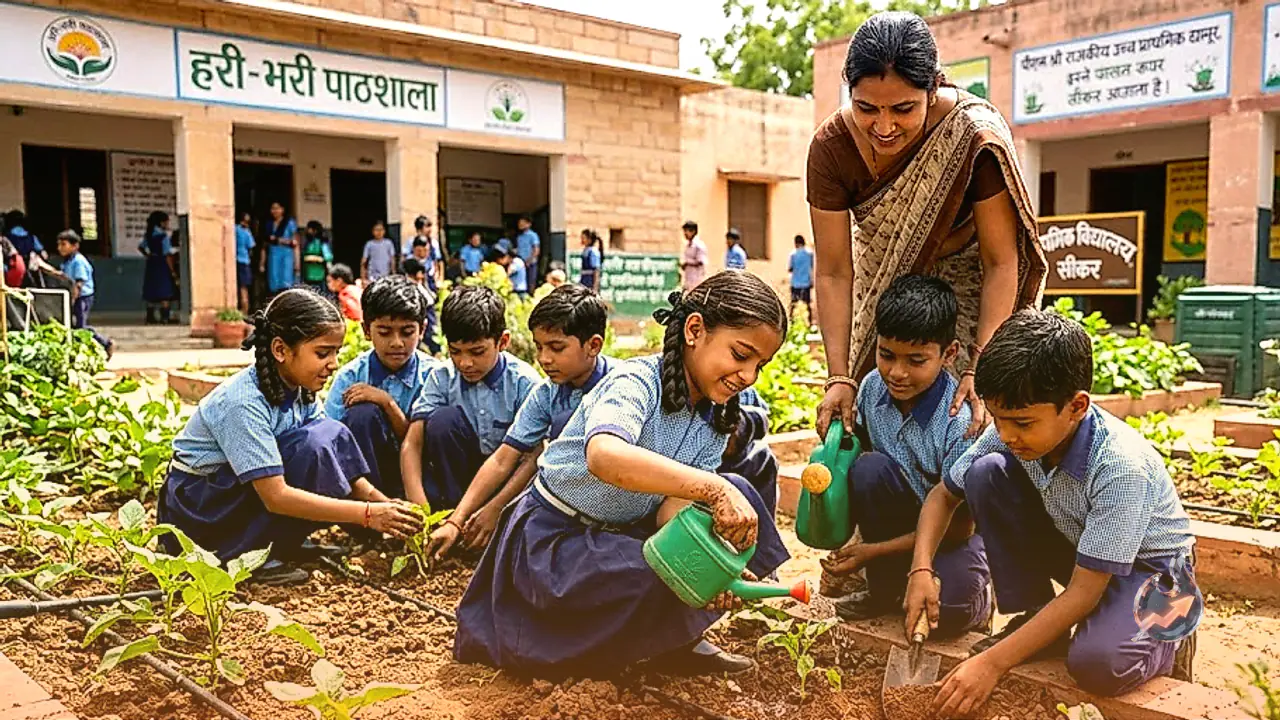

A major environmental initiative has been launched under the Central Government's PM Shri scheme to instill ecological awareness and sustainability habits among school children. Under this project, 28 PM Shri government schools across Sikar district are being upgraded into Green Schools. The primary objective is to move beyond textbook education and offer students hands-on experience in environmental conservation, energy efficiency, campus hygiene, and waste management. A total financial outlay of 31.72 lakh rupees has been sanctioned for implementing various eco-friendly programs across these selected educational institutions.
Energy Conservation and LED Lighting Infrastructure
Special emphasis is being placed on curbing electricity consumption within the school premises as part of the Green School roadmap. Outdated, energy-intensive conventional bulbs and tubelights are being removed and replaced with energy-efficient LED lights. Alongside the infrastructure upgrade, special educational sessions will be organized to teach students the significance of saving electricity and consuming power responsibly. Schools will host interactive campaigns focusing on resource conservation and maintaining campus cleanliness, with active student participation forming the core of these drives.
Experiential Learning Through Educational Field Trips
To bridge the gap between classroom theory and real-world environmental action, an extensive educational tour plan has been formulated. Around 4470 students from Sikar district will be taken on exposure visits to plant nurseries, botanical gardens, and municipal council offices. During these visits, students will directly observe plant care techniques, sapling cultivation, urban sanitation arrangements, and municipal waste management systems. Experiencing these practical operations firsthand will deepen their interest in nature and encourage sustainable living practices from a young age.
Waste Segregation Systems and On-Site Composting
To establish efficient waste management practices, all 28 designated schools will implement source segregation of garbage. Separate waste bins are being installed across campuses, featuring green dustbins for wet organic waste and blue dustbins for dry recyclable waste. To make waste disposal engaging for younger children, the dustbins will be decorated with illustrations of popular cartoon characters. Furthermore, compost pits are being constructed on school grounds to convert collected organic wet waste into nutrient-rich compost, which will subsequently be used to nourish school gardens and kitchen gardens.
Kitchen Gardens, Medicinal Plants, and Upcycling Competitions
To foster an interest in farming and greenery, schools will establish herbal and medicinal plant sections alongside dedicated kitchen gardens. A specific allocation of 2.80 lakh rupees has been set aside from the budget for developing these gardens. Students will participate directly in planting saplings, nurturing them daily, and learning about their therapeutic properties, while select schools will also cultivate seasonal vegetables. Additionally, creative competitions will be organized where students learn to upcycle discarded materials into useful items, nurturing a mindset focused on waste reduction and resource reuse.
Strict Monitoring and Surprise Inspections by Authorities
To ensure smooth implementation and transparent utilization of funds, oversight responsibilities have been assigned to the District Education Officer and relevant educational authorities. Official guidelines mandate that inspectors conduct surprise visits to these 28 schools at least twice a month. These inspections will evaluate the execution of green activities and audit financial expenditures. School principals are required to maintain a dedicated register documenting every event, participant record, and program outcome to maintain accountability.