

















Following a disappointing performance in the recent urban municipal elections, the Congress party in Rajasthan has decided to fundamentally overhaul its political approach ahead of the 2026 Panchayati Raj elections. Having failed to generate expected electoral dividends in urban centers, the party leadership is actively working to avoid past errors and take zero chances across rural constituencies. Under this recalibrated roadmap, the Rajasthan Pradesh Congress Committee has announced a high-powered 20-member election campaign committee featuring top party veterans, making it evident that collective leadership will steer the campaign in the villages.
Internal Scrutiny and Debates Over Campaign Tactics
The outcome of the urban civic body polls triggered intense debate within party ranks regarding organizational preparedness and campaigning style. Former Chief Minister Ashok Gehlot was among the foremost leaders to question the established approach. Drawing attention to the competitive terrain, he observed that had Congress organized widespread roadshows and aggressive mass campaigns on the scale mounted by Chief Minister Bhajan Lal Sharma, the civic poll results might have looked quite different.
In regional political circles, this pointed observation was widely perceived as an indirect critique of the election strategy overseen by state Congress president Govind Singh Dotasra. Observers noted that standard rallies alone had proved inadequate against a vigorously mobilized opponent. Consequently, the newly unveiled rural campaign structure represents an institutional attempt to accommodate diverse viewpoints, bridge internal tactical differences, and project an undivided front.
Twenty Senior Figures Anchoring the Special Committee
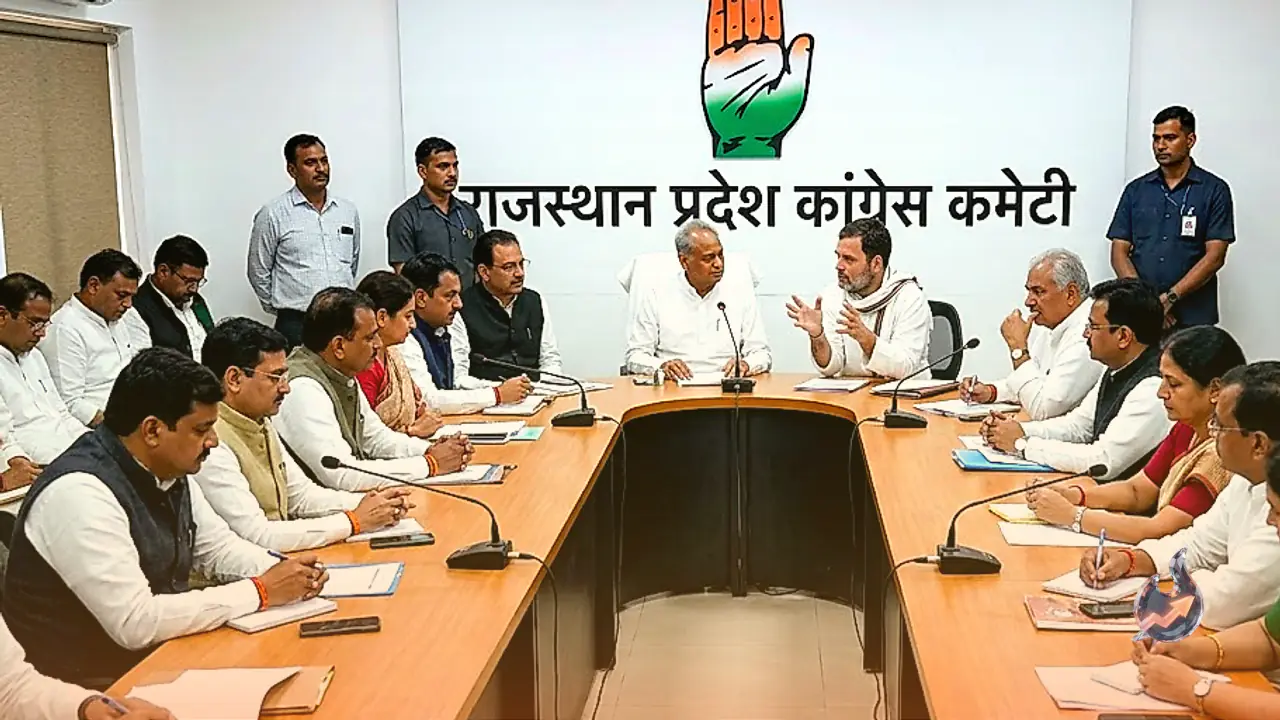
In response to this strategic requirement, the Pradesh Congress Committee rolled out a 20-member campaign panel with immediate effect. The committee features the state unit's foremost figures: state president Govind Singh Dotasra, former Chief Minister Ashok Gehlot, former Deputy Chief Minister Sachin Pilot, and Leader of the Opposition Tika Ram Jully. Their joint presence at the head of the panel is designed to send an unambiguous signal of organizational unity.
Alongside these four leaders, the roster includes prominent figures such as CP Joshi, Jitendra Singh, Harish Chaudhary, Neeraj Dangi, Ramkesh Meena, and Rafiq Khan. The lineup is further strengthened by former ministers and regional heavyweights, including Uday Lal Anjana, Pramod Jain Bhaya, Shale Mohammad, Pratap Singh Khachariyawas, Shakuntala Rawat, and Mamta Bhupesh. Completing the panel are Ganesh Ghogra, Harsahay Yadav, MD Chopdar, and CB Yadav. To maximize operational outreach, the heads of all frontal organizations of the Congress have been designated as additional members, ensuring structural coordination across every wing of the party.
Deploying Star Campaigners to Energize Rural Bases
Every member of this 20-leader committee has been assigned the dual mandate of strategist and star campaigner. The party carefully selected leaders who command distinct regional and social followings across Rajasthan's diverse administrative divisions. Through this deliberate distribution, the party intends to re-energize local cadres and establish direct, continuous communication with rural voters ahead of polling day.
For Congress, the upcoming Panchayati Raj elections carry stakes far beyond securing seats in Zila Parishads and Panchayat Samitis. These elections serve as an indispensable litmus test for measuring the party's grassroots hold in rural territory. The overarching plan involves deploying Gehlot, Pilot, Dotasra, Jully, and their colleagues across a structured schedule of village visits, community gatherings, and public rallies to build an energetic campaign atmosphere.
Ground Challenges: Candidate Selection and Factionalism
Announcing an imposing roster of senior figures represents only the initial step toward electoral recovery. A much steeper task lies in restoring morale among party workers disheartened by the recent urban defeat. Ensuring that senior leadership remains visible on a common stage is vital, yet paper unity alone does not deliver victory at the ballot box.
The party faces practical operational challenges, including preventing factional divisions from disrupting local candidate selection and building reliable campaign networks in remote habitations. Observers will be closely watching whether this shift toward visible, collective leadership succeeds in reversing recent setbacks and reinforcing the party's rural foundation in Rajasthan.