


















Following the declaration of ward councillor election results in the Rajasthan civic polls, the political landscape governing municipal leadership posts is evolving at a remarkable pace. Across numerous urban centres in the state, intense political manoeuvring is underway as major parties attempt to rally councillor majorities, prevent poaching, and establish their municipal boards. However, the political environment in Bharatpur, the home district of Chief Minister Bhajan Lal Sharma, and the neighbouring district of Deeg stands in stark contrast to the rest of the state. In these two key eastern districts, protracted backroom negotiations have given way to decisive, uncontested victories that have effectively settled the local leadership well ahead of the final polling deadline.
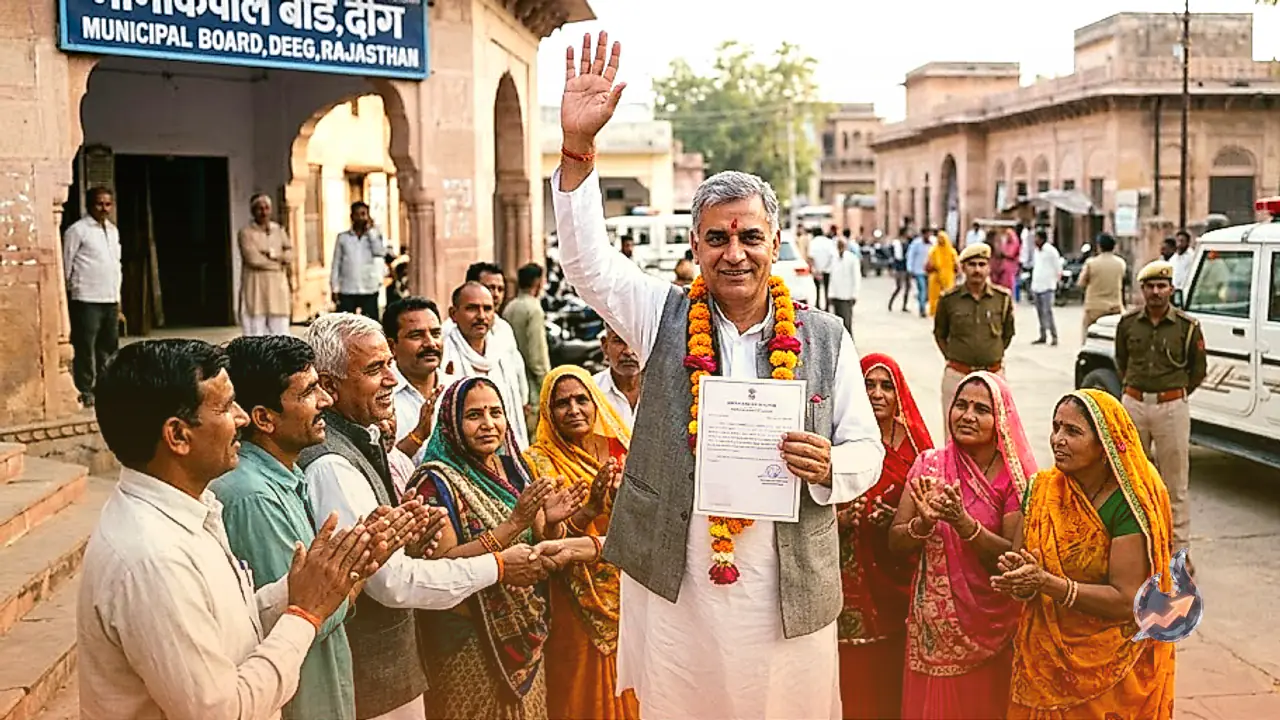
Across Bharatpur district, 5 out of the 6 urban local bodies have already witnessed the uncontested election of their board chiefs. Most prominently, the Bharatpur Municipal Corporation saw its mayoral seat resolved without requiring any balloting. Simultaneously, in the adjoining district of Deeg, the path has been entirely cleared for the Bharatiya Janata Party to form boards across all its municipal bodies. The dynamics that crystallized during the nomination filing and withdrawal phases left virtually no electoral battle on the ground. While independent ward councillors continue to hold the balance of power across several other cities in the state, Bharatpur and Deeg have steered clear of prolonged uncertainty, paving the way for the formal constitution of boards on 21 September.
Five Out of Six Civic Bodies in Bharatpur See Uncontested Leadership
Political momentum in Bharatpur district gathered pace immediately after the announcement of the councillor tallies. Following the release of the ward results on 14 September, both the ruling Bharatiya Janata Party and the opposition Congress went to work on their respective operational strategies to secure control over the executive leadership of the local bodies. However, during the scrutiny and subsequent withdrawal of nomination papers, the contours of the local contests transformed dramatically, resulting in uncontested selections across 5 of the 6 urban bodies in the district.
Because Bharatpur is the home turf of Chief Minister Bhajan Lal Sharma, the contest for the mayoral seat of the Bharatpur Municipal Corporation attracted keen observation from observers across Rajasthan. Securing the mayoral chair without opposition marked the completion of an essential phase in board establishment for the ruling formation. Similarly, in the other four municipalities within the district, the uncontested outcomes for the chairman posts brought a swift resolution to localized political rivalries and administrative friction.
Deeg District Secures a Clean Sweep Across Municipal Boards
In neighbouring Deeg district, the emerging picture became even more definitive. The political architecture across all urban bodies in Deeg has consolidated entirely in favour of the Bharatiya Janata Party, paving the way for unanimous board formations. The potential multi-cornered rivalries that were anticipated immediately after the declaration of councillor seats dissolved during the subsequent stages of the electoral calendar.
Localized organizational coordination played a critical role in managing these developments across Deeg. Once the ward councillor tallies were published, various political camps had initiated internal discussions to stitch together the requisite numbers for municipal governance. The ruling party successfully coordinated its group of newly elected councillors while simultaneously solidifying support for the top executive posts. By the time the withdrawal window closed, opposition challenges had dissipated, leaving single candidates in the fray and eliminating the need for competitive voting.
Contrasting Uncontested Outcomes with Statewide Resort Politics
Across wide swathes of Rajasthan, the containment of elected councillors in hotels and luxury resorts has emerged as one of the central spectacles of this civic election cycle. In several municipalities, councillors belonging to the Bharatiya Janata Party have been sheltered in secluded accommodations, while the Congress has likewise maintained close surveillance over its members to prevent floor-crossing. Independent candidates in these contested towns remain heavily courted, as their individual decisions are capable of tilting the governing majority.
Bharatpur and Deeg presented an entirely divergent operational reality. Because the mayoral and presidential positions in most of their civic bodies were settled without opposition, the necessity of housing councillors in protective custody or engaging in prolonged floor management ceased to exist. This stark divergence has prompted observers to analyze the electoral developments in Bharatpur and Deeg as a unique exception to the broader political volatility prevailing across Rajasthan's urban centers.
Twenty-Five Civic Bodies Across Rajasthan Settle Leadership Without Polling
Intense political deliberations continue across Rajasthan regarding the executive seats of municipal corporations, councils, and boards. Statewide data shows that candidates have been elected uncontested across 25 urban local bodies so far, representing both the Bharatiya Janata Party and the Congress. Within this overall tally of 25 uncontested bodies, the concentration of victories in the Bharatpur and Deeg belt holds notable significance.
An uncontested election occurs in law when, upon the conclusion of the official withdrawal timeframe, only one valid nomination remains in the contest for a designated post. Under local election rules, this removes the statutory requirement for physical balloting, leading to an immediate declaration of the sole candidate as duly elected. Conversely, in municipalities where more than one contender remains in the running, active lobbying and intense outreach among elected ward members continue unabated ahead of the final vote.
The Stage Is Set for the Crucial 21 September Board Formation
With the initial councillor counts formalized on 14 September, the subsequent phase of electing executive leadership is entering its decisive climax. In local bodies where multiple candidates remain registered on the ballot paper, formal voting among councillors will be conducted on 21 September. Both major political camps remain intensely focused on municipalities where neither formation commands a standalone majority.
In those closely balanced councils, independent members will effectively decide which alliance secures executive control. However, in Bharatpur and Deeg, the wave of uncontested wins has already completed the decisive arithmetic ahead of schedule. While the formal administrative inductions will be finalized in due course, all eyes now turn to the remaining municipal bodies across Rajasthan on 21 September, where the alignment of ward councillors, independent coalitions, and tactical alliances will decide the final governing boards.