






















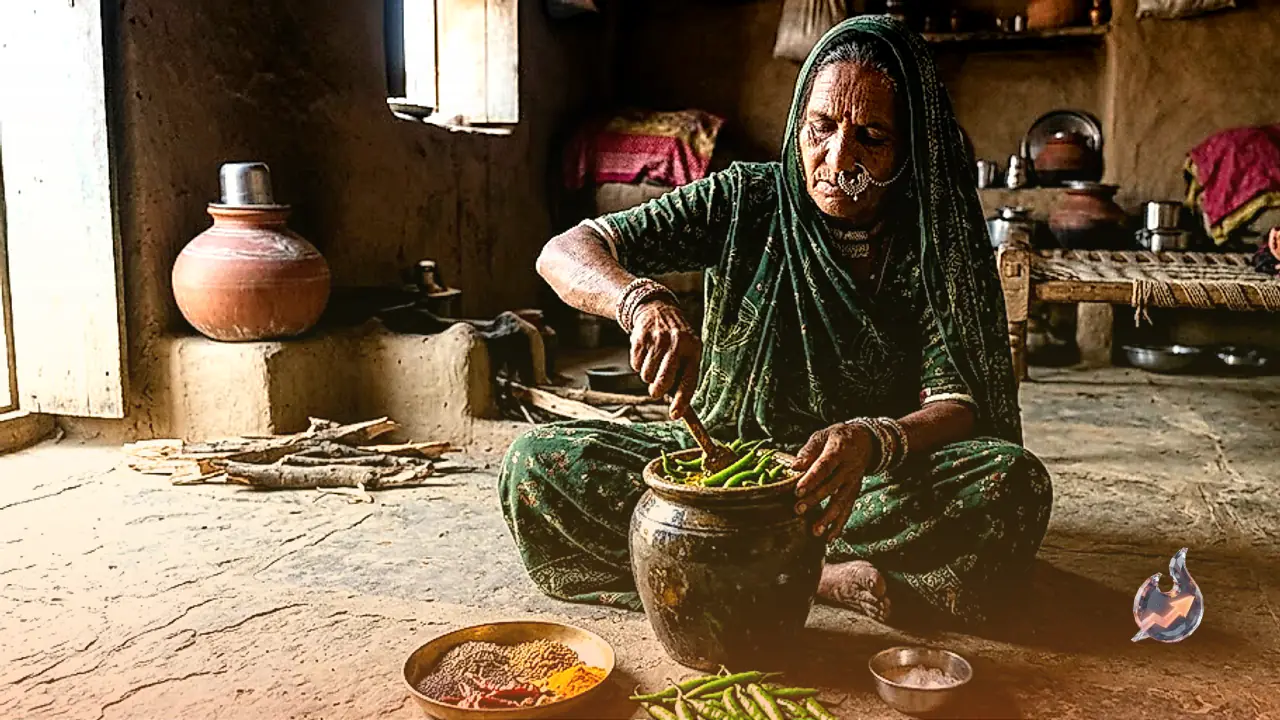

Pickles hold a revered position across Indian dining traditions, elevating simple staple meals into memorable culinary experiences. While most classical pickling methods rely heavily on mustard or sesame oil as a preservative medium, Rajasthan offers a refreshing departure known as mirchi ki kanji. This heritage preparation abandons cooking fats entirely, using lightly spiced water and natural fermentation to yield green chillies that are intensely tangy, sharp, and deeply aromatic.
For individuals seeking to minimize excess fat and oil in their everyday regimen, this regional speciality serves as an ideal condiment. Instead of swimming in seasoned oil, the chillies absorb complex layers of aroma from coarsely ground spices suspended in boiled water. Over several days, crushed mustard seeds infuse the broth with a signature pungency, turning everyday peppers into a crisp, piquant accompaniment.
Core Ingredients for the Recipe
The ingredient list for this oil-free pickle remains modest, relying primarily on pantry essentials and fresh produce. The foundation requires approximately 500 grams of fresh green chillies. The selected peppers must be firm and unblemished, avoiding any soft, blackened, or deteriorating pieces. The dry spice blend incorporates one to two teaspoons of coarsely ground mustard seeds, one teaspoon of fennel seeds, one teaspoon of fenugreek seeds, and one teaspoon of roasted cumin seeds. For seasoning and colour, half a teaspoon of turmeric powder, a pinch of asafoetida, and salt according to personal taste are introduced. Roughly two teaspoons of plain white vinegar can be included to enhance acidity, alongside sufficient clean water. Freshness across all spices remains imperative to prevent premature spoilage.
Blanching and Pepper Preparation
The preparation begins with thorough hygiene. Wash the green chillies under running water and dry them completely with a clean cloth. Ensuring that not a single droplet of residual moisture remains on the outer skins is essential for preserving the batch. Next, bring a sufficient quantity of water to a rolling boil in a deep vessel. The moment boiling commences, shut off the heat source and immerse the chillies into the hot water. Cover the pot securely with a lid and let the contents rest undisturbed for approximately 10 minutes.
This brief immersion softens the exterior skin slightly while preserving the pepper's essential crunch. Once the time elapsed, transfer the chillies to a clean tray or colander to cool completely. Crucially, the water used during this blanching step must be reserved rather than discarded, as it forms the flavorful brine for the entire pickling process.
Creating the Spice Filling and Stuffing
To craft the interior seasoning, combine the mustard seeds, fennel seeds, fenugreek seeds, and roasted cumin in a grinder or mortar, reducing them into a coarse blend rather than a fine powder. Stir in the turmeric, asafoetida, and salt until the dry mixture achieves uniform distribution. Once the blanched peppers reach room temperature, use a paring knife to make a careful lengthwise slit down the middle of each chilli. Care must be taken not to sever the chilli into two distinct halves, maintaining an intact pocket. Gently pack the coarse dry spice mixture inside each slit chilli until all peppers are evenly stuffed.
Assembly and Fermentation Guidelines
Arrange the stuffed chillies snugly inside an impeccably clean and dry glass jar. Allow the reserved blanching water to reach room temperature before pouring it into the jar, ensuring that the peppers remain fully submerged beneath the liquid level. Add two teaspoons of white vinegar and stir gently to combine. Instead of sealing the container airtight immediately, cover the opening with a clean cotton fabric and leave it in a dry, room-temperature location for three to four days. Throughout this initial window, the mustard activates, infusing the water with a pleasant sourness as the peppers absorb the surrounding flavours.
Preservation, Hygiene, and Handling
Because this formulation lacks oil to act as a barrier against environmental microbes, meticulous handling is mandatory. Only retrieve chillies using completely dry, sterilized spoons, as introducing stray moisture or organic residue can ruin the entire vessel. Once the acidity and bite reach desired maturity, moving the jar into a refrigerator will significantly prolong freshness. In the event that cloudy mold develops on the surface, an unpleasant off-odour emerges, or the texture undergoes uncharacteristic deterioration, discard the preparation immediately.
Culinary Pairings and Serving Notes
Rajasthani water chilli pickle harmonizes seamlessly alongside classic regional fares such as dal baati, crispy parathas, stuffed puris, plain rotis, or comforting lentils and rice. Enthusiasts often ladle out the tangy brine alongside the chillies to moisten dry breads or impart punch to mild dishes. It represents a flavorful option for diners watching their fat intake, though it should be enjoyed simply as an artisanal culinary pleasure rather than an alternative to therapeutic wellness regimes.