


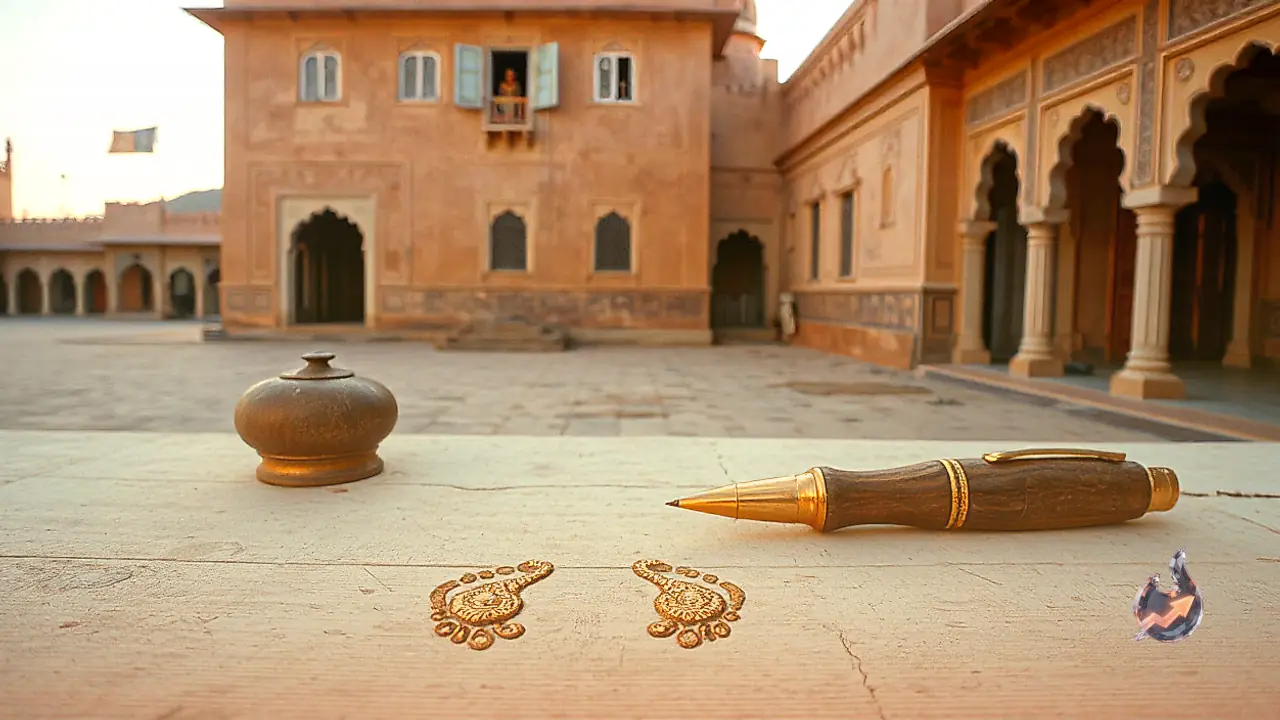














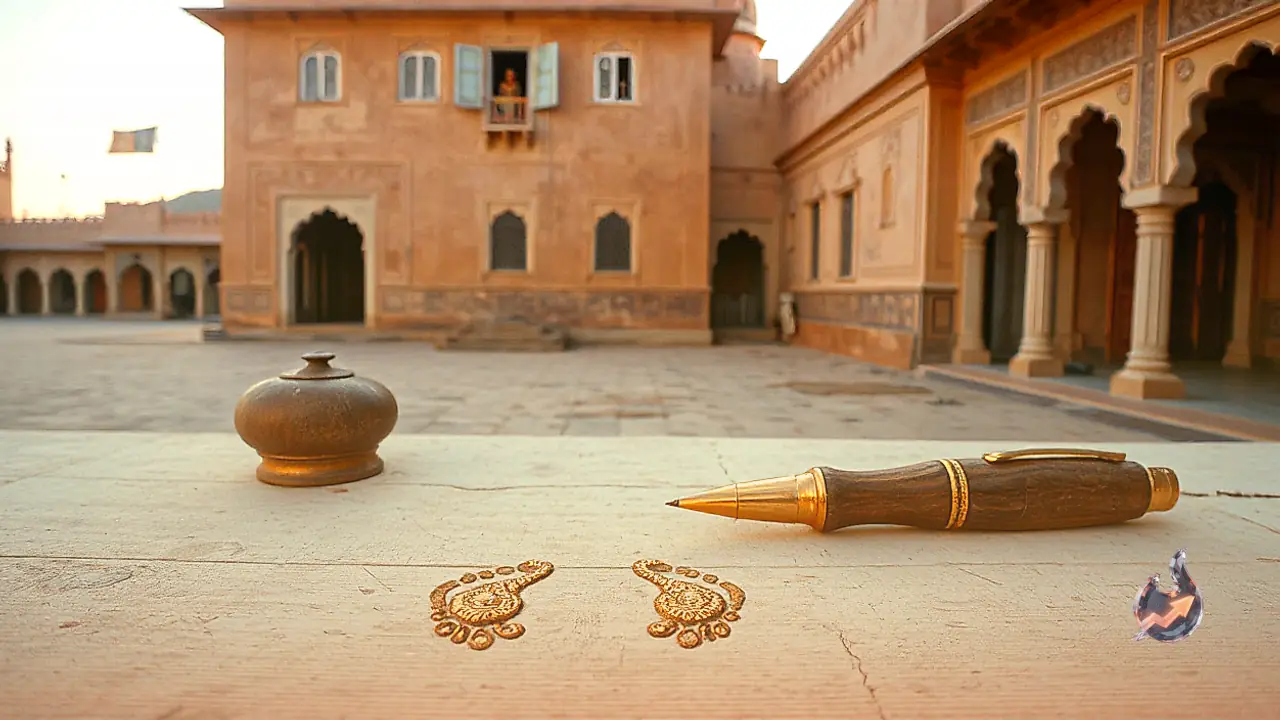

Welcoming Goddess Lakshmi during Deepawali by depicting her holy footprints is an age-old custom across Indian households. While people traditionally draw these footprints using red vermilion or paint at their entryways and shrines, an artist from Bikaner, Rajasthan, has reimagined this devotional ritual through a unique artistic creation. Ram Kumar Bhadani, a skilled painter based in Bikaner, has crafted exquisite charan paduka (sacred footprints) of Goddess Lakshmi using a gold pen on mango wood, creating a blending of traditional art and spiritual heritage.
Connecting Traditions With Fine Artistry
According to artist Ram Kumar Bhadani, the practice of inscribing Goddess Lakshmi's footprints during Diwali holds deep cultural roots. Observing how families commonly draw these marks with red dyes, he sought to transform this ephemeral tradition into an enduring work of devotion. His primary objective extends beyond creating a decorative piece; he aims to reconnect people with Indian heritage, scriptural beliefs, and spiritual values. The delicate artwork accomplished with a gold pen offers an aesthetic appeal while inspiring individuals to honour their cultural roots.
Detailed Sacred Symbols and Their Meanings
The defining feature of these gold-inked padukas is the intricate engraving of sacred emblems. Bhadani incorporated twelve prominent auspicious symbols into the design, including the lotus, trident, conch shell, discus, padma, swastika, Indra's thunderbolt (vajra), arrow, bow, sun, moon, and the Shri Yantra. Each symbol carries profound spiritual significance in traditional lore. The lotus signifies purity and abundance, while the conch and discus are tightly associated with Lord Vishnu. Furthermore, the swastika represents good fortune, and the Shri Yantra is regarded as the supreme geometric symbol for invoking Goddess Lakshmi's blessings.
Craftsmanship Using Mango Wood and Meenakari
The manufacturing process behind these sacred footprints involves painstaking effort and meticulous craftsmanship. The artist uses high-quality mango wood as the base material, shaping it carefully before starting the artwork. Once the wooden base is ready, fine miniature detailing is rendered using a gold pen. To enhance the visual richness, traditional Meenakari enamel work is applied, elevating the sheen and depth of the intricate patterns engraved on the surface.
Months of Dedication and Festive Availability
Given the complexity of the detailing, crafting these sacred footprints requires significant time and focus. Bhadani mentioned that it takes nearly one and a half to two months of continuous work to complete a pair. Keeping the festive demand of Deepawali in mind, he has prepared a limited edition of 100 pairs of gold-worked charan padukas. To make this art form accessible to devotees for their home altars, each pair has been priced at Rs 1,100.