



















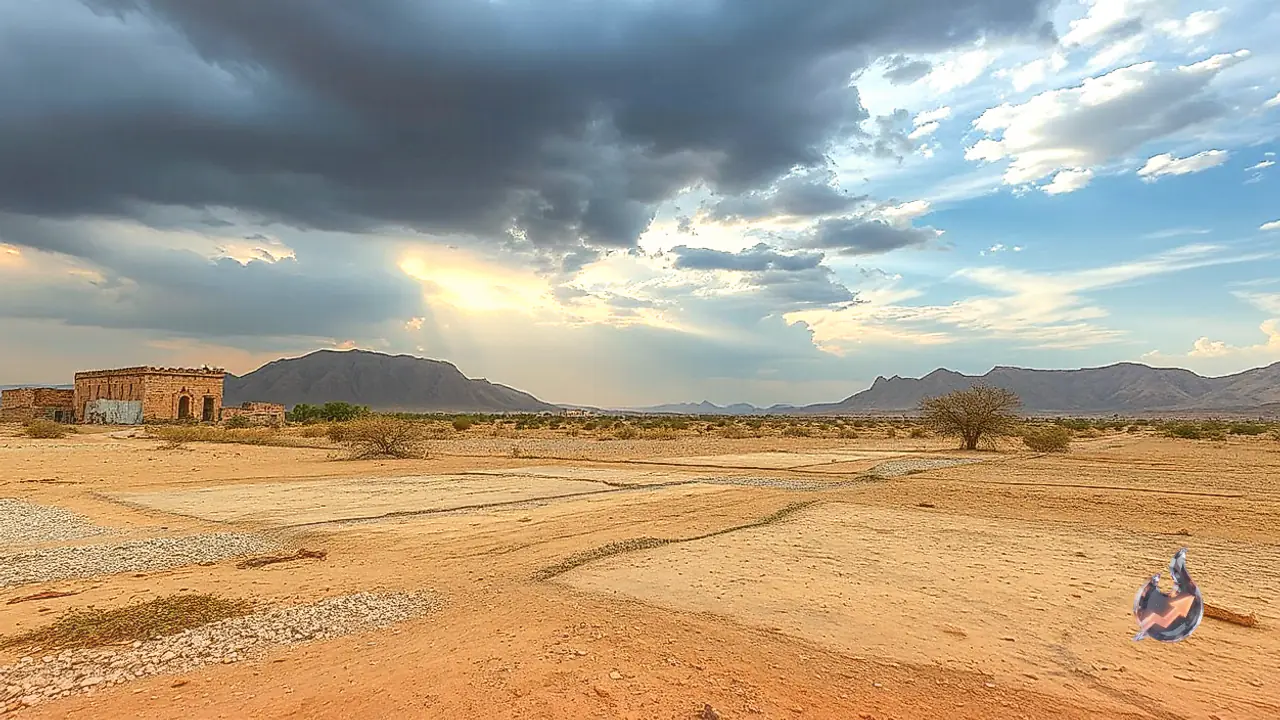

A distinct shift in atmospheric patterns is sweeping across Rajasthan as the final day of October unfolds. Following a spell of cloud cover and precipitation driven by interacting weather systems, rainfall activity is now tapering off significantly across the desert state. On 31 October, light to moderate rainfall is expected to be confined strictly to isolated pockets in the eastern divisions of Kota and Bharatpur, whereas the vast expanse of western Rajasthan is slated to experience completely dry weather. Crucially, weather authorities have issued no severe weather warnings or alerts for thunderstorms, squalls, or heavy rain across any of the districts.
Precipitation Records and Temperature Shifts in the Past 24 Hours
Over the preceding 24 hours, several localities across eastern Rajasthan recorded light to moderate spells of rain. Precipitation measurements revealed that Khairthal and Harsoli logged the highest regional accumulation at 43 millimetres, followed closely by Pawta in Jaipur district with 40 millimetres of rainfall. The combination of overcast skies and intermittent precipitation triggered a sharp drop in daytime mercury, with maximum temperatures falling by 2 to 5 degrees Celsius across multiple areas. Barmer registered the highest maximum temperature in the state at 34.7 degrees Celsius. Dry conditions are establishing dominance across western Rajasthan on 31 October, with eastern Rajasthan slated to turn dry from 1 November.
Synoptic Systems Driving Regional Weather
The prevailing precipitation patterns have been governed by a western disturbance currently positioned over northern Punjab and adjoining territories, taking the form of a cyclonic circulation located roughly 4.5 kilometres above sea level. This structure is accompanied by a trough embedded within the mid and upper tropospheric westerlies. Simultaneously, a secondary trough extends from north-western Uttar Pradesh to a low-pressure area over northern Chhattisgarh and adjoining eastern Madhya Pradesh at an altitude of 3.1 kilometres above sea level. While both systems are losing energy rapidly, lingering easterly winds continue to support isolated rainfall over parts of eastern Rajasthan.
Providing operational guidance on social media, the regional centre of the meteorological department wrote on X that cloud cover and light to moderate showers were likely across eastern Rajasthan on 30 October under the influence of the western disturbance, with weather activity declining from 31 October and dry conditions prevailing over most parts of the state throughout the first week of November.
Divisional Outlook: Kota, Bharatpur, Jaipur, and Western Districts
On 31 October, localized weather variations will define different geographical zones across the state. While isolated showers of light to moderate intensity remain possible in parts of the Kota and Bharatpur divisions, the weather across the Jaipur, Ajmer, and Udaipur divisions is anticipated to stay predominantly dry. In western Rajasthan, the sprawling desert territories of Jodhpur and Bikaner divisions will enjoy clear skies, with border districts seeing no precipitation. Jaipur, Jodhpur, and Udaipur remain entirely free of alerts. Because atmospheric instability is fading, no district faces warnings for heavy downpours or gusty surface winds.
Clear Skies and Rising Daytime Mercury from 1 November
With the arrival of November, clear and dry weather will firmly take over almost all parts of Rajasthan. Atmospheric models indicate a dry spell lasting for at least the coming week, practically eliminating any chance of rain. As cloud cover dissipates and unobstructed sunlight returns, daytime maximum temperatures are projected to climb by 2 to 3 degrees Celsius. However, clear skies will also facilitate nighttime terrestrial cooling, ensuring that pleasant morning and nighttime chill persists across both urban and rural settlements.
Advisories for Farmers and Grain Marketyards
Agricultural operations require careful management during this transitional window. Farmers and wholesale market operators have been advised to take proactive measures to safeguard harvested produce and loose grains stored in open fields or marketyards. Given the potential for scattered drizzle and brief showers across eastern Rajasthan on 31 October, stakeholders should shift grains to secure shelters or cover stockpiles with waterproof tarpaulins to prevent moisture damage. Overall, the transient rain phase will conclude swiftly, ushering in dry weather and a gradual rebound in daytime temperatures from 1 November.