
















A major infrastructure initiative aimed at strengthening rail connectivity and opening industrial transport corridors in north India has moved forward. The Railway Board has officially granted sanction for the detailed project report and final location survey for a proposed 191-kilometer new railway line connecting Rewari in Haryana directly to Jaipur in Rajasthan. This alternate alignment is planned to cut across expanding industrial townships such as Neemrana, Behror, and Kotputli, providing a viable diversion and supplementary route for the heavily burdened Delhi-Jaipur rail stretch.
Easing Congestion on the Conventional Bandikui Route
Presently, rail services between the national capital territory and Jaipur rely predominantly on the traditional corridor passing through Rewari, Alwar, and Bandikui. Operating as a twin arterial artery for both express passenger movements and freight traffic originating from western ports, this section experiences significant operational congestion. Any line maintenance, platform occupancy delay, or unexpected disruption on the Bandikui segment often ripples through the regional timetable. Building a parallel, direct corridor will relieve this network strain, allowing railway operators greater flexibility in scheduling long-distance trains and improving punctual arrivals.
Planned Alignment Across Industrial Belts
According to the preliminary alignment plan, the 191-kilometer rail line will originate from the junction station at Rewari in Haryana. It will cross into Rajasthan, touching Shahjahanpur, Neemrana, Behror, Kotputli, Paota-Pragpura, and Shahpura before terminating in Jaipur. Most of these urban and rural pockets have historically depended on national highway networks, lacking direct access to broad-gauge railway services. Integrating these regions into the national rail grid is set to bridge a long-standing logistical gap, providing thousands of daily commuters and local businesses with an economical mode of transportation.
Potential Time Savings of Up to 90 Minutes
Passengers traveling between Delhi, Gurugram, Rewari, and the Pink City could witness substantial reductions in total transit time once the infrastructure is built. Initial operational estimates suggest that the direct route could shave off between 1 and 1.5 hours from existing travel durations. However, precise operational speed improvements will depend on final track engineering specifications, signaling upgrades, track doubling, and the frequency of commercial stoppages. The corridor could also host premium services such as Rajdhani and Tejas expresses, easing their passage toward onward destinations in Gujarat and Maharashtra, including Ahmedabad and Mumbai.
Catalyst for Manufacturing in Neemrana and Kotputli
Beyond convenience for passenger mobility, the 191-kilometer rail connection holds commercial significance for industrial output in northern Rajasthan. Neemrana serves as an anchor node along the Delhi-Mumbai Industrial Corridor, hosting dedicated Japanese industrial enclaves alongside numerous multinational manufacturing plants. Similarly, the Kotputli cluster is known for heavy cement production and mining operations. Heavy reliance on road freight has contributed to logistics inflation, highway wear, and vehicular emissions. A direct railway link will provide factories with bulk wagon loading capabilities, lowering the cost of dispatching finished goods and receiving essential raw materials.
Survey Allocation and Next Regulatory Milestones
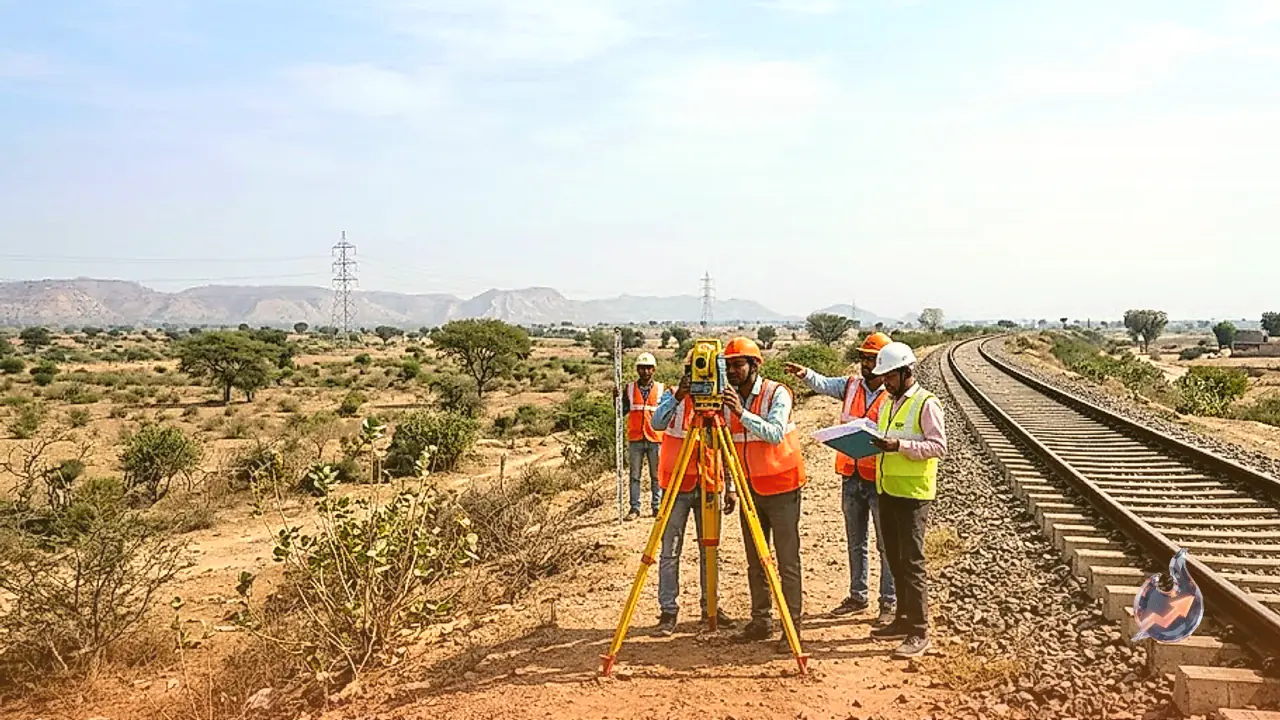
The Railway Board has approved an allocation of Rs 5.73 crore specifically to execute the final location survey and draft the comprehensive project blueprint. Field surveyors will map land contours, evaluate acquisition requirements, mark minor and major bridge crossings, and outline station yard designs. The ultimate capital expenditure and construction budget will be established only after the project report is finalized and submitted. Subsequent stages will involve formal cabinet expenditure clearances, tendering schedules, and physical execution timelines.
Upgrades Planned for Jaipur Rural Stations
Discussions regarding rail enhancement have also encompassed regional passenger facilities within the Jaipur Rural parliamentary constituency. Member of Parliament Rao Rajendra Singh recently met Union Railway Minister Ashwini Vaishnaw to review progress on the Rewari-Jaipur alignment alongside other local railway upgrades. Proposals under review include upgrading Kishangarh-Renwal station under the Amrit Bharat Station Scheme, carrying out redevelopment work at Badhal station, and establishing scheduled train stoppages at Naraina and Sambhar Lake stations to support tourism and commercial trade.