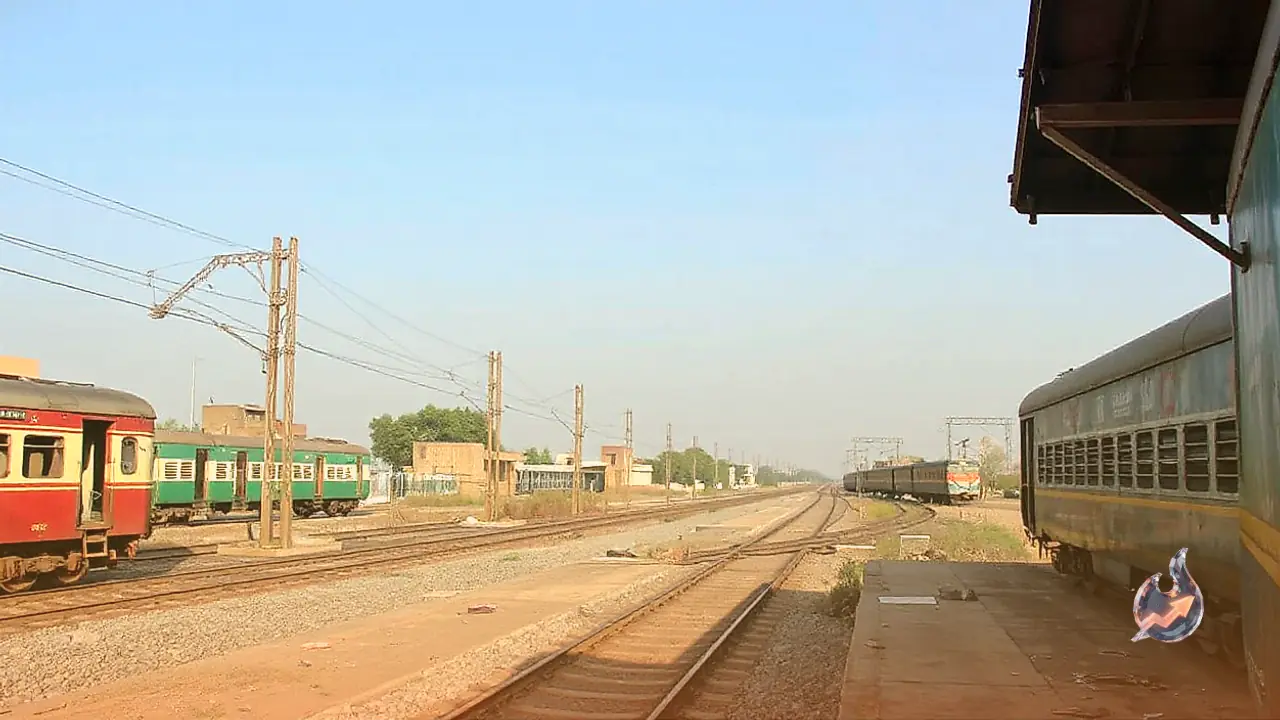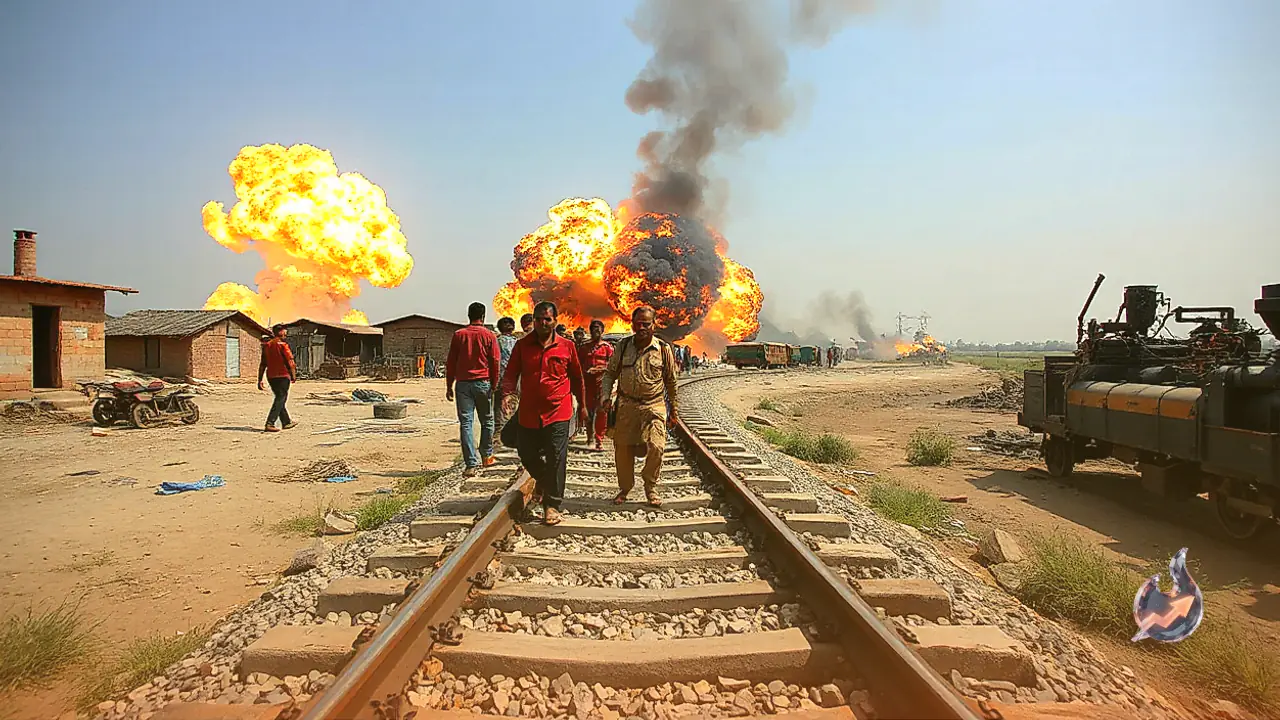




















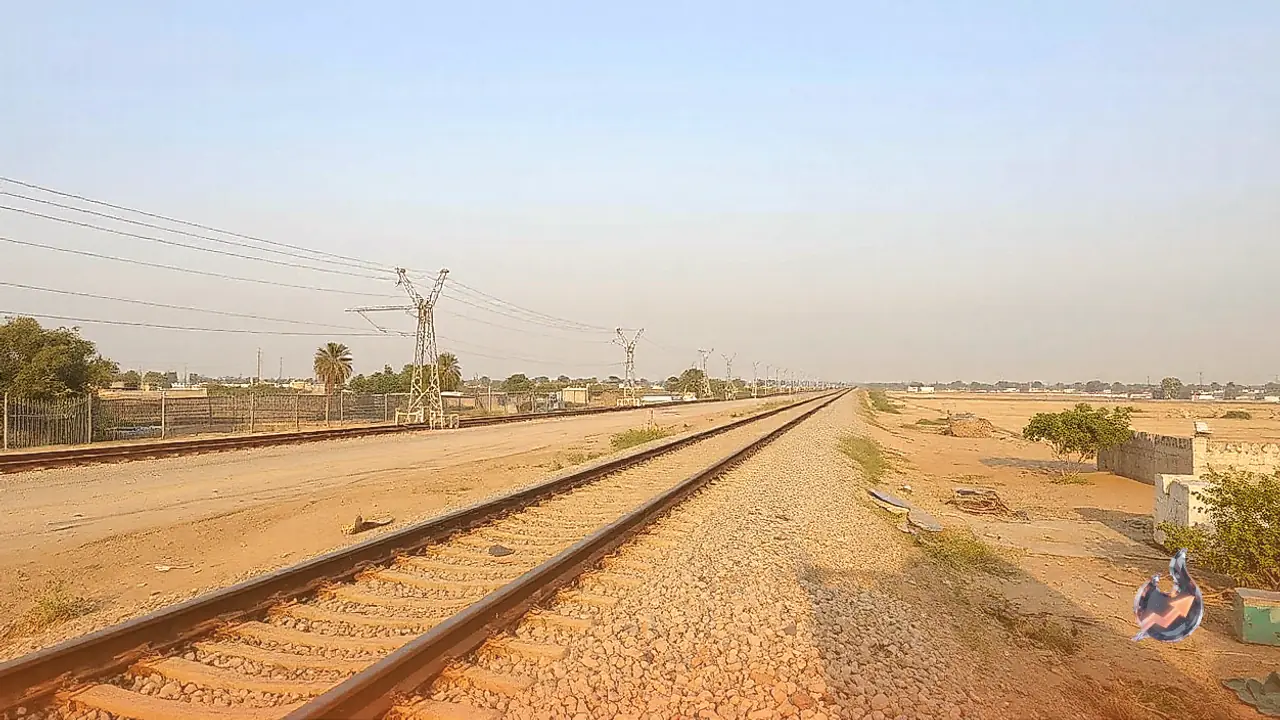

A severe blast triggered along the Anupgarh-Suratgarh railway line close to the India-Pakistan border on Tuesday, November 3, has prompted security agencies to re-examine vulnerability risks across Rajasthan's rail infrastructure. The explosion occurred near 50 GB village, sparking serious concerns regarding transport safety. This is far from an isolated episode in the state, where strategic railway tracks, bridges, and passenger trains have repeatedly faced deliberate sabotage attempts over recent years. As investigative teams examine the scene of the latest explosion, previous instances of explosives on tracks, obstruction hazards, and physical attacks on passenger coaches highlight a recurring pattern of threats.
The Blast on the Anupgarh-Suratgarh Border Track
The incident on Tuesday, November 3, took place near 50 GB village on the critical route connecting Anupgarh and Suratgarh, which runs in close proximity to the international border. The sheer force of the detonation immediately placed local administration and security agencies on high alert. Forensic and intelligence teams have stepped in to inspect the area, gather residue, and ascertain whether the explosion was linked to a deeper disruptive plot. Authorities have indicated that the exact nature of the blast, the materials deployed, and any underlying conspiratorial motive will only be determined once ongoing investigative evaluations conclude.
The Detonation on the Udaipur-Ahmedabad Rail Bridge
The recent explosion mirrors a major sabotage event that shook the state during the late hours of November 12, 2022, along the Udaipur-Ahmedabad railway corridor. Unidentified perpetrators orchestrated an explosion directly on a key railway bridge, causing severe structural damage and cracking the tracks in multiple sections. Responders arriving at the site recovered traces of gunpowder, leading initial inquiries to conclude that the perpetrators intended to bring down the bridge and inflict catastrophic damage on the rail route.
The threat level was highlighted by the fact that an active train had crossed that very bridge just four hours prior to the blast. In the immediate aftermath, an incoming passenger train bound for Udaipur from Ahmedabad had to be halted at Dungarpur to prevent a potential disaster. Investigators also discovered that crucial nuts and bolts securing the tracks to the bridge had been intentionally removed.
Tara Chand Meena, who was serving as the District Collector at the time, voiced suspicions that detonators had been used to blow up the structure. Udaipur's then Superintendent of Police, Vikas Sharma, stated that preliminary findings pointed towards a premeditated attack. Specialized bomb disposal units and forensic personnel combed the site to gather physical evidence, while the Rajasthan Police Anti-Terrorism Squad (ATS) joined the probe. The incident carried heightened political and infrastructural significance because Prime Minister Narendra Modi had inaugurated that exact railway line on October 31, 2022, merely days before the attack. Following the blast, Railway Minister Ashwini Vaishnaw confirmed that the ATS, National Investigation Agency (NIA), and railway police were conducting a joint investigation and affirmed that strict action would be taken against those responsible.
Deliberate Obstructions Placed Before Freight Trains in Ajmer
Following the bridge blast, another calculated effort to disrupt train movement surfaced on September 8, 2024, in the Ajmer district. Miscreants placed two solid cement blocks directly onto the tracks of the Dedicated Freight Corridor. The incident unfolded between Sardhana and Bangad stations along the Phulera-Ahmedabad section. A moving goods train travelling on the line collided with the cement blocks. Fortunately, a major derailment was averted, and no catastrophic damage occurred. Railway authorities promptly registered a formal complaint and initiated a comprehensive investigation to trace the culprits behind the sabotage attempt.
Stonethrowing Incidents Threaten Passenger Coaches
Beyond explosive plots and obstacles on the tracks, random kinetic assaults on running passenger trains have raised safety concerns. On the evening of October 26, a stone was hurled by an unidentified person at the Jaipur Intercity train shortly after it departed from Phulera railway station. The stone struck the D-8 coach, shattering the windowpane. Flying glass shards accompanied by the rock struck a passenger seated inside directly on the head, causing injuries. Such incidents against moving trains present acute dangers to commuter well-being, yet the identity of the assailant and the motivation behind the attack remain unconfirmed.
From the recent detonation near Anupgarh to the bridge bombing in Udaipur, the placement of concrete hazards in Ajmer, and stone attacks near Phulera, the repeated targeting of railway assets has placed security personnel on alert. Investigators now face the task of uncovering the precise causes behind these episodes and determining whether any coordinated link exists among them.