



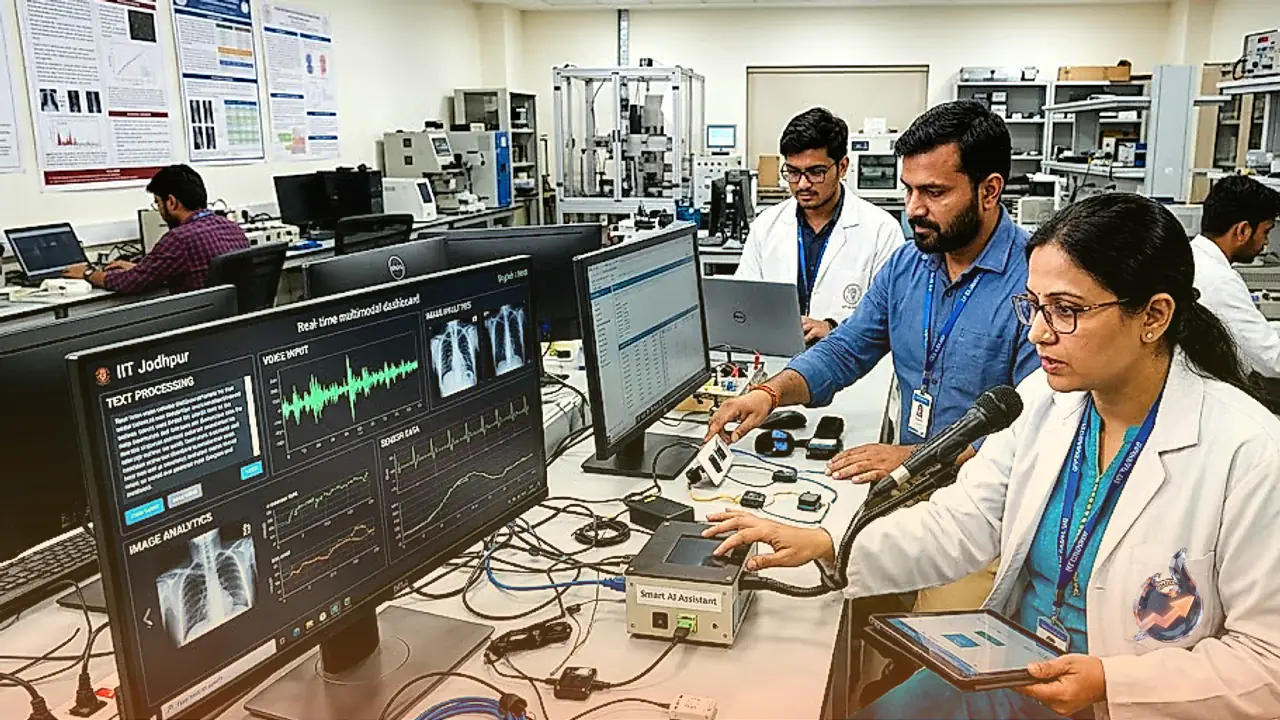















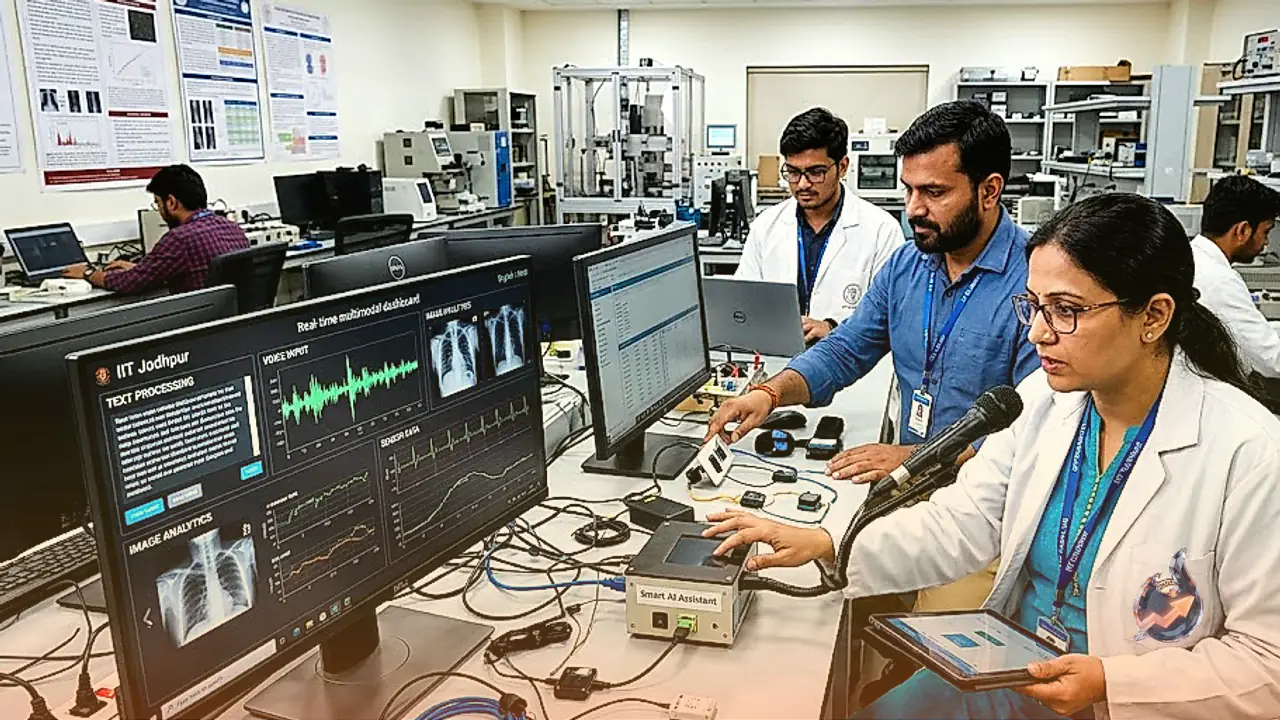

An innovative technological development is currently underway at IIT Jodhpur to bring futuristic computing closer to everyday reality. Imagine a scenario where a medical practitioner has access to a patient's historical reports, diagnostic images, and clinical data all at once, with a system that analyzes everything to present actionable conclusions. Similarly, picture an industrial facility receiving early warnings about potential machinery failures before any breakdown actually occurs. Researchers at the institute are working to turn such capabilities into reality by developing a smart assistant designed to simultaneously comprehend images, documents, audio, reports, and sensor feeds. Crucially, the project emphasizes making this technology compact, fast, and cost-effective while keeping specific Indian conditions and practical requirements at the forefront.
Focus on Multimodal Learning and Low Resource Efficiency
This research is being conducted inside the Machine Intelligence Lab at IIT Jodhpur under the leadership of Dr. Divya Saxena, an assistant professor in the Department of Computer Science and Engineering. The technology is being built upon three primary pillars, which include multimodal learning, efficient artificial intelligence, and smart agents. The main objective behind this approach is to reduce reliance on large and expensive systems that typically demand heavy computing resources and uninterrupted high-speed internet connectivity. The researchers are heavily focused on engineering the system so that it operates effectively even under constrained resource environments.
Transforming Operations from Healthcare to Industry
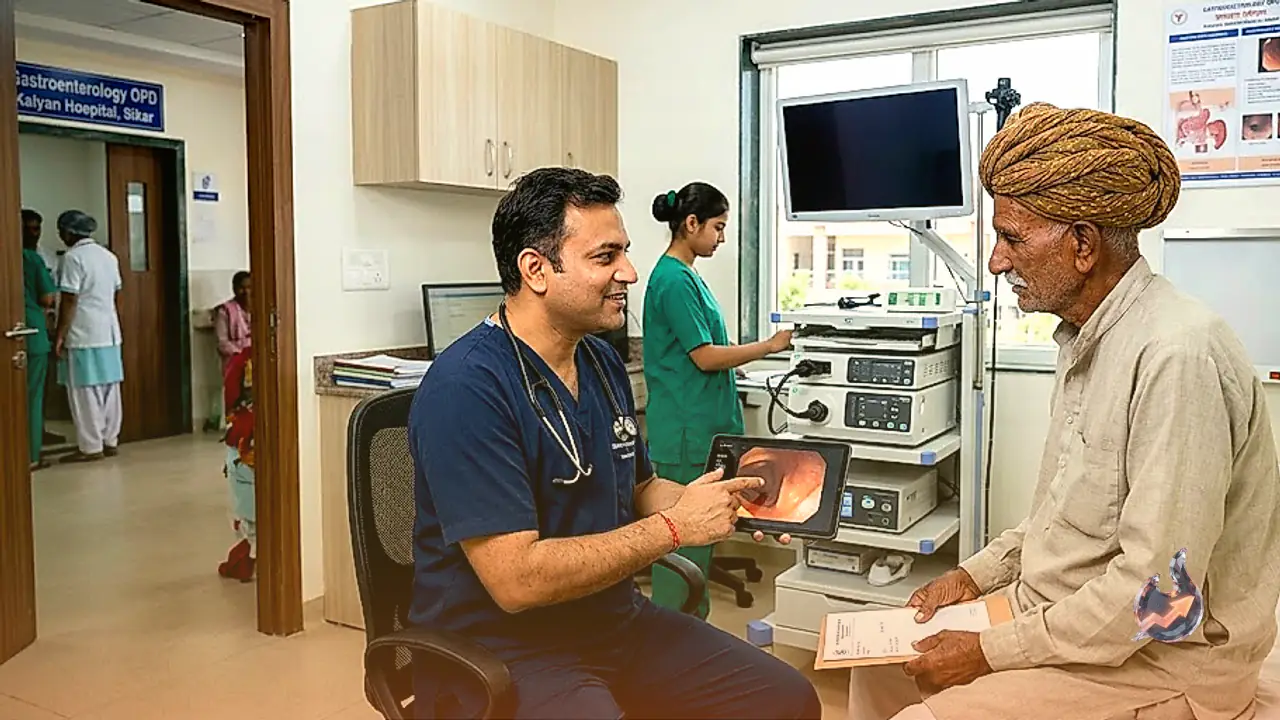
Within the healthcare sector, this system can process a patient's past medical records, diagnostic images, and physician notes concurrently to assist medical professionals in making informed decisions. Meanwhile, in industrial settings, it can analyze machinery imagery, sensor readings, log files, and technical manuals to help identify early indicators of potential equipment malfunctions. This capability is expected to significantly mitigate financial and operational losses caused by unexpected machinery shutdowns in factories.
Vormous Potential in Education and Academic Research
The applications extend profoundly into education and academic research as well, where complex documents, research papers, and study materials can be processed to generate useful summaries and insights for students. The potential scope for deployment in India is immense. According to UDISE+ 2024-25 data, the country encompasses 14.71 million schools with 24.69 crore students enrolled, alongside 4.46 crore students pursuing higher education. According to Dr. Divya Saxena, the ultimate goal is to build a practical support system that does not merely supply raw information, but genuinely understands the workflows of people and institutions to deliver meaningful solutions.