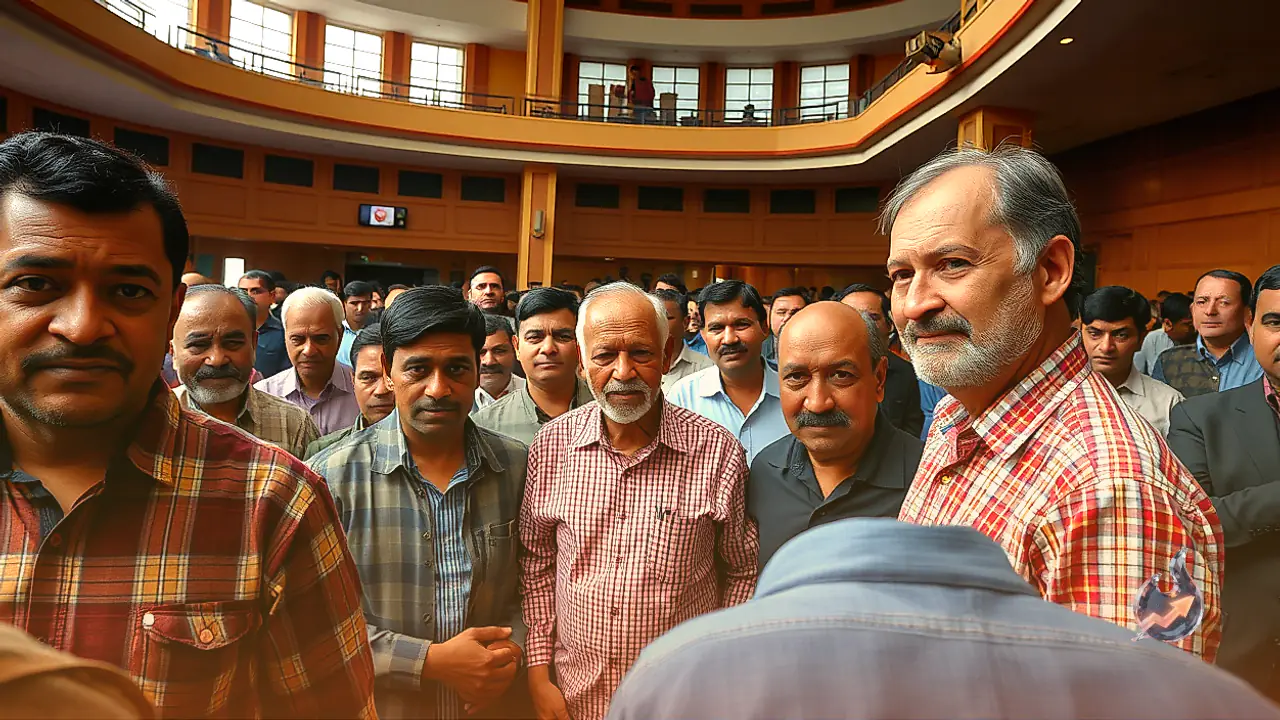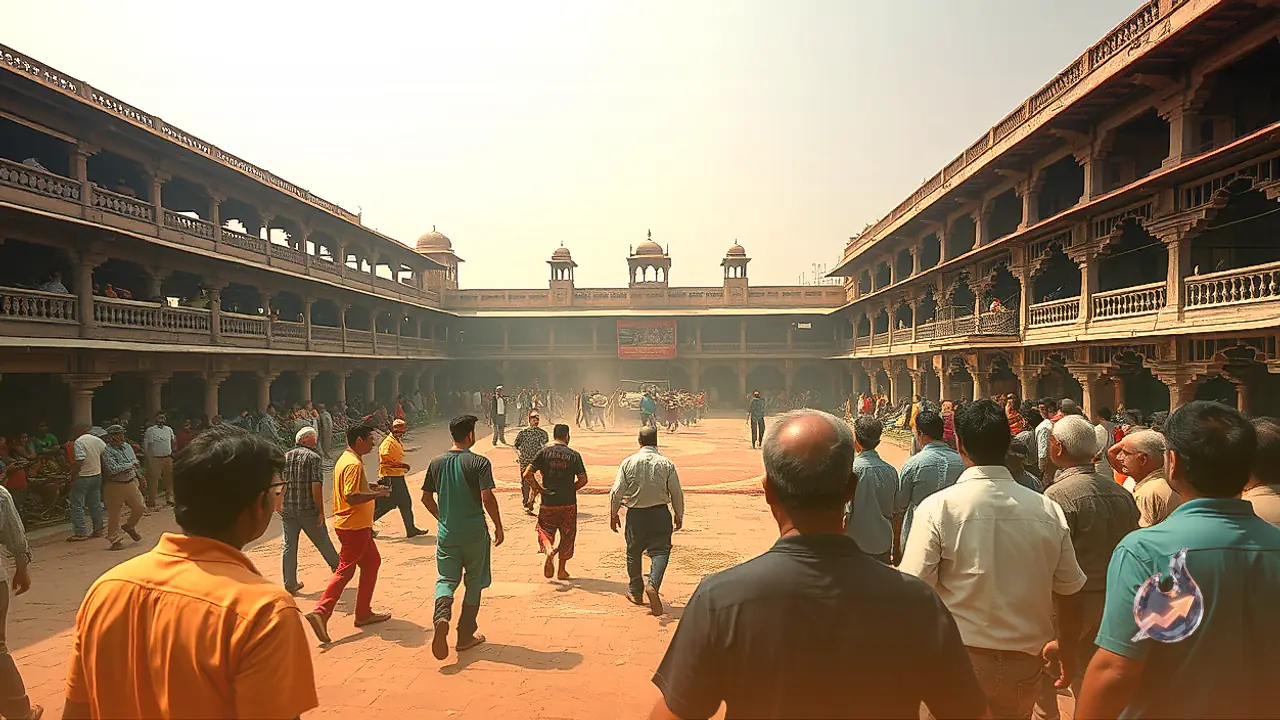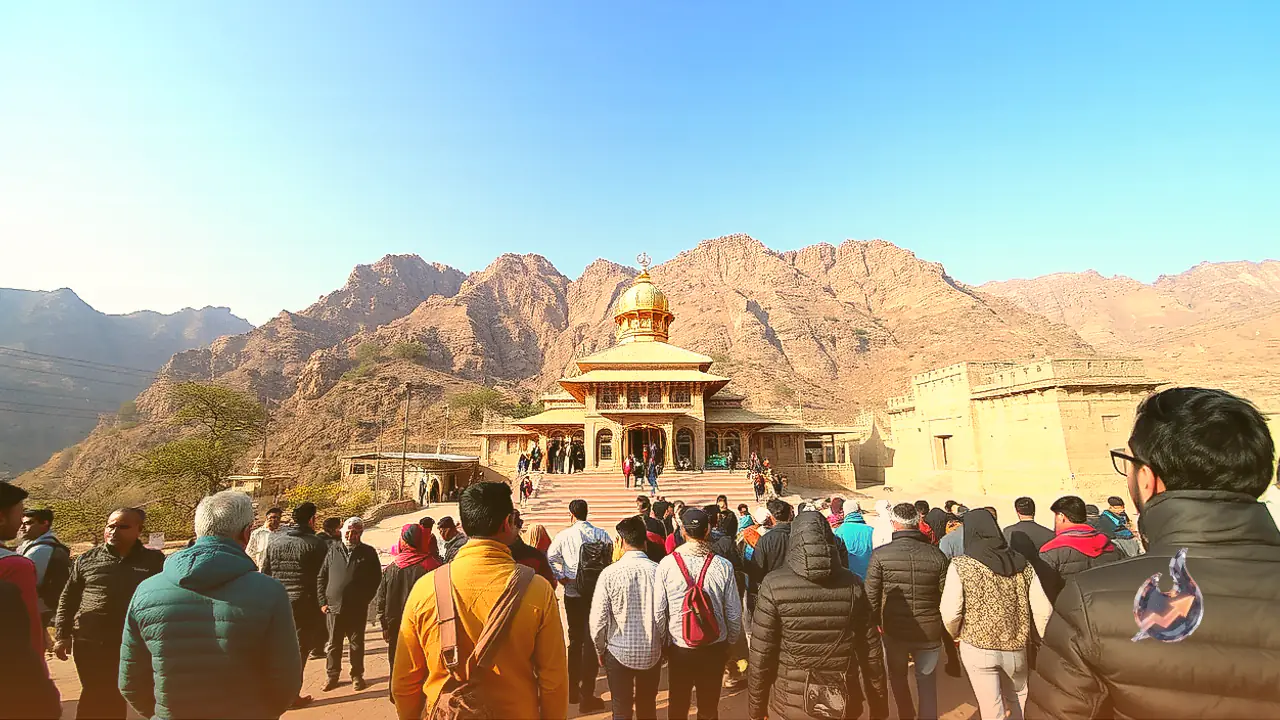


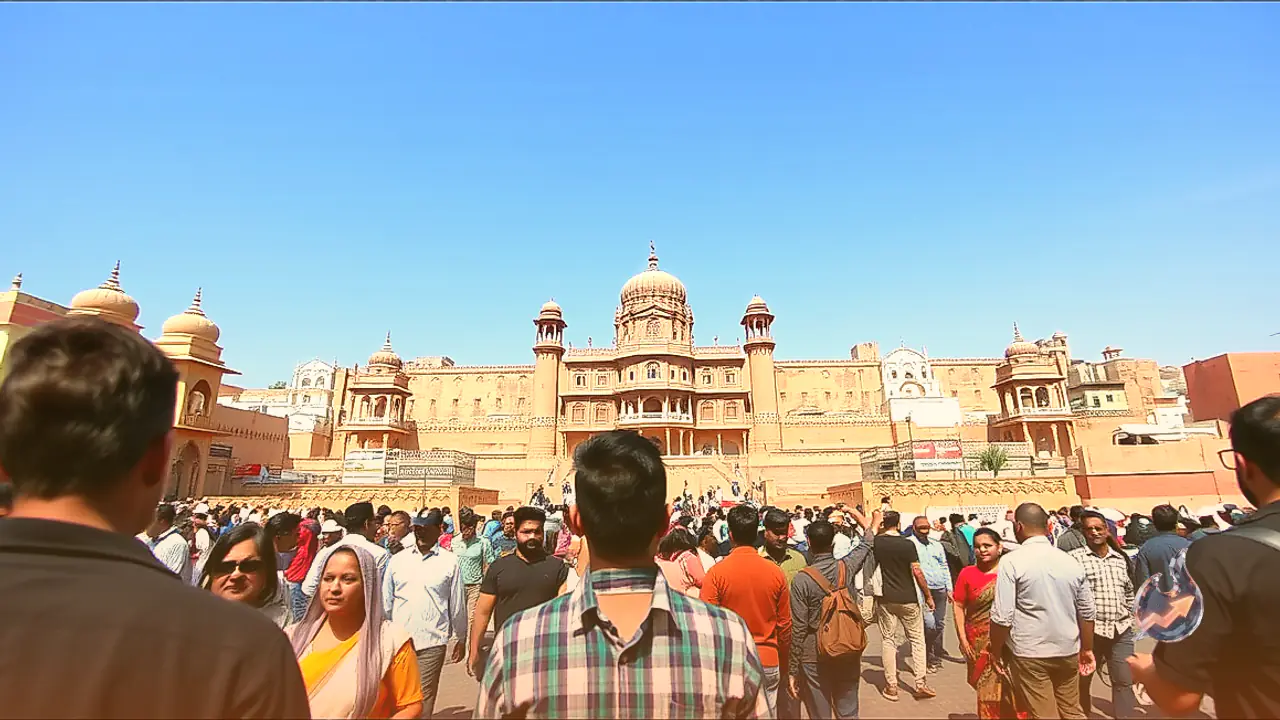














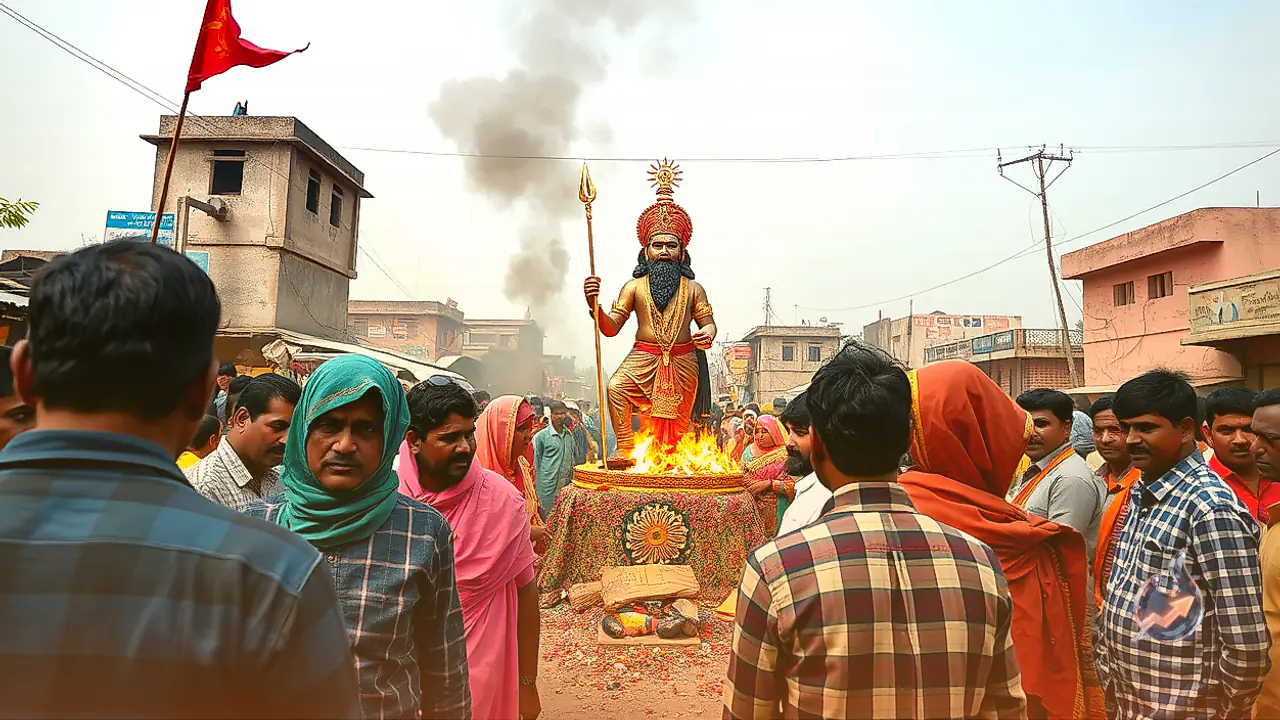

The Dussehra celebrations in Ropan village, located within the Shahpura district of Bhilwara, stand out starkly from conventional festivities seen across the country. While Vijayadashami typically witnesses the burning of tall paper effigies symbolizing the destruction of evil, this locality follows a completely distinct tradition. Instead of setting an effigy ablaze, residents perform the ritual slaying of a permanent, roughly ten-foot-tall statue built right inside the village. Before the festival arrives, this historical sculpture undergoes careful painting and maintenance, after which a young boy portraying Ram uses a bow and arrow to enact the ritual killing. To witness this rare and fascinating event, not just local villagers but large crowds from surrounding regions gather in substantial numbers.
A Century-Old Tradition and Lanka Dahan
According to local accounts, the permanent statue of Ravhan in the village is nearly a hundred years old. Because of this long-standing custom, neighboring populations frequently refer to Ropan as the village of Ravhan. A day prior to the main slaying ceremony, the village organizes the Lanka Dahan program. This ritual begins with a ceremonial procession of Thakurji starting from the Bhagwan Charbhujanath temple, followed by an auction for the roles of Ram and Lakshman. A child artist dressed as Hanuman reaches the Ravhan Chowk, where the symbolic burning of Lanka takes place. On the following day, the young boy playing Ram completes the tradition by shooting an arrow at the statue.
A Deeply Respected Center of Faith and Reverence
The statue in Ropan serves as much more than a mere yearly custom, functioning as a powerful focal point of deep religious devotion for the residents. Village priest Pandit Satyanarayan Sharma explains that Ravhan is revered here as a scholar rather than a typical villain. Spanning over a century, this unique tradition focuses on slaying the figure instead of burning it. A lively fair is organized in the village on Dussehra day, drawing active participation from the entire community.
Fulfilling Vows and Historical Rain Legends
The priest notes that villagers frequently visit the sacred spot with personal prayers and wishes, offering gifts and offerings once their desires are fulfilled. He recounts an episode from the past when severe drought-like conditions gripped the area without any rainfall. Facing a crisis, villagers organized an overnight vigil at the Ravhan site, praying earnestly for rain. According to local belief, heavy rainfall began the very next morning, cementing the villagers' unwavering faith in the site. Even today, travelers passing through pay their respects to the statue and offer prayers to overcome their troubles.
An Inherited Legacy Passed Through Generations
Village resident Bhagchand Sharma describes the custom as an invaluable heritage handed down by their ancestors. He mentions watching this ancient statue since his earliest childhood days. While neighboring settlements burn effigies on Vijayadashami, Ropan marks the festival through the ceremonial slaying of its permanent structure. The narrative of staying awake all night during droughts to seek divine intervention has been passed down across generations, prompting people to continue visiting for solace and offering gifts upon the fulfillment of their wishes.
A Unique Cultural Identity
This distinct custom grants Ropan a singular identity during the festival season. While the rest of the nation conveys the victory of good over evil through burning effigies, this village preserves its heritage through a century-old statue ritual. The confluence of history, faith, and local tradition ensures that Ropan continues to celebrate Dussehra in a deeply distinctive manner, highlighting the rich diversity of cultural practices across different regions.