


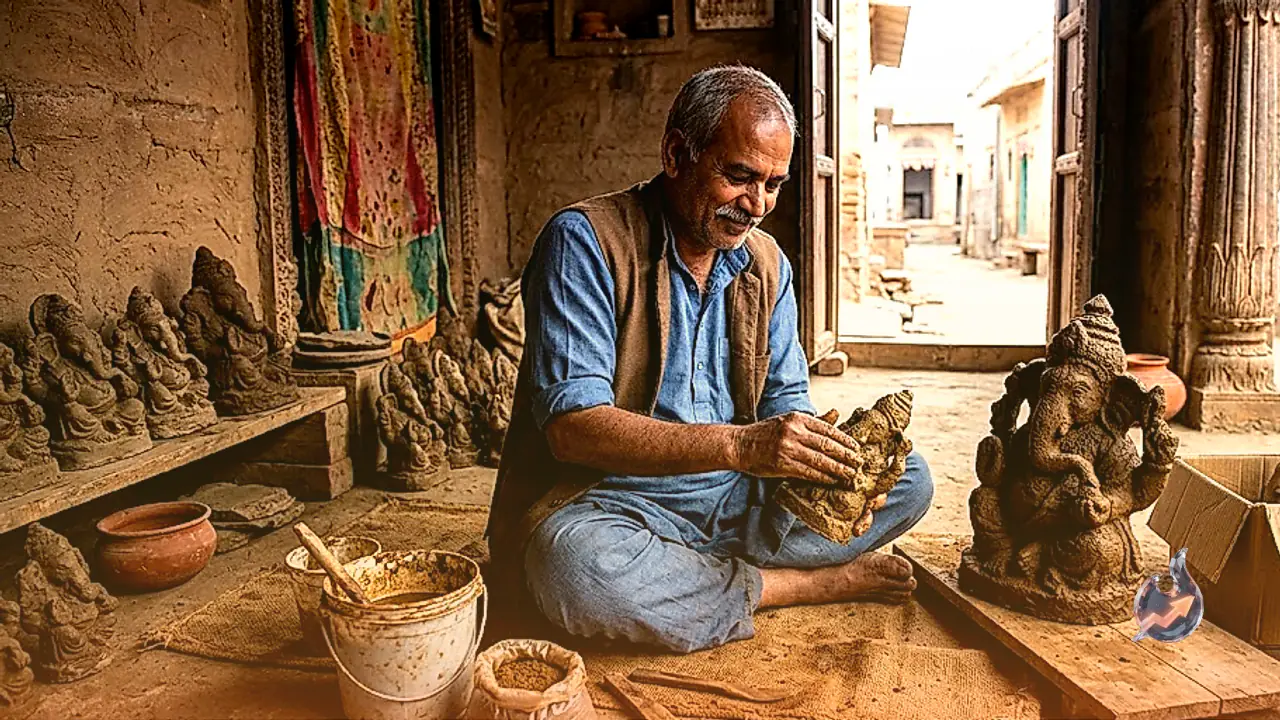

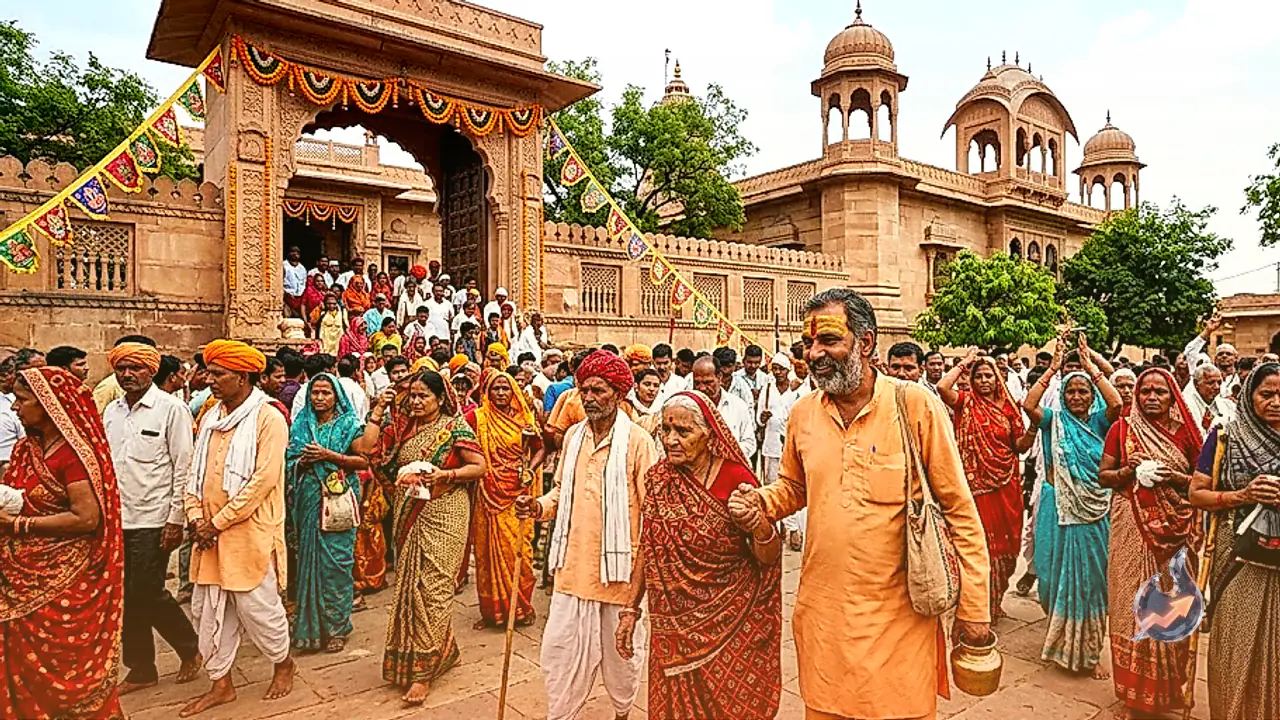















Ahead of the upcoming Ganesh Chaturthi festival, a remarkable initiative has emerged that blends traditional devotion with a strong message of environmental protection. Living in the Sharda Puram colony of Nagaur, Jaiprakash Sharma has been meticulously crafting Lord Ganesha idols using entirely natural ingredients over the past month. Steering completely away from conventional practices, these sculptures are made without a single gram of plaster of Paris or toxic chemical colors, making them completely safe for the environment.
The creation process relies heavily on organic elements derived from indigenous cows, including cow dung, gomutra, pure desi ghee, red soil, and bael leaf seeds. To give the idols an appealing and vibrant finish, synthetic dyes are entirely avoided in favor of natural alternatives. The creator aims to utilize this major religious festival to raise widespread awareness about the importance of protecting nature and safeguarding cows.
The newly crafted Ganesha idols range in size from 4 inches up to 12 inches. The smaller variants are particularly favored by households for domestic installation during the festival. Demand for these eco-friendly creations has been pouring in not just from local buyers in Nagaur and various other cities across Rajasthan, but has also expanded internationally. Alongside shipments to Gujarat, several pieces have successfully reached supporters in the UK and London.
The most distinctive feature of these idols lies in their immersion process, which discards traditional methods entirely. Instead of carrying them to rivers, lakes, or other water bodies for disposal, devotees can dissolve them right at home inside a flower pot. Once the idol is placed in the soil and watered, it slowly begins to disintegrate, eventually merging completely with the earth to turn into organic manure that nourishes household plants.
The manufacturing method itself is kept strictly organic from start to finish. Initially, indigenous cow dung is thoroughly dried and processed into a fine powder. This powder is then mixed with red soil, gomutra, and pure ghee. All these components are blended together to form a solid paste that gives the final structure adequate strength without relying on any artificial binding agents.
To ensure structural integrity and proper bonding, a special powder made from bael leaf seeds is prepared. This powder is mixed with holy Ganga water to form a liquid base, which is then incorporated into the primary mixture of soil and dung. Artisans then shape this natural dough into divine forms of Lord Ganesha. Because of the entirely natural ingredients and manual craftsmanship involved, production takes considerable time, yet the creator considers it a vital contribution toward environmental safety.
These panagavya-based Ganesha idols successfully deliver a dual message of spiritual faith and ecological responsibility. While they fulfill the devotion of worshippers during the festival, their conversion into organic fertilizer after immersion eliminates water pollution risks entirely. What began as a humble experiment in Nagaur has now traversed boundaries all the way to London, establishing a shining example for sustainable celebrations in the future.