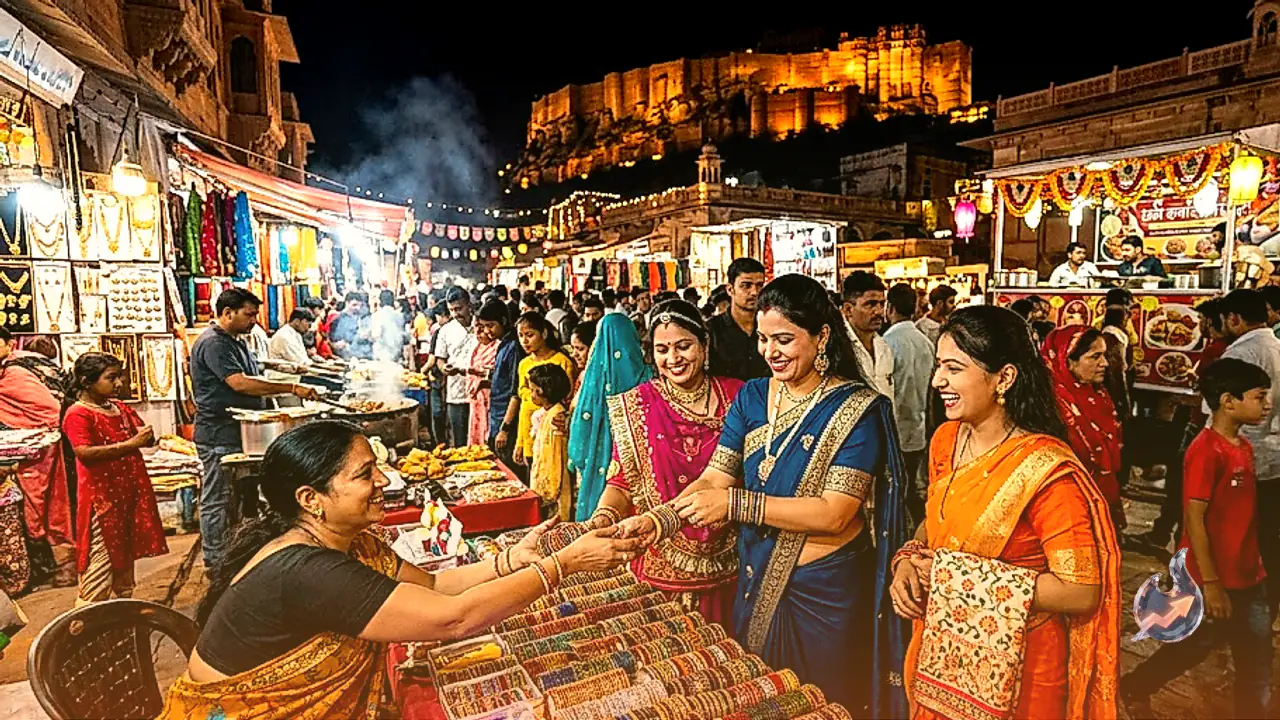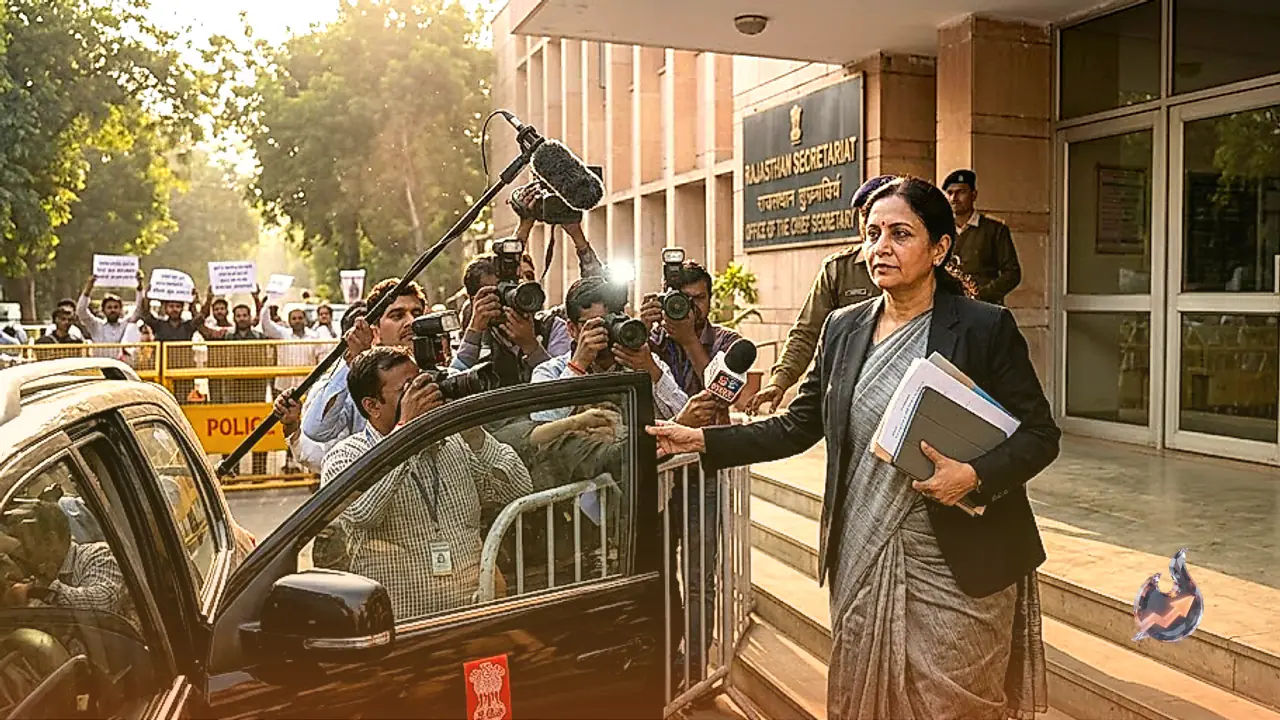





















The Jaipur Municipal Corporation elections bring a contest that goes far beyond a routine battle of votes between the BJP and Congress, presenting both major political parties with a massive test across five distinct fronts. Following recent delimitation updates, the electoral map of Pink City Jaipur has completely transformed. The previous count of 250 old wards has now been restructured into 150 new wards. Consequently, forecasting political equations based strictly on past election data and previous results is no longer straightforward. The ruling BJP faces the formidable challenge of converting its robust organizational machinery and governmental authority into votes within these newly carved wards, while the Congress party must preserve its historical stronghold in the old heritage areas while establishing a foothold in the newer Greater regions. The heritage zone has consistently remained a vital political backyard for the Congress in Jaipur politics.
During the previous municipal elections in 2020, the Congress emerged as the single largest party within the heritage zone. However, the traditional administrative walls separating Heritage and Greater have now collapsed, creating the biggest strategic hurdle for the Congress. The party must safeguard its entrenched grassroots support within the old city under the new delimitation boundaries while simultaneously expanding its presence into Greater areas where the BJP organization maintains a stronger grip. Traditional community voter bases, minority-dominated neighborhoods, and influential local leaders will play pivotal roles for the Congress. Yet, relying solely on legacy vote banks will not guarantee victory in this complex electoral race. Candidate selection, shifting social equations, the impact of women and youth candidates, potential post-ticket rebellions, and post-poll strategies to secure board majorities will collectively dictate the trajectory for both political formations. These five critical fronts will ultimately determine which way the political winds blow in the Pink City.
Narrow Lanes and Local Issues Will Shape the Electoral Path
Local grievances and civic issues are set to dictate the electoral discourse this time around. Voters will assess whether broken streets were repaired on time, whether sewer overflow and waterlogging issues were permanently resolved, and if garbage collection vehicles arrived promptly. Questions will be raised over why main roads turn into water reservoirs during minor downpours, who successfully alleviated drinking water shortages, and whether neighborhood streetlights remain operational. Additional focal points include actions taken against illegal encroachments, the management of stray cattle, and lasting solutions to parking and traffic congestion. These seemingly minor neighborhood grievances can rapidly transform into major political issues across numerous wards. While voters typically evaluate national and provincial matters during assembly or parliamentary elections, municipal contests prompt residents to make their voting decisions right outside their doorsteps based on the condition of their local lanes.
Both Major Parties Vying to Capture the Youth Electorate
Young voters are poised to act as a decisive factor in these Jaipur municipal elections. Citizens aged 18 to 25 comprise a substantial share of the local electorate. This younger demographic does not focus exclusively on traditional concerns like employment or inflation. They demand improved public transport, a cleaner urban environment, accessible parks and recreational sports facilities, digitized civic services, and most importantly, a city where everyday life runs smoothly. Consequently, securing youth candidates is not merely a ticket-distribution formality for both the BJP and the Congress, but a core component of their broader voter acquisition strategy.
Caste Mathematics Versus Individual Candidate Charisma
Municipal elections maintain a distinct temperament compared to assembly elections. Party affiliation matters, but an individual candidate's personal reputation and local standing carry immense weight. In some wards, caste demographics may dominate the outcome, whereas in others, personal popularity will drive results. Party organizational strength will decide contests in certain pockets, while grassroots public outreach by local leaders will seal victories elsewhere. Numerous wards will witness triangular contests rather than straight duels between the BJP and the Congress, as independent candidates step into the fray to disrupt traditional calculations.
Rebel Candidates Set to Disrupt Party Calculations
The true electoral landscape will crystallize only after political parties finalize their candidate lists. Aspirants denied tickets will face two paths: accepting party decisions or launching open rebellions. Rebel candidates frequently dismantle the careful electoral math of major political parties during municipal elections, particularly in wards where an individual's personal local following outweighs party loyalty. Therefore, official candidate announcements will reveal the true extent of internal discontent brewing within both the BJP and the Congress camps.
The Contest Is a Combination of 150 Micro-Elections
The Jaipur municipal contest will not unfold as a uniform battle across the entire city. In reality, it represents a composite of 150 distinct micro-elections. While the BJP may hold the upper hand in one ward, the Congress might dominate the adjacent one, and an independent contender could disrupt equations in a third. Female candidates could prove decisive in certain areas, just as youth contenders might secure upsets elsewhere. Caste arithmetic will drive outcomes in specific neighborhoods, while personal integrity and individual image will matter in others. Relying solely on citywide political trends will make predicting final outcomes difficult. At present, declaring either party an outright frontrunner remains premature. The BJP commands governmental power, organizational depth, and a strong track record from previous Greater elections. The Congress retains its historical footing in heritage zones, opportunities to champion local grievances, and the appeal of fresh youth candidates. However, the most critical variable remains the new delimitation exercise, which prevents a direct mapping of old ward results onto the new 150-ward structure. Consequently, localized social dynamics and candidate-specific appeal will outweigh legacy statistics in determining final results.