
















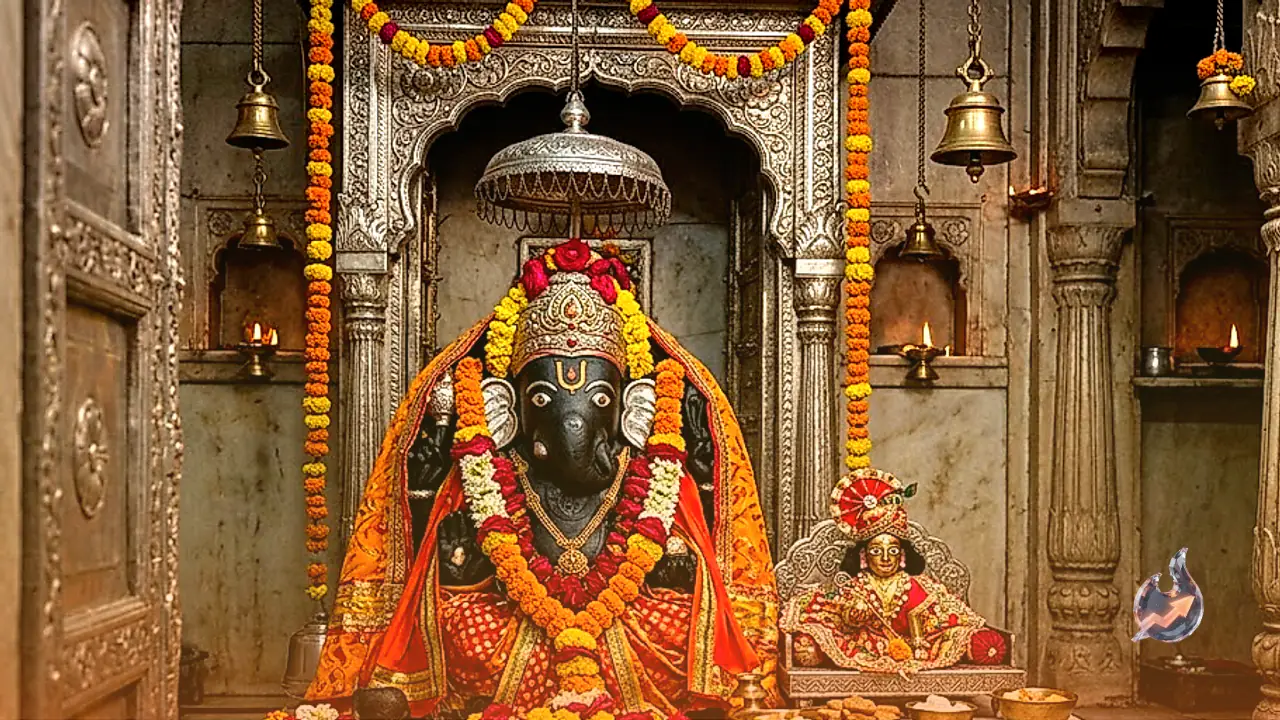

The historic walled city of Jaipur is widely celebrated for its rich tapestry of heritage structures and spiritual landmarks, each carrying centuries of lore and traditional reverence. Tucked inside the buzzing thoroughfare of the famous Chaura Rasta market stands one such remarkable shrine, popularly venerated as the Kale Ganeshji Temple. Among all the ancient abodes of Lord Ganesha scattered across the Pink City, this sacred site is recognized as the most compact in terms of physical dimensions. Its most striking hallmark is the depiction of the elephant headed deity in his innocent infant avatar, a theological portrayal that sets it apart from conventional shrines.
Southern Roots and Seventeenth Century Kachhwaha Heritage
The origins of this sacred temple are widely held to predate the formal laying of Jaipur city itself. Religious records and local lore explain that the presiding black stone idol of Lord Ganesha was carefully brought from Southern India before being consecrated at this location. What makes the deity exceptionally rare within traditional iconography is the complete absence of a trunk, presenting the god entirely in his early childhood likeness. Such unique sculptural portrayals are exceedingly uncommon across the subcontinent.
Historical chroniclers trace the construction of the present shrine back to the 17th century under the patronage of the rulers of the Kachhwaha dynasty. Archival records state that the sacred complex was built under the direct spiritual guidance of Buddhsen Mishra, who served as the royal preceptor and trusted political counselor to Maharaja Sawai Madho Singh of Jaipur. To this day, a preserved antique portrait of Buddhsen Mishra hangs inside the sanctuary, offering modern visitors an evocative window into its royal origins.
A Rare Consecration of Infant Vinayaka and Laddoo Gopal
Beyond its rare main idol, the temple houses another profound spiritual feature that draws steady streams of pilgrims from across Rajasthan. Alongside the child form of Lord Ganesha rests Laddoo Gopal, the revered toddler incarnation of Lord Krishna. This temple stands as perhaps the solitary place of worship in Jaipur where devotees can offer prayers simultaneously to the infant avatars of both Ganpati and Krishna under a single canopy. This harmonious confluence makes daily visits particularly rewarding for worshippers seeking blessings for their households.
In terms of architecture, the sanctuary does not boast sprawling courtyards or towering domes; instead, it is styled as an intimate, modest space accessible through a short flight of traditional stone stairs. Alongside the central black stone idol, another graceful sculpture of Lord Ganesha is housed nearby, traditionally adorned with a sacred orange sindoor coat. Despite its humble spatial footprint, the temple exudes an overwhelming sense of peace and devotional intimacy.
The Seven Wednesday Tradition and Sacred Surroundings
Within Hindu custom, Wednesday is historically dedicated to the propitiation of Lord Ganesha, and shrines across Jaipur experience elevated foot traffic on this day. However, rituals at the Kale Ganeshji shrine take on heightened spiritual significance on Wednesdays. A long standing devotional belief holds that any worshipper who undertakes prayers here on seven consecutive Wednesdays with genuine faith will see their deepest aspirations fulfilled. This sacred lore brings hundreds of pilgrims to the steps of the temple every Wednesday morning, forming orderly queues that often reach down into the bustling street.
The temple also benefits from its extraordinary spiritual environment in the heart of the old city. Situated merely steps away is the revered and ancient Tadkeshwar Mahadev Temple, another cornerstone of Jaipur's civic faith. Due to the clustering of these historic sanctums, the surrounding lane of Chaura Rasta stays immersed throughout the day in rhythmic temple bells, floral fragrances, and an enduring aura of quiet devotion.