






















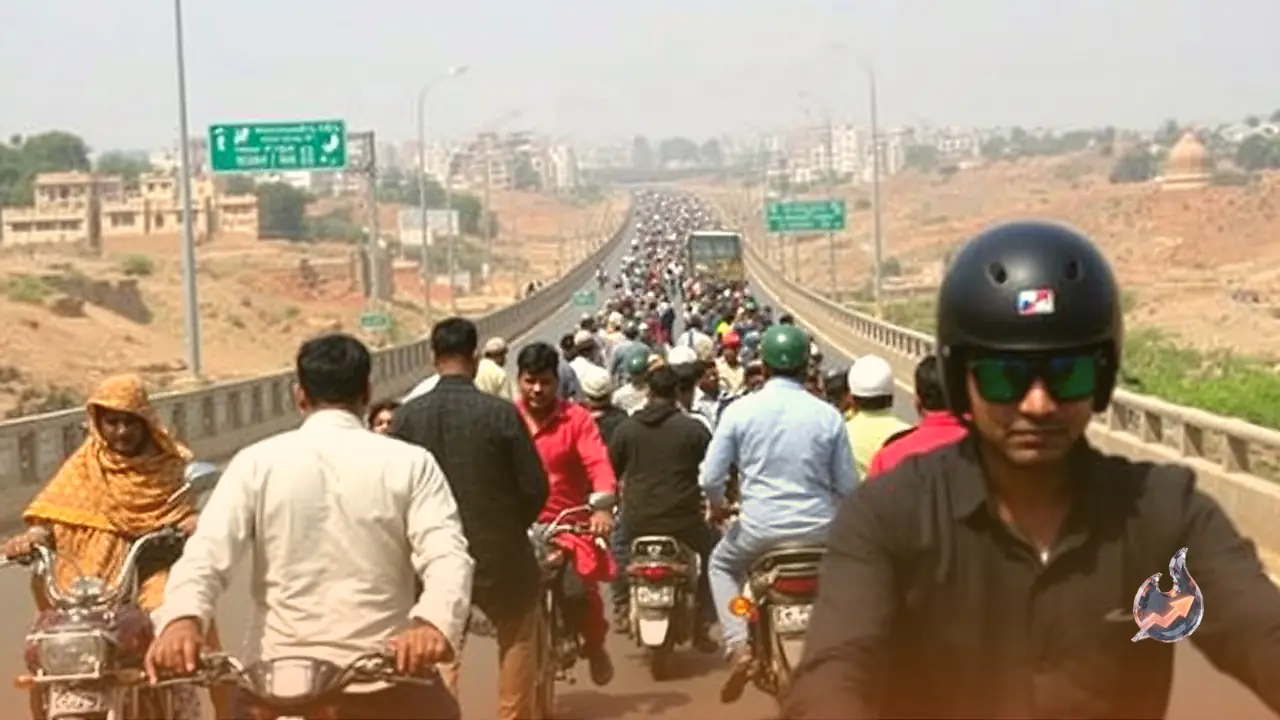

Commuters traveling between Jodhpur and Pachpadra are set to experience significantly smoother journeys as authorities roll out a major infrastructure upgrade. Due to the ongoing construction of the refinery in Pachpadra, the region has witnessed a massive surge in traffic density, particularly involving heavy commercial vehicles and freight carriers. Taking note of this mounting traffic pressure and the pressing need for better connectivity, the National Highways Authority of India has finalized a major decision to expand the 87-kilometer stretch of National Highway 25 connecting Jodhpur and Pachpadra from a two-lane road into a four-lane corridor. At present, the narrow two-lane configuration frequently buckles under the heavy weight of commercial traffic, resulting in regular bottlenecks and congestion for everyday travelers. To execute this comprehensive infrastructure overhaul, the National Highways Authority of India has prepared a detailed proposal worth approximately 2,130 crore rupees and submitted it to the central government while simultaneously inviting formal bids for the tender process.
The official tender submissions have been invited up to 22 October, following which land acquisition formalities and paper-work are slated for completion within a window of one to a and a half months. Current projections indicate that actual on-ground construction work on this vital highway is expected to commence by the end of December 2026 or by January. To streamline the extensive construction efforts and ensure systematic execution, the National Highways Authority of India has divided the entire project into two core segments. The first phase of the master plan will originate from Jodhpur and extend all the way up to Patau, covering a length of roughly 67 kilometers with an estimated construction expenditure of about 1,800 crore rupees. Meanwhile, the second phase of the project will stretch from Patau to the Pachpadra refinery zone, spanning a length of approximately 20 kilometers with an allocated financial outlay of around 330 crore rupees.
Upon the successful completion of this expansive project, the daily movement of more than 8,000 small and large vehicles will become entirely safe, seamless, and efficient, thereby making the onward journey all the way to Barmer remarkably effortless. Alongside the widening of the Jodhpur-Pachpadra highway, protecting dense residential areas and congested local marketplaces from severe traffic gridlock remains a core priority for the National Highways Authority of India. At present, the highway cuts directly through prominent towns such as Bhanvu and Kalyanpur, which frequently triggers severe accidents and persistent traffic jams due to the unrelenting movement of heavy trucks. To formulate a permanent solution to this recurring problem, the National Highways Authority of India will construct brand-new bypasses spanning a total length of 20 kilometers around both of these towns.
Under the finalized blueprints for these bypasses, the Bhanvu bypass will span a length of 2.16 kilometers, whereas the Kalyanpur bypass will be constructed with a length of 2.96 kilometers. Once these bypasses are operational, heavy trucks and commercial vehicles will be able to bypass urban settlements entirely and skirt around the outside without entering the inner streets, thus freeing local residents from the constant threat of accidents and congestion. Under the existing road layout, the complete absence of a central median divider on this national highway has rendered the route exceptionally hazardous, leading to frequent head-on collisions, vehicles losing control, and tragic losses of life and property. During the upcoming four-lane construction phase, a robust central divider will be erected across the entire length of the highway.
Furthermore, the project incorporates the installation of responsive drainage systems, rock cutters, protective safety signage, and proper lighting arrangements along both edges of the roadway. Once the highway transformation into a four-lane corridor is finalized, all accident-prone black spots along the route will be permanently eradicated, allowing drivers to enjoy high-speed, secure, and uninterrupted transit.