




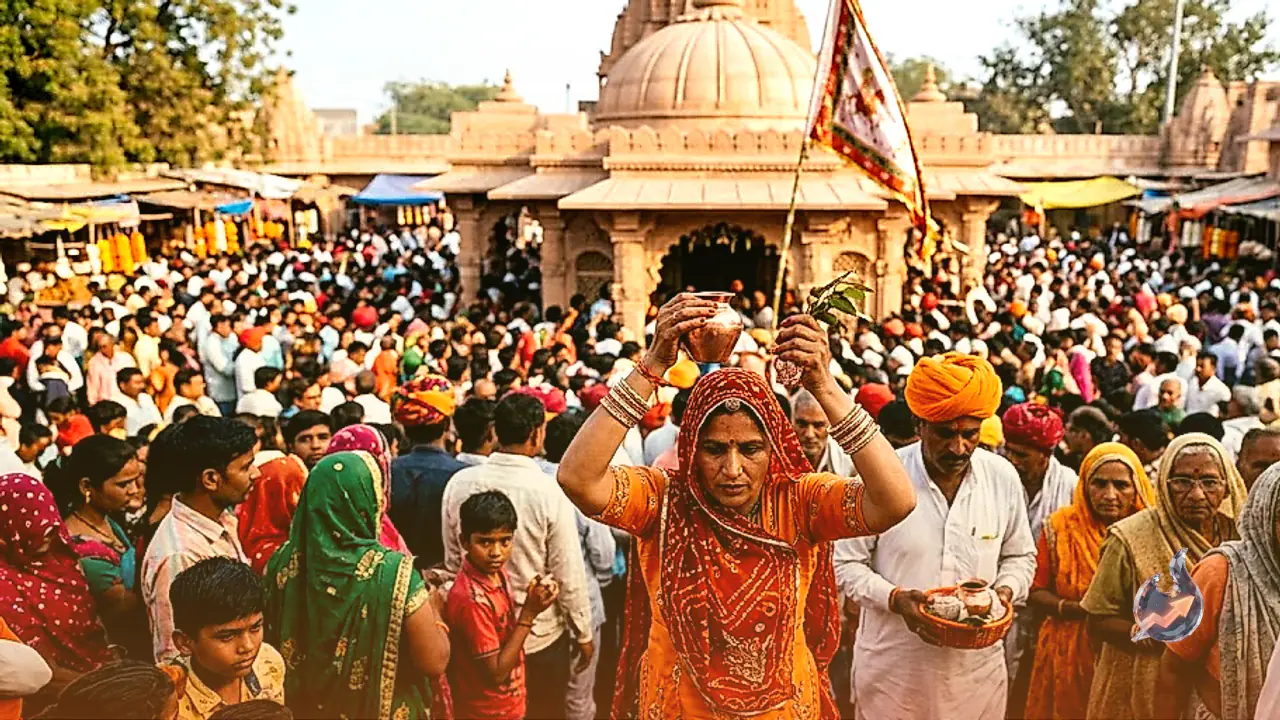
















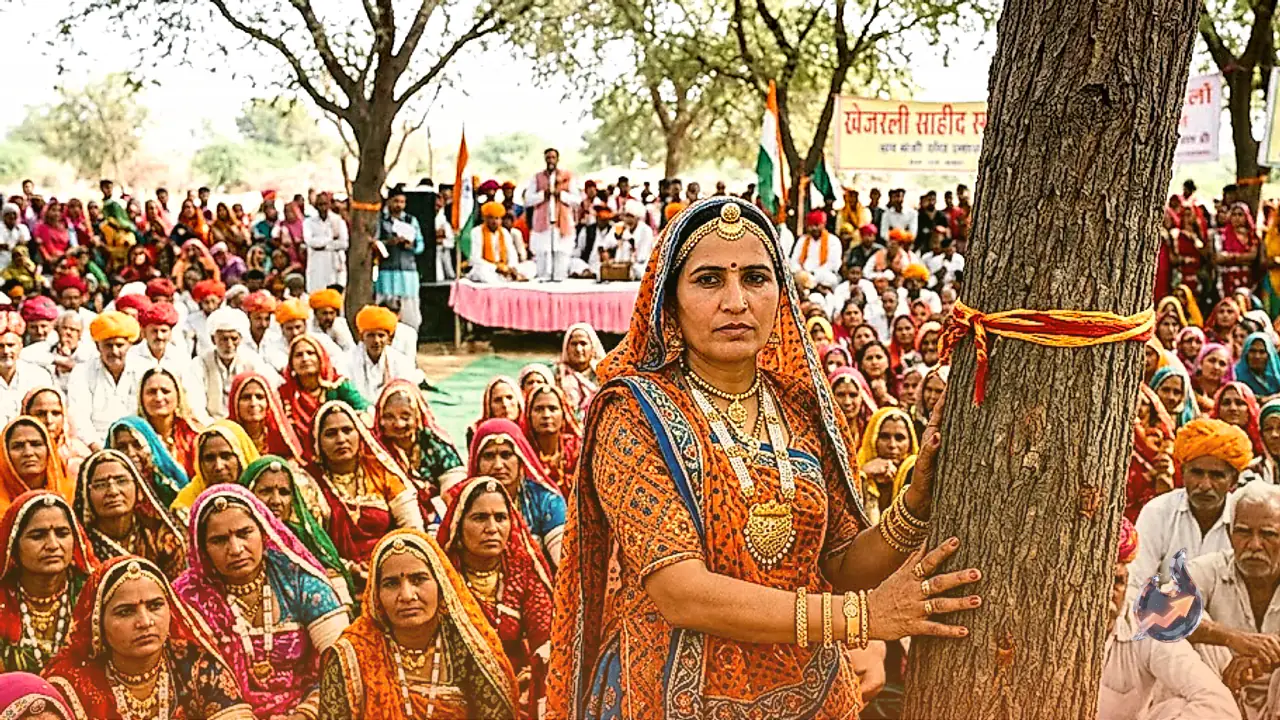

In Rajasthan's historic village of Khejarli near Jodhpur, thousands of devotees gathered to commemorate the supreme sacrifice of Amrita Devi and 362 other members of the Bishnoi community who laid down their lives protecting sacred trees. Held on Monday, the annual martyrdom fair honors the 296-year-old ecological resistance where 363 villagers embraced Khejri trees to shield them from royal axes. The solemn gathering drew massive crowds dedicated to renewing their community vow to safeguard nature, wildlife, and indigenous forests.
Women in Traditional Attire and Heavy Gold Jewelry Draw Attention
A distinctive highlight of this year's gathering was the striking presence of Bishnoi women dressed in ornate traditional garments and adorned with significant heirloom gold jewelry. Many attendees arrived wearing elaborate gold necklaces weighing several tolas, intricate traditional bangles, and heavy earrings. Homemakers alongside women professionals and entrepreneurs took part in the observance, proudly reflecting their cultural heritage. The jewelry worn by several women was valued in the lakhs, with some collections estimated at around one crore rupees. Beyond honoring ancestral customs, the participating women paid solemn respects at the memorial while delivering a powerful message on forest preservation and ecological balance.
Devotees Offer Sacred Coconuts as Gatherings Span Multiple States
The memorial fair attracted visitors well beyond the borders of Jodhpur district, drawing large delegations from across Rajasthan, including Phalodi, Nagaur, Bikaner, Sanchore, Jalore, and Pali. Devotees also traveled from neighboring states such as Haryana, Punjab, and Madhya Pradesh to pay tribute. From early morning, steady streams of worshippers reached the village grounds. A community ceremonial fire ritual took place where pilgrims offered coconuts into the sacred flames. Following the prayers, attendees proceeded directly to the martyr memorial to bow before the legacy of the 363 fallen protectors.
A 296-Year-Old Movement That Set a Global Conservation Benchmark
The historic events commemorated at Khejarli unfolded nearly three centuries ago during the reign of Maharaja Abhai Singh. Royal troops had arrived in the rural settlement to fell indigenous Khejri trees required for palace construction works. As soldiers began axing the grove, village resident Amrita Devi stepped forward in resolute defiance and physically embraced a tree trunk. Her three daughters, Asu, Ratni, and Bhagu Bai, immediately followed their mother's example and clutched adjacent trees. Inspired by their bravery, scores of neighboring villagers joined the living barrier. In the ensuing royal crackdown, 363 people lost their lives, a casualty count comprising 71 women and 292 men.
Annual Bhadwa Dashami Assembly Upholds Royal Tree Protection Decree
Upon receiving word that 363 subjects had sacrificed themselves to save the sacred grove, Maharaja Abhai Singh immediately ordered a complete halt to all logging operations. The ruler subsequently presented the Bishnoi community with a formal written decree prohibiting the cutting of green Khejri trees anywhere across the Marwar territory. To preserve the memory of this watershed environmental defense, the community convenes annually on the tenth day of the lunar month of Bhadwa at Khejarli. The gathering remains a living testament to the community's longstanding devotion to protecting flora and fauna alike.