

















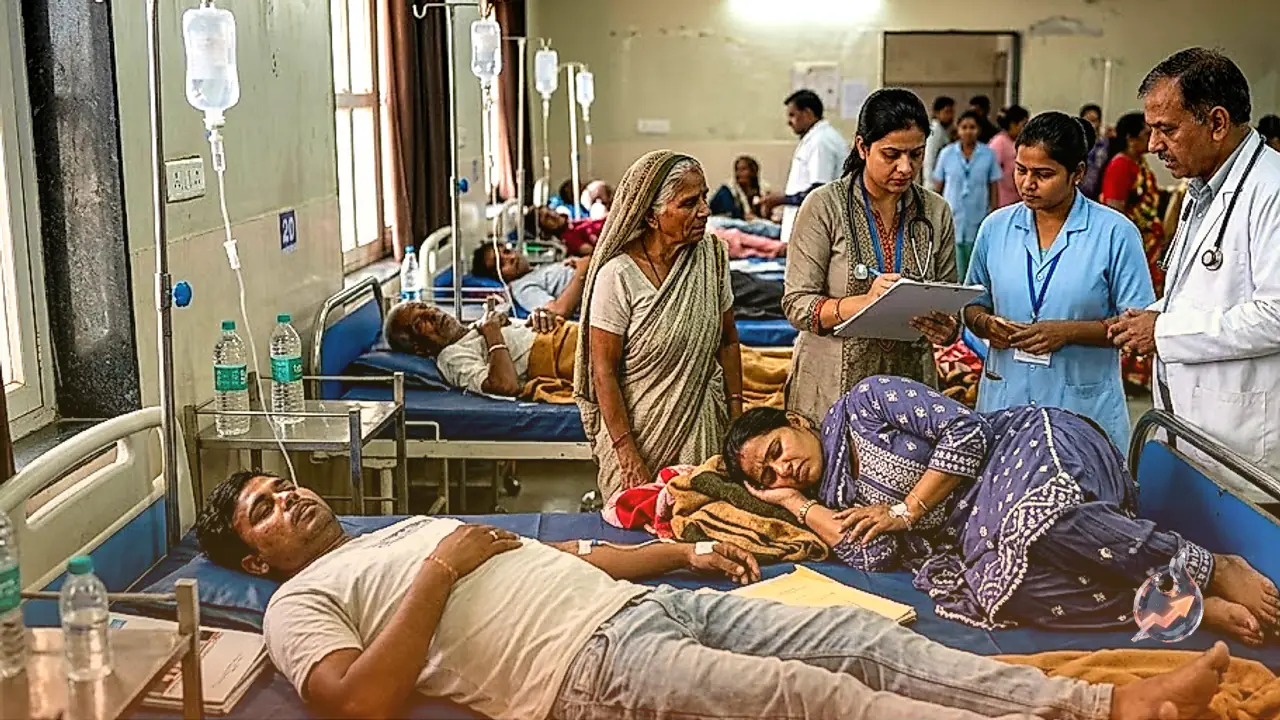

A religious gathering turned into a major health crisis in Rajasthan's Jhalawar district when more than a hundred individuals fell severely ill after eating a traditional community feast. The incident took place in the Bhawanimandi area, where a large crowd had gathered at a local Eidgah to participate in a Muharram feast, commonly referred to as a langar. Shortly after participating in the feast, a massive wave of food poisoning swept through the attendees, affecting both men and women from the community. Relatives and community members had to scramble to arrange transport as victims began collapsing and complaining of severe discomfort, resulting in a chaotic scene at local healthcare facilities.
How the Festive Meal Turned Toxic
The community gathering was organized on Sunday at the Eidgah situated in Bhawanimandi town, drawing a significant number of residents. The menu prepared for this special occasion featured traditional dishes, specifically Dal-Maande and a sweet dish known as Seviyan ka Zarda. According to local administrative official Bhawanimandi Tehsildar Abdul Hafeez, the participants consumed the food during the daytime. However, the joy of the festival was short-lived. Approximately two to three hours after consuming the preparation, several individuals began experiencing acute physical distress. The symptoms started with mild nausea but rapidly escalated into severe stomach aches, persistent vomiting, and uncontrollable diarrhea. As more and more people began showing the same symptoms simultaneously, panic spread across the neighborhood, prompting a massive rush to get the victims medical attention.
Emergency Medical Response and Administrative Mobilization
The sheer volume of patients arriving at the same time put an immense strain on the local healthcare infrastructure. Families rushed the sick individuals to the Bhawanimandi sub-district hospital, where the medical staff had to immediately transition into emergency mode. Dr. Ram Singh and Dr. Deepika Nagar, the attending medical officers, quickly assessed the situation, administered first aid, and admitted the patients to manage their dehydration and other symptoms. Simultaneously, several other victims were admitted to a private hospital in the town to ensure everyone received prompt attention.
Upon receiving news of the mass poisoning, Block Chief Medical and Health Officer (CMHO) Dr. Vikas Jain rushed to both hospitals. He personally inspected the wards, interacted with the patients to monitor their recovery, and instructed the medical staff to deploy all available resources to ensure the best possible treatment. On the security front, acting Station House Officer (SHO) Revatiram arrived at the medical centers with a police contingent. The police team recorded statements from the victims and their families to understand the chronological sequence of events and prevent any law-and-order complications arising from the sudden panic.
Investigation into Contaminated Food and Current Status
The health department has taken immediate administrative measures to identify the root cause of the contamination. Food safety teams have collected and secured samples of the food items served at the langar, including the Dal-Maande and the sweet Seviyan. Initial assessments by health officials suggest that the culprit behind the food poisoning might have been substandard mawa (condensed milk solids) used in the preparation of the Seviyan ka Zarda. Poorly preserved mawa is highly susceptible to bacterial growth, especially during hot and humid weather, which can easily trigger severe gastrointestinal infections.
Despite the initial suspicion, authorities have emphasized that the final confirmation regarding the source of infection will only be available once the official laboratory analysis report of the food samples is released. As of now, the administration and health departments are keeping a close watch on the recovery of the hospitalized patients. The most reassuring aspect of this unfortunate incident is that none of the patients are reported to be in a critical condition, with most showing positive responses to the ongoing therapy. Nevertheless, the incident of over a hundred people falling ill at once has forced the local administration to review food safety guidelines for public feasts.