




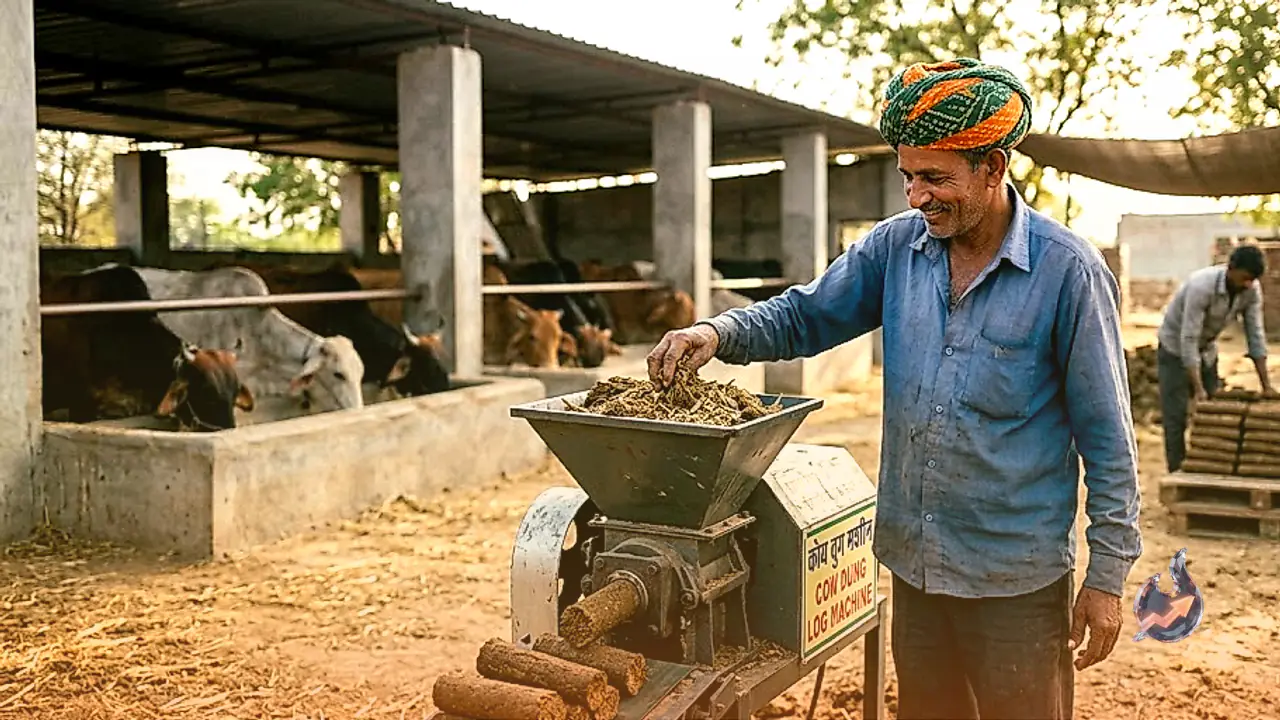

















In an effort to boost the financial standing of registered cattle shelters across Rajasthan and help them achieve self-reliance, a new cow-dung log scheme has been rolled out. The initiative aims to create alternative revenue streams for these shelters so they are not solely dependent on external aid. Under this program, the government is extending financial assistance to procure specialized machinery that transforms bovine waste into usable fuel logs, providing a sustainable alternative to traditional firewood.
Substantial Eighty Percent Subsidy for Equipment Purchase
The standout feature of this policy is that the state government bears eighty percent of the total cost of the machinery as a direct subsidy. The remaining twenty percent of the amount must be arranged by the respective cattle shelter. Procurement of these units is handled centrally through the Directorate of Goplanan. The estimated market rate for the finished fuel logs has been fixed at eight rupees per kilogram, allowing shelters to generate steady income by selling them commercially.
Strict Ten-Year Restriction to Prevent Equipment Misuse
To ensure that the machinery provided under the subsidy is not misused, the animal husbandry department has laid down stringent guidelines. Clear directives state that no beneficiary shelter will be allowed to sell or transfer the machine to any other person or organization before the completion of a mandatory ten-year period. Strict punitive actions are prescribed for any institution that attempts to bypass these compliance rules.
Cancellation of Grants and Registration for Rule Breakers
If any cattle shelter attempts to sell or transfer the equipment before the stipulated ten-year duration expires, its government grant will be immediately suspended. Furthermore, the official registration of the violating shelter will be permanently revoked. This strict oversight is designed to ensure that state-backed resources are utilized honestly and solely for the welfare of the cattle and the longevity of the initiative.
Mandatory Geo-Tagging Within Ten Days of Receipt
Operators must report the exact physical location and operational status of the equipment to the authorities. Consequently, geo-tagging of the manufactured log machine has been made entirely compulsory. Within ten days of receiving the unit, the joint director of the local animal husbandry department must complete the geo-tagging process. This enables officials to maintain accurate records of the installation site and monitor proper utilization.
Monthly Monitoring and Quarterly Income Reports
Continuous oversight will be maintained regarding the operation of the machines and the volume of fuel logs produced. The district-level Goplanan committee has been entrusted with the responsibility of monthly supervision. Additionally, beneficiary shelters are required to submit a comprehensive report every three months detailing production figures, total sales, and revenue generated, ensuring transparency in the actual financial returns.
Commercial Sales from Crematoriums to Hotels and Dhabas
The finished cow-dung logs serve as an efficient eco-friendly substitute for conventional timber across various sectors. Shelters can market their production to crematoriums, factory boilers, local hotels, dhabas, and for ritualistic fire ceremonies. All proceeds earned from these commercial transactions will go directly into the account of the respective shelter, empowering them to generate independent operational funds.
Strict Eligibility Criteria Based on Cattle Count and Land
Not every shelter qualifies for this assistance. Eligible institutions must be officially registered and operational for a minimum of three years. Key prerequisites include housing more than two hundred cattle, possessing at least five bighas of land, and having a three-phase electricity connection. Shelters with pending court cases or those that already availed benefits during the 2024-25 financial year are barred from applying. If applications exceed one hundred, shelters with a higher cattle count will be given preference.