

















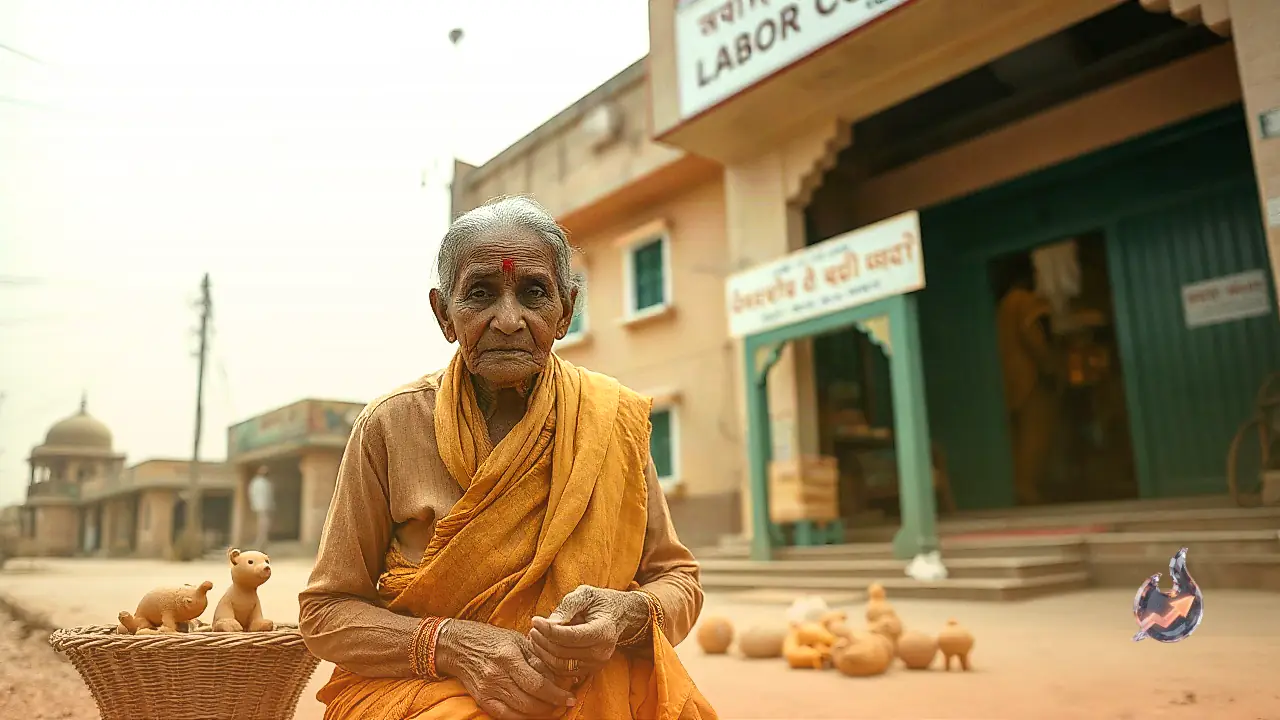

Along the bustling walkways of Pali in Rajasthan, an eighty-five-year-old artisan continues to preserve a vanishing traditional craft despite mounting challenges. Positioned on the pavement outside the labor court in Pratap Nagar, Haskee Devi arranges her assortment of handmade earthen wares every morning just as she has done for seventy years. Her association with this very spot dates back to an era when the local roads were unpaved and modern consumer goods had not yet entered every household. Despite the visible physical toll of advanced age, she remains firmly dedicated to shaping and selling unbaked clay figurines.
Changing Play Patterns and the Rise of Plastic
Decades ago, handcrafted clay piggy banks, miniature kitchen utensils, and tiny clay horses were staple items of childhood delight that young boys and girls eagerly requested from their parents. As retail options transformed, low-cost manufactured plastic items and digital entertainment completely reshaped children's pastimes. With screen gaming and electronic novelties taking center stage, the market for organic earthen toys dwindled rapidly. Yet, amid this sharp cultural shift, Haskee Devi has chosen to continue her daily work, serving as a rare custodian of ancestral pottery customs in the modern town.
Dedication to Heritage Despite Dwindling Footfall
Reflecting on seven decades spent trading on the pavement, Haskee Devi notes that buyers dedicated to earthen items have largely disappeared. Describing her enduring bond with the medium, she shares that her deep affection for the craft motivates her to safeguard the heritage for as long as she lives. Rather than resting or depending entirely on relatives in her twilight years, she chooses to set up her modest roadside stall every single day. Her expression conveys not merely the strain of an arduous life, but deep concern over witnessing a cherished historical art form gradually fade out of public consciousness.
An Heirloom Craft Facing Generational Abandonment
The artisan recalls that the techniques used to mold these toys were passed down by earlier generations of family elders who spent their lifetimes practicing the craft. However, she believes future generations are unlikely to carry the occupation forward due to the hard labor and vanishing financial returns. Factory-made plastic alternatives now completely dominate the toy market, making genuine mud figurines an uncommon sight in regional bazaars. While customers arrive far less frequently than in the past, she keeps her pavement display open in the daily hope that admirers of traditional craftsmanship will still seek out her work.