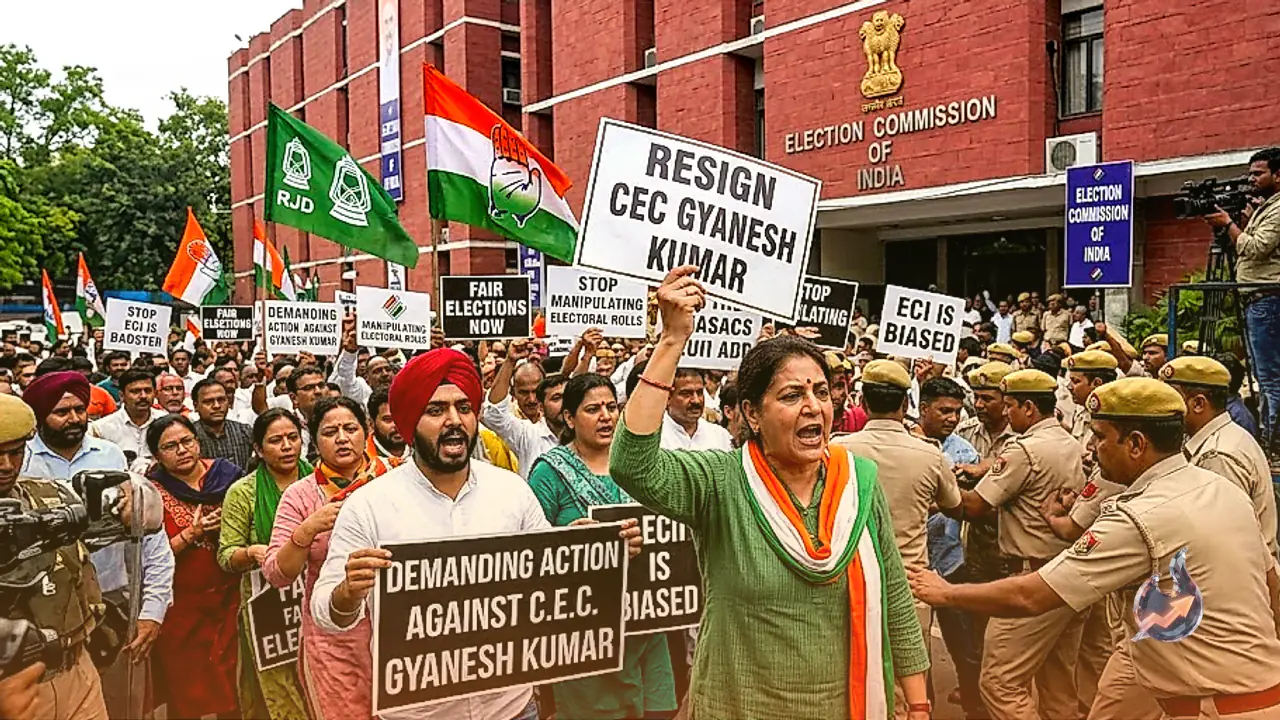














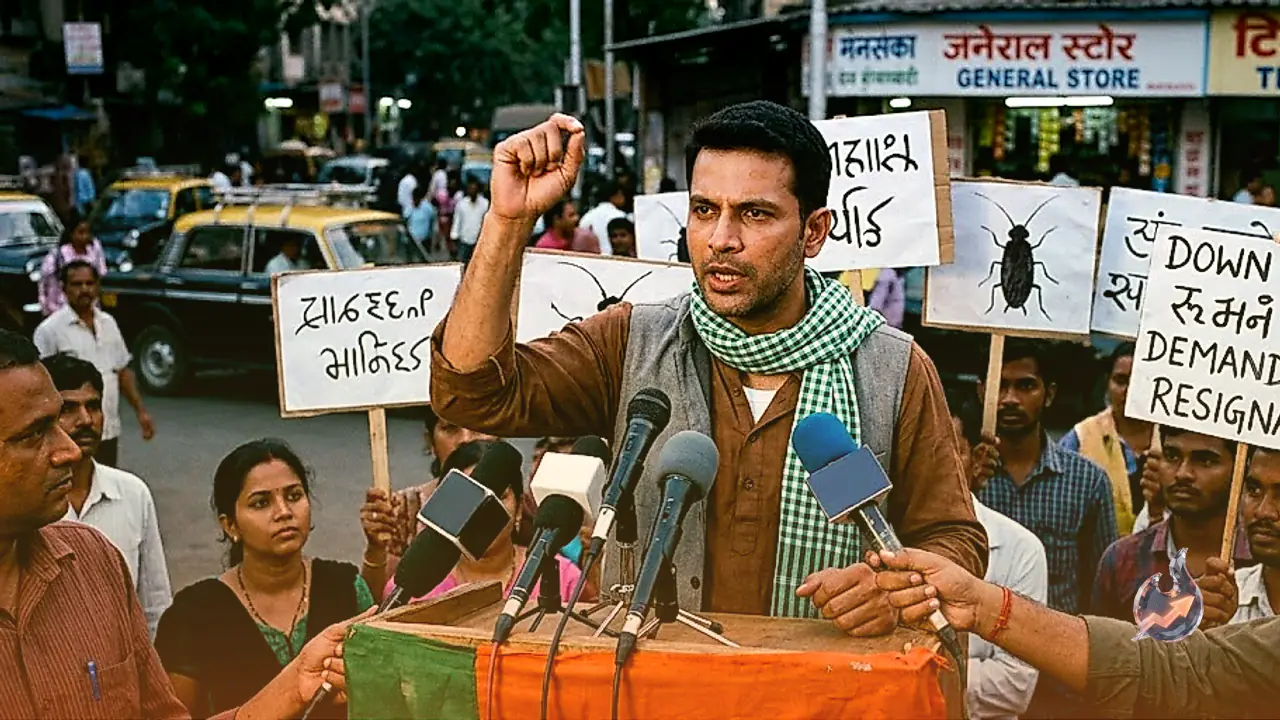

Demands for the resignation of Chief Election Commissioner Gyanesh Kumar have intensified, drawing sharp reactions across political circles following revelations surrounding the Election Commission. Joining the push for accountability, the Cockroach Janata Party (CJP) has formally declared an agitation against the top leadership of the poll body. The party warned that a widespread public movement will be launched if Gyanesh Kumar does not vacate his office immediately.
Pan-India Demonstration Beginning October 2 From Mumbai
Outlining the protest plan, CJP national convener Abhijeet Dipke took to social media platform X to issue an ultimatum. He stated that if Gyanesh Kumar does not tender his resignation by tomorrow, the party will initiate its nationwide demonstration from Mumbai on October 2, coinciding with Gandhi Jayanti.
Dipke explained that the agitation will not stay confined to Mumbai, but will gradually expand across various cities throughout India. Emphasizing the significance of the chosen date, he issued a public call urging citizens to pledge to protect democratic principles and oppose irregularities in institutional governance.
Sharp Criticism of Opposition Parties
Alongside targeting the election commission chief, Abhijeet Dipke turned his focus toward opposition parties, questioning their approach to the current electoral landscape. He contended that political organizations continue participating in rigged elections primarily out of fear of losing their political presence, thereby inadvertently legitimizing an unfair process.
According to Dipke, taking part in compromised elections helps sustain the false perception that the voting process remains genuinely free and fair. By simply fielding candidates to protect their ballot presence, parties end up lending institutional credibility to a contested mechanism.
Concerns Over Defections and Institutional Integrity
Elaborating on the internal fragility of political entities, Dipke argued that genuine political survival is impossible under present dynamics. He pointed out that while parties fear being wiped out if they boycott contests, they face constant threats of stolen votes, divided party units, and the poaching of elected lawmakers and members of parliament.
He described this ongoing participation as merely trying to survive inside a structure engineered to weaken parties, trigger internal splits, or strip away elected representatives at will. Dipke concluded by questioning how long political outfits could realistically endure while operating under such systemic vulnerabilities.