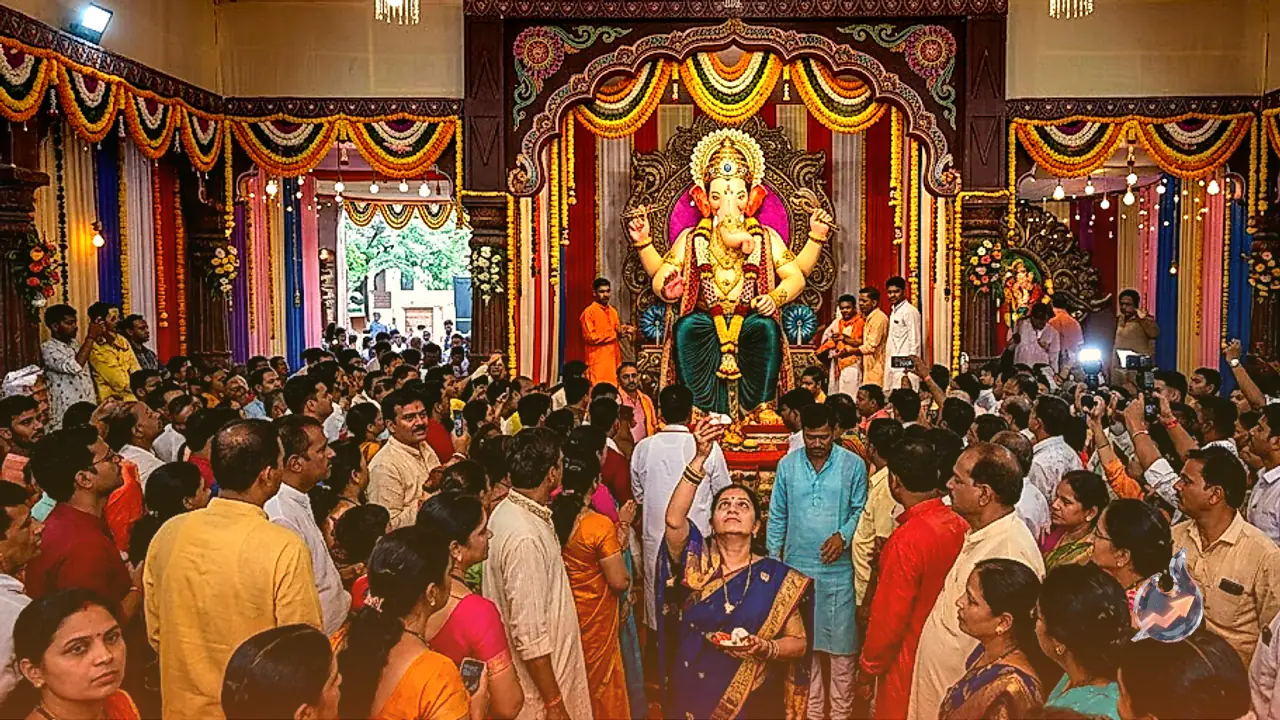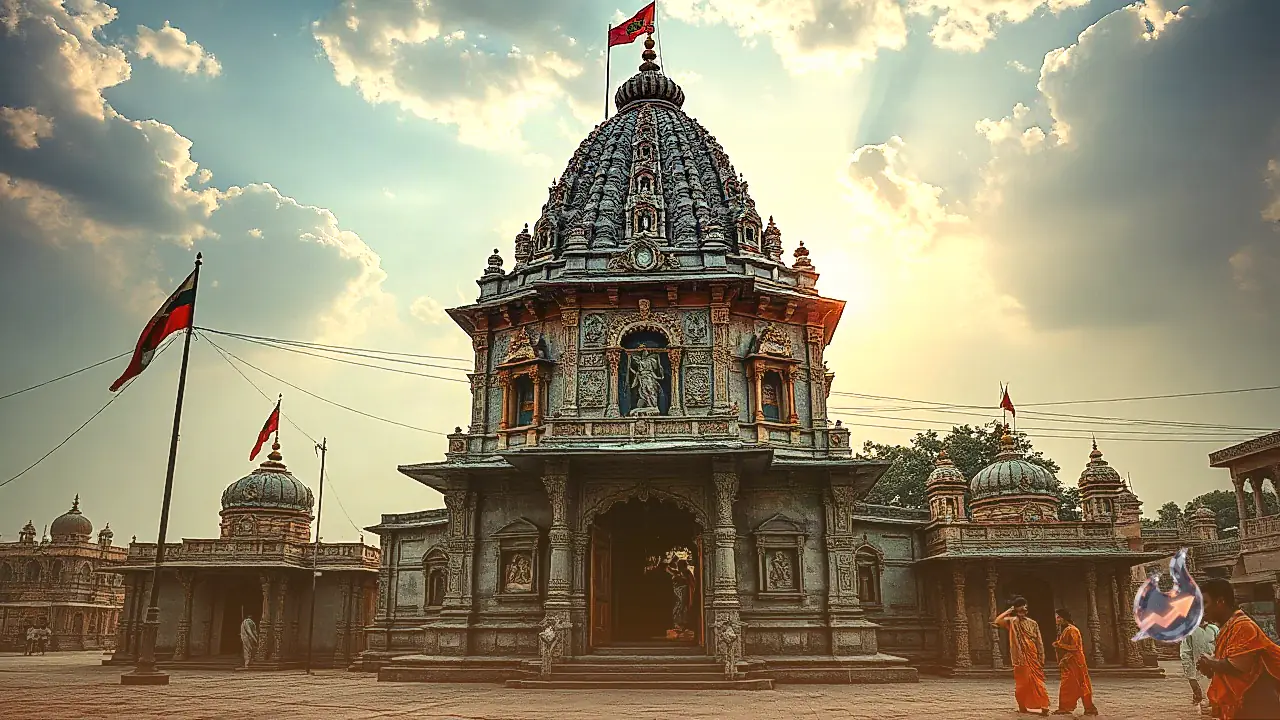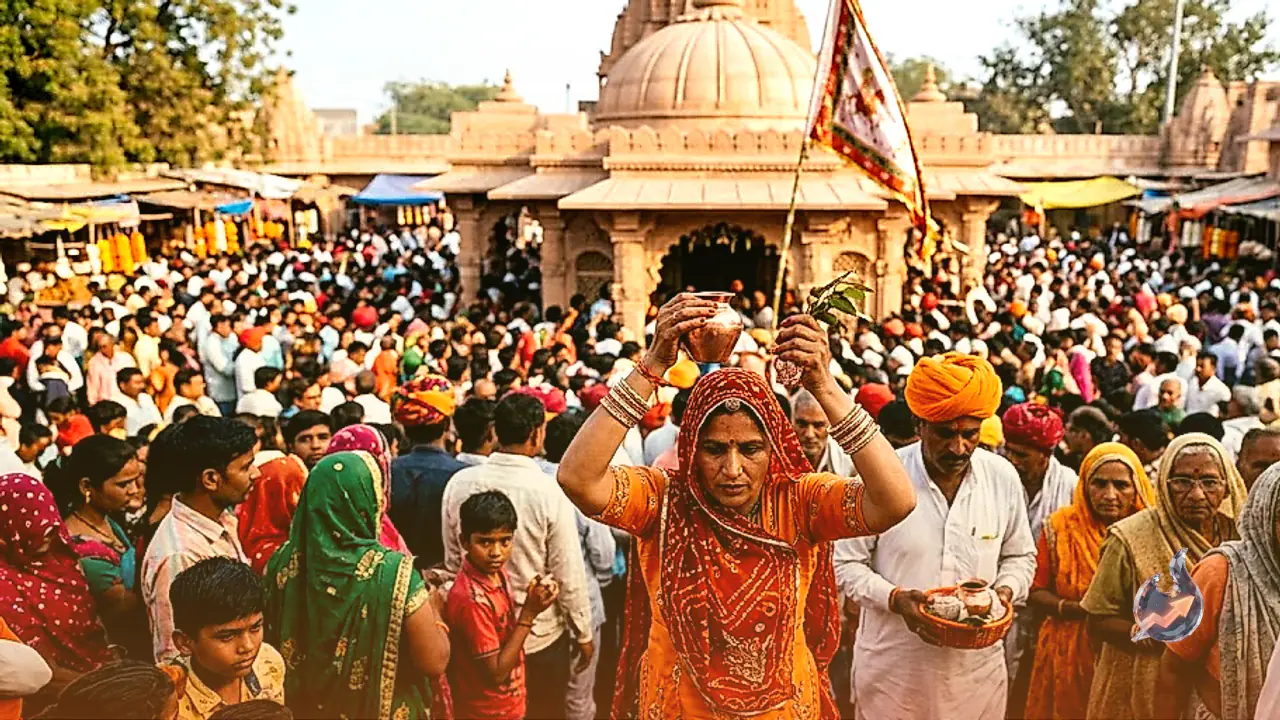



















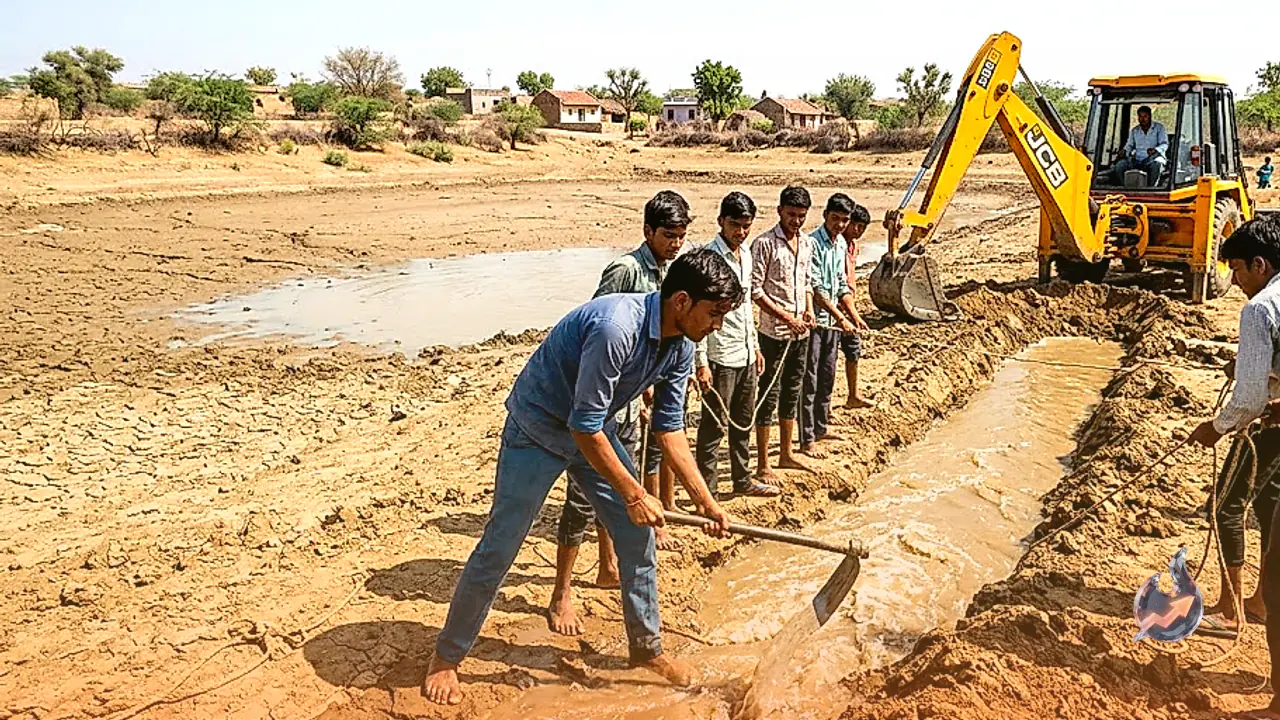

Across the country, devotees have been bidding farewell to Lord Ganesha amid festive celebrations, yet a severe dry spell posed an unexpected hurdle for villagers in Rajasthan's Pali district. The historic village of Auwa and its adjacent rural belts registered an acute deficit in rainfall this season. Due to the prolonged lack of rain, the age-old water reservoirs, ponds, and local water bodies had dried up entirely. As the auspicious time for idol immersion arrived, organizers and devotees were confronted with a serious predicament regarding where and how to immerse their idols when not a single drop of water was left in traditional reservoirs.
Severe Water Scarcity Threatens Celebrations
The total absence of water in local ponds threatened to derail the concluding rituals of the festival in the Auwa region. With natural water resources failing due to the poor monsoon, the traditional immersion ceremony appeared to be hanging in uncertainty. Rather than abandoning the rituals or surrendering to nature's harsh conditions, the local residents chose to act collectively. They resolved to find an ingenious local solution so that their revered deity could be sent off with complete religious sanctity and customary enthusiasm.
Youth Committee Takes the Initiative
Stepping forward during this critical situation, a local community group named Ganpati Yuva Mitra Mandal spearheaded the mission. Committee members Laxman Prajapat, Ramesh Choudhary, and Jitendra Suthar mobilized fellow villagers to tackle the shortage head-on. The young volunteers determined that if nature had withheld water, they would arrange it through their own community efforts. For the immersion ceremony, they designated Kadamb Nadi, a traditional reservoir situated roughly 1.5 kilometers away from the village, which lay completely dry at the time.
Excavation and Channelling Groundwater
To revive the dry water body, the villagers promptly deployed a JCB excavator machine. Working without delay, they carved out a dedicated drainage channel directing water toward Kadamb Nadi. They subsequently linked this newly dug channel to an agricultural tubewell situated at the nearby Bera Vanawa. Running the tubewell continuously for hours, they directed a steady stream of groundwater through the trench right into the dried reservoir. After persistent collective labor over several hours, Kadamb Nadi was successfully filled to capacity with ample water.
Auwa Becomes Regional Hub for Visarjan
With Kadamb Nadi brimming with water, the site has transformed into an immersion destination not just for Auwa, but also for several neighboring villages facing similar dry conditions. Devotees are now joyfully arriving in large numbers to conduct the immersion rites following all traditional customs. This proactive grassroots initiative and community teamwork have earned widespread admiration throughout Pali district, demonstrating that united community effort can overcome severe environmental obstacles.