




















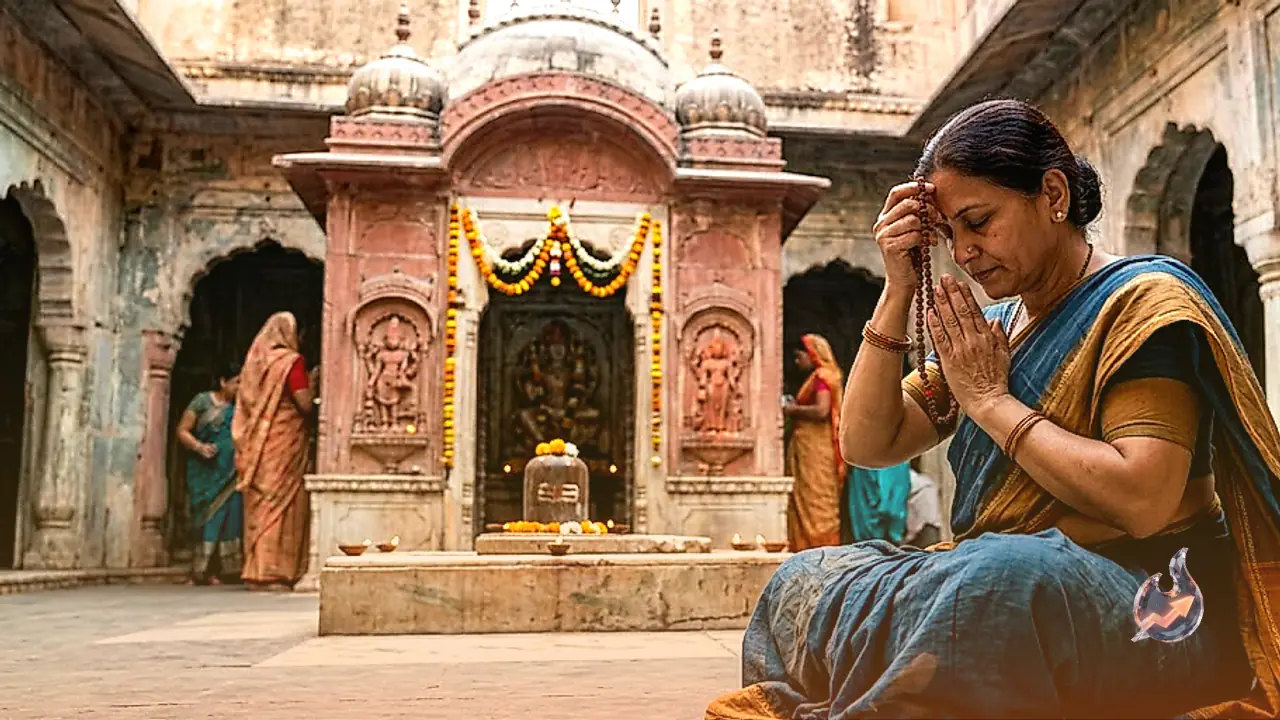

Walking through the historic walled alleys of Jaipur, stepping toward the corner of the Ajabghar path in Kishanpol Bazaar brings a sudden sense of calm amidst the surrounding market noise. Situated right within this tranquil environment is the Phansikat Mahadev Temple. This shrine is not merely a center of faith but a landmark deeply intertwined with the history and religious traditions of Jaipur. People facing hardships look upon this place as a divine court of Lord Shiva, visiting the premises to find relief from their mental distress and worries.
According to local folklore, during the princely era, serious offenders were executed by hanging from a tree located around this very spot. Accounts note that during the British administration, certain criminals were executed without the Maharaja's permission, an incident that deeply angered the royal court. As time passed, an idol of Lord Shiva was consecrated at this location, and gradually it became renowned as Phansikat Mahadev among the populace.
Another popular legend associated with the temple is widely shared among devotees. Social worker Sanjay जायसवाल recounts hearing a story from his elders about a saint who was handed a death sentence on false charges. Legend has it that right before the execution, the holy man prayed to Lord Shiva with utmost devotion. As preparations were underway to carry out the punishment, a black snake suddenly appeared at the scene, halting the execution and saving the saint's life.
Even today, numerous worshippers visit the Phansikat Mahadev Temple carrying their personal prayers. While some pray for deliverance from family troubles, others seek relief from long-standing disputes or mental stress by bowing before Lord Shiva. Many believers hold the conviction that prayers offered with a sincere heart are always heard here. This is why, despite being located in the middle of a busy commercial hub, the temple witnesses a steady stream of visitors.
Amid modernity and rapidly changing urban life, the public faith tied to this temple remains steadfast. During the holy month of Sawan, special religious events are organized within the temple grounds, drawing increased numbers of devotees and creating an atmosphere of deep devotion to Shiva. Through processions and rituals like Sahasraghat, worshippers honor Lord Shiva. For local residents, these events are not just religious programs but a medium to carry forward age-old traditions and communal faith.
The festival of Maha Shivaratri brings immense enthusiasm to the Phansikat Mahadev Temple, where a large multitude of devotees arrive to perform Jalabhishek and offer prayers. Followers pray for their families' peace and well-being alongside the safety and prosperity of society at large. Locals often offer prayers to curb crimes like theft and robbery while fostering mutual brotherhood. Thus, the faith surrounding the temple extends beyond personal wishes to encompass social peace and harmony.