






















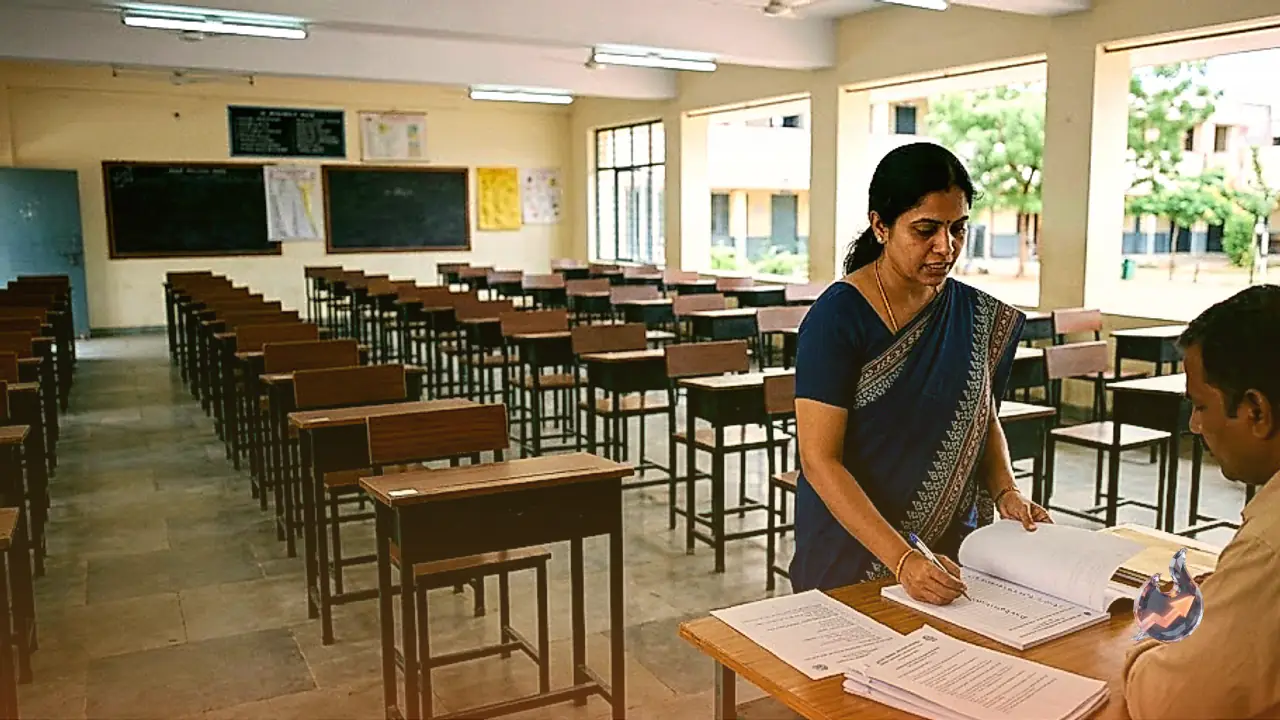

Administrative and educational preparations are officially underway for the secondary and senior secondary examinations scheduled by the National Institute of Open Schooling for October 2026. As part of these arrangements, authorities plan to establish twelve government schools as designated examination centers across five key regions within the Nagaur and Didwana-Kuchaman districts. The institute has already forwarded a formal proposal regarding these testing venues to the Rajasthan education department, which has subsequently initiated the process of inviting applications from government institutions to ensure all operational requirements are met well in advance.
Official Directives And Departmental Action
The office of the secondary education director issued formal instructions on August 24 to all relevant administrative officers, directing them to complete all necessary actions concerning the establishment of the testing venues. Following these directives, the education department accelerated efforts to gather operational details from the proposed schools and launched the application workflow. The primary objective emphasized by the department is to complete every logistical arrangement ahead of time so that candidates appearing for the assessments in October do not encounter any hurdles or inconveniences during the examination days.
Regional Distribution Of Centers And Candidates
According to the location roster compiled by the institute, examination venues have been proposed across five distinct regions within the Nagaur and Didwana-Kuchaman territories. The utilization plan outlines the requirement for one center in Didwana, two in Kuchaman City, four in Lunwa, one in Molasar, and four centers in Riyan. Across these five designated areas, a total of 3,089 examinees have been accounted for, necessitating the establishment of the twelve proposed venues. Final allocations will be determined based on the actual candidate count and the specific regional demand.
The location list provided by the organizing body details both the student volume and facility requirements for each sector. Building on this data, the education department will now inspect the available infrastructure, facilities, and mandatory standards at the nominated government schools. Eligible institutions will then submit their applications, which will subsequently be routed back to the institute for review. The ultimate decision on which facilities secure designation as official testing locations will rest on administrative necessities and compliance with established benchmarks.
Infrastructure And Security Requirements
Government schools hoping to host the upcoming assessments must meet stringent technical and security standards. The presence of functional closed-circuit television cameras is mandatory to monitor the examination halls and ensure student safety. Additionally, institutions must possess reliable internet connectivity, heavy-duty printing equipment, photocopying machines, and adequate power backup systems to handle potential disruptions. Authorities have mandated that all video recordings captured by the surveillance cameras during the testing periods must be preserved securely to maintain institutional integrity.
Final Selection And Administrative Outlook
The organizing body has explicitly clarified that merely submitting an application does not guarantee that a school will be allotted center status. Venue selection will weigh administrative priorities, security infrastructure, available resources, and regional necessity alongside strict testing standards. Consequently, applicant schools must ensure all prescribed setups are fully functional to qualify. Through these coordinated administrative efforts, authorities aim to provide local testing accessibility for the 3,089 candidates while maintaining an organized and secure environment for the autumn board assessments.