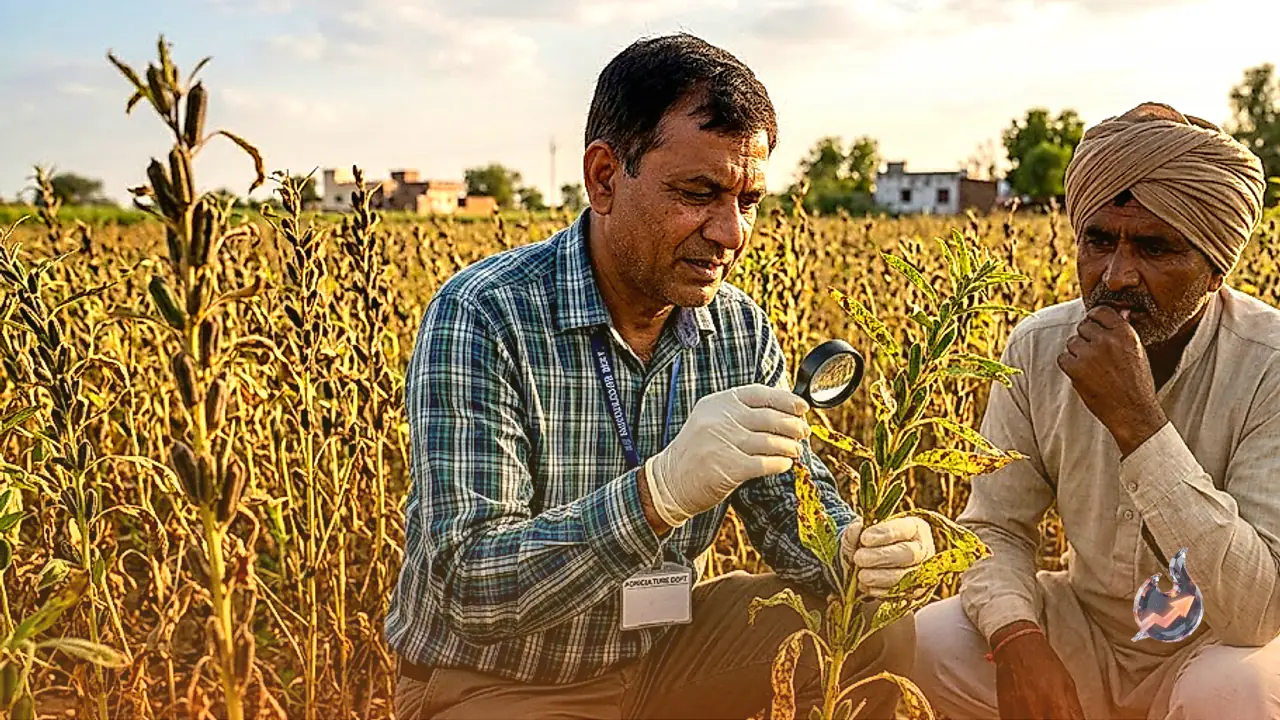























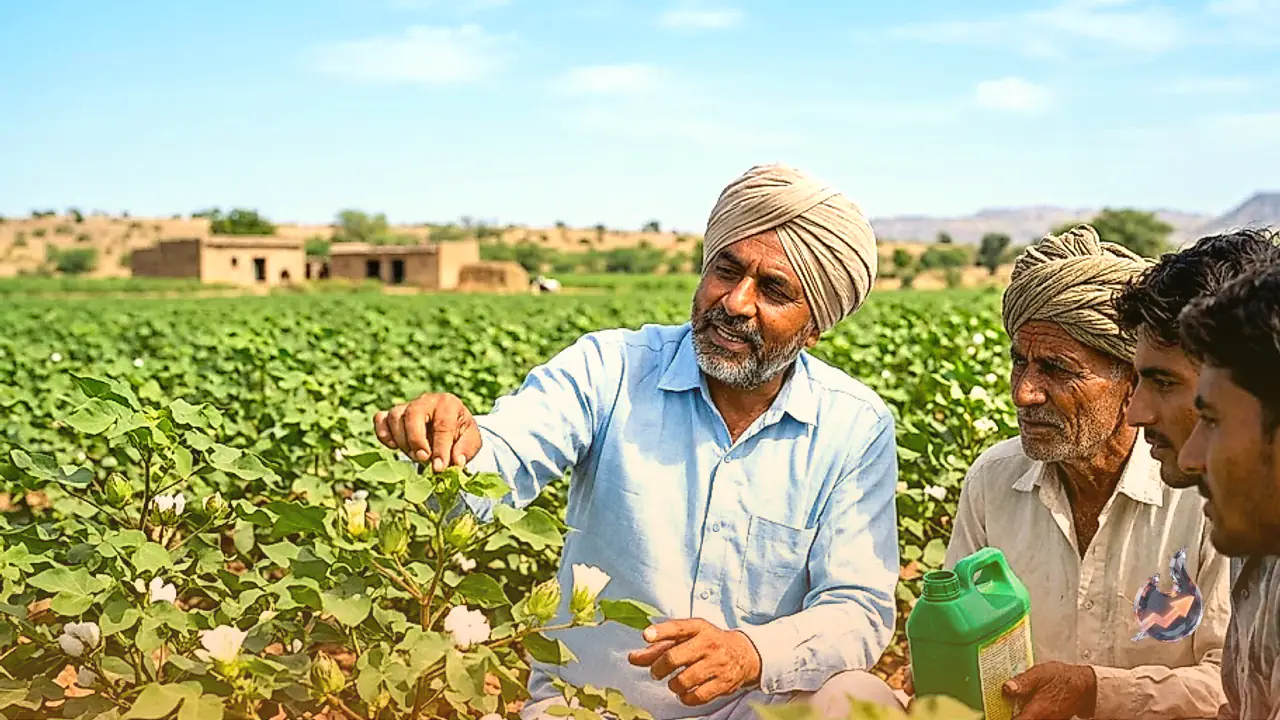

Cotton cultivation in the Nagaur district of Rajasthan serves as a primary source of livelihood and income for local farmers. Fields across the region are currently experiencing active vegetative growth, marking the onset of the flowering and boll formation stages, which are considered the most critical phases of the crop cycle. Excessive shedding of flowers and buds during this sensitive period directly curtails overall crop productivity. According to agricultural expert Bajrang Singh, flower dropping is primarily triggered by nutrient deficiencies. Furthermore, irregular irrigation schedules, high ambient temperatures, pest infestations, and environmental stress aggravate this condition, leading to substantial yield losses if left unaddressed.
Hormonal Balance and Chemical Spray Management
To combat flower drop effectively, agricultural expert Bajrang Singh recommends targeted hormonal intervention and crop management strategies. Farmers noticing early signs of flower shedding should apply a foliar spray of Acimone or Planofix. The recommended dosage is 2.5 ml of the chemical formulation dissolved per 100 liters of water. This specialized treatment helps maintain optimal hormonal balance within the plants, significantly reducing the probability of flower and bud abscission.
Application timing plays a crucial role in maximizing the efficacy of the spray. Farmers are advised to execute spraying operations exclusively during the early morning or late evening hours. Spraying during intense midday heat reduces chemical effectiveness and increases the risk of foliar injury. Conducting the application during cooler periods ensures better absorption by the foliage, protecting the plants from physiological stress while providing maximum defense against flower drop.
Foliar Nutrition for American Narma Crops
For growers cultivating American Narma cotton varieties, the peak flowering phase demands dedicated nutritional care to support heavy boll load. Expert guidance suggests applying a 2 percent solution of Potassium Nitrate as the initial foliar spray during this crucial growth phase.
The application of Potassium Nitrate delivers readily accessible essential nutrients directly to the plant canopy, accelerating the development of healthy flowers and bolls. This timely nutritional boost enhances plant vigor, improves stress resistance, and enhances the overall yield potential. Combining balanced fertilization with timely field interventions offers a highly profitable approach for regional farmers.
Pest Control and Weed Management Strategies
Pest attacks pose another major threat to cotton yields in Nagaur. Agricultural expert Bajrang Singh highlighted that sap-feeding and chewing pests such as the pink bollworm, whitefly, thrips, and aphids can inflict severe damage on the crop. Rain-fed conditions and high humidity often trigger rapid pest multiplication, necessitating frequent and diligent field monitoring during the monsoon season.
Early diagnosis of pest symptoms enables farmers to implement prompt control measures before widespread damage occurs. Maintaining effective weed control, balanced fertilizer applications, and regulated irrigation schedules helps sustain robust plant growth. Farmers must also avoid over-applying nitrogenous fertilizers, as excessive nitrogen supply fosters lush vegetative growth at the expense of floral stability, thereby worsening flower drop.
Irrigation Control and Moisture Retention
Maintaining a stress-free environment for plants from floral initiation through boll maturity is vital for achieving high yields. Soil moisture must be carefully balanced to prevent root stress. Adequate drainage mechanisms must be maintained to safeguard fields against waterlogging during heavy rainfall spells.
Conversely, during dry spells or drought-like conditions, farmers should provide timely supplemental irrigation to prevent moisture stress. Any visible micronutrient deficiency symptoms should be corrected immediately through soil or foliar amendments. Keeping plants healthy and stress-free encourages profuse flowering and maximum boll retention per plant.
BT Cotton Economics in Nagaur: Sowing, Varieties, and Yields
BT cotton is extensively grown as a commercial cash crop across Nagaur district. The region's sandy loam soil and favorable climatic conditions provide an ideal environment for high-density cotton production. By adopting micro-irrigation systems such as sprinkler or drip irrigation, farmers in the region are generating substantial net profits ranging between Rs 1.5 lakh and Rs 2 lakh per hectare.
The optimal window for sowing BT cotton in this region falls between April 15 and May 15. The recommended seeding rate is approximately 3 kg of certified BT cotton seeds per bigha. High-yielding varieties most widely planted across Nagaur and adjacent farming belts include Rashi Jet, Surpass 77, US 51, and Tata Diggaj. Regular monitoring and adherence to scientific crop advisories enable farmers to mitigate risks associated with sudden weather shifts or prolonged cloudy conditions, securing high yields and optimal economic returns.