



















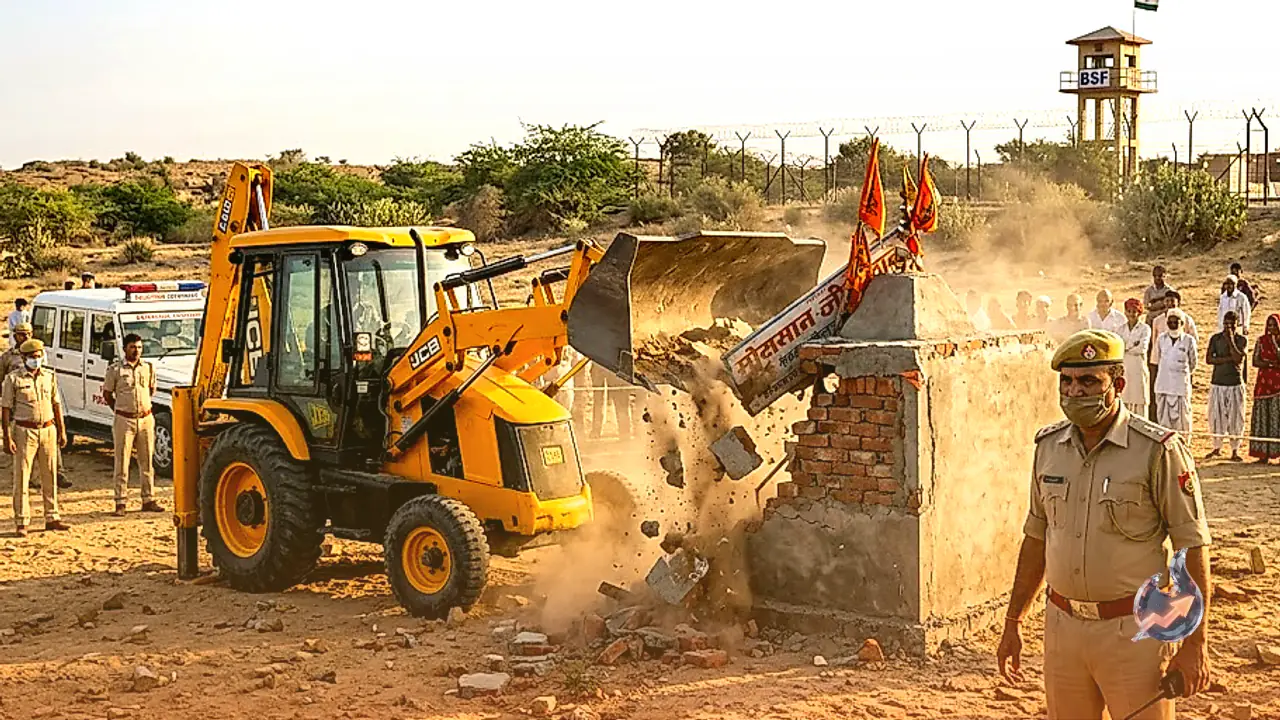

Bulldozers are rolling through border villages along Rajasthan's international frontier with Pakistan, and the demolition drive has now spread well beyond where it began. After Barmer, machines moved into Jaisalmer and Bikaner districts this week, flattening structures built without permission on government land. On Thursday, illegal religious structures and other encroachments standing on state land in the Ramgarh and Nachna belt of Jaisalmer were pulled down, while a parallel operation cleared encroachments in the Khajuwala, Pugal and Chhatargarh areas of Bikaner district. A large contingent of police and administrative officials stayed stationed at every site through the exercise, ready to step in if the demolitions triggered any trouble. What started as action confined to one district has, within weeks, widened into a coordinated sweep covering almost the entire length of the state's border with Pakistan.
The Order to Clear a 50-Kilometre Buffer
The trigger for all this goes back roughly a month, to an order from the Union Home Ministry directing that every kind of encroachment within 50 kilometres of the India-Pakistan border be cleared out, citing security concerns. A 50-kilometre buffer strip is being treated as sensitive enough that no unauthorised structure, religious or otherwise, is meant to remain standing inside it. Within that band in the Jaisalmer and Barmer border belt, officials found not just ordinary encroachments but a large number of mosques and madrasas that had come up without any authorisation. Five Rajasthan districts, Barmer, Jaisalmer, Bikaner, Phalodi and Sri Ganganagar, sit along this frontier, across which the India-Pakistan international boundary in Rajasthan runs for 1070 kilometres, making this one of the longest stretches the drive has to cover.
From Barmer's Courtroom Fight to a Green Light for Security
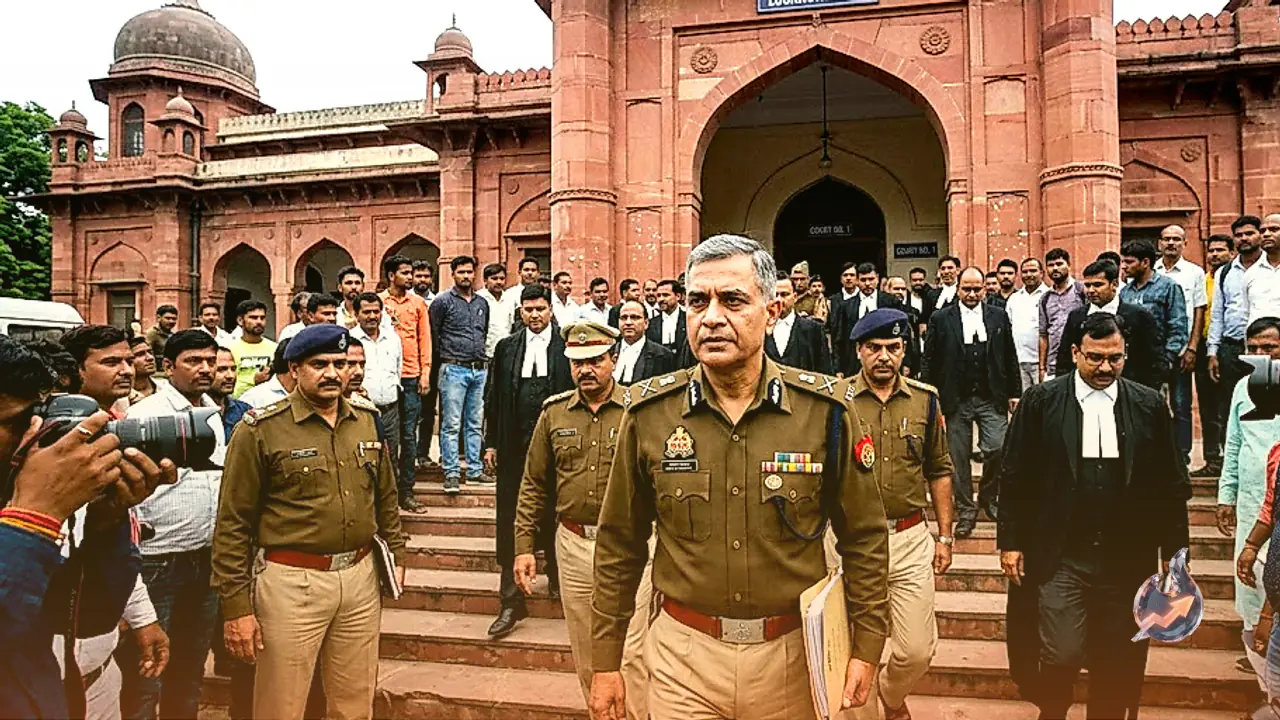
Officials named the drive Operation Border Clean, and the bulldozers first rolled into Barmer's border belt, knocking down several religious structures there, a move that drew some local pushback. Those affected then argued their case in terms of religious freedom and moved the Rajasthan High Court, filing petitions to halt the demolitions. On Thursday, the court threw out those petitions, ruling that the country's security takes precedence over any religious identity. That verdict cleared the administration to press ahead with removing encroachments across the border belt without further legal hurdles, effectively giving officials a green light to extend the campaign into Jaisalmer and Bikaner the same day.
Ramgarh, Nachna and Tanot Feel the Bulldozers
With the court's backing secured, action resumed the same day in the Ramgarh and Nachna sectors, where illegal religious structures on government land were torn down. The encroachments removed sat anywhere between 20 and 50 kilometres from the border, and security agencies stayed on alert throughout the operation. In Jaisalmer's Nachna area alone, around two dozen encroachers had already been served notices before the bulldozers arrived. In Ramgarh's Ghotaru area, an illegal religious structure enclosed within a boundary wall on two bighas of government land, land that had originally been allotted to families displaced by the Pong dam, was also demolished. In the Tanot sector, an illegal madrasa met the same fate.
Bikaner's Own Tally: 80 Encroachments Down
Bikaner's share of the operation was larger still: the forest department tore down 80 encroachments across the Khajuwala, Pugal and Chhatargarh areas within 50 kilometres of the border there. Local residents protested strongly as the demolitions proceeded, but with heavy security force deployment on the ground, their objections made no difference. Sources indicate this round of Operation Clean will run for three more days, with police and administrative teams arriving at each new site fully prepared to carry out further clearances.