























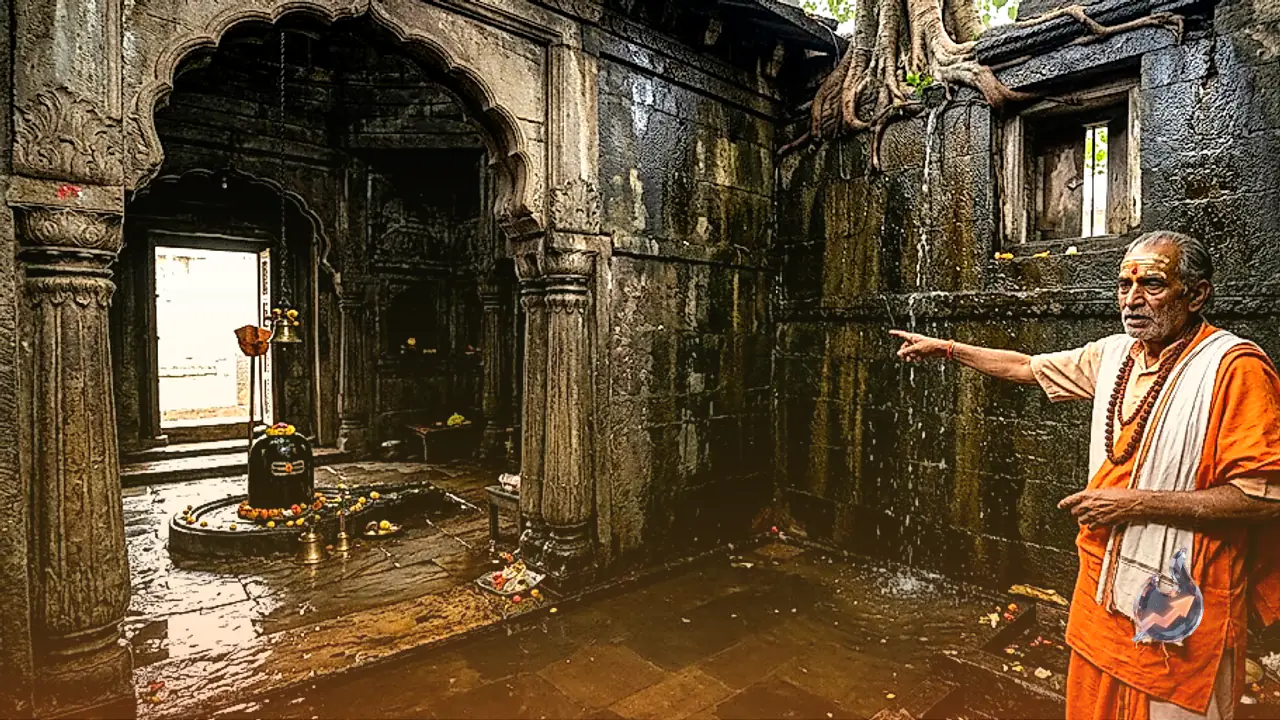

Questions are being raised regarding the upkeep and structural safety of the ancient Baba Bageshwar and Baneshwar temples, which form the historic and religious identity of the Bageshwar district. Amid continuous rainfall, water streams have started reaching inside both temples, creating severe waterlogging within the premises. This situation has heightened anxiety among the priest families and devotees regarding the safety of the ancient structures.
Water Seepage Threatens Ancient Stones
Temple priest Bhagwat Rawal stated that water is seeping inside from the roof and other parts of the temple during the rains. He explained that the issue is not limited to temporary waterlogging alone, as prolonged water leakage can adversely impact the ancient stones and other structural components. He emphasized the urgent need for timely conservation and specialized treatment to prevent long-term damage.
Dangerous Growth of Peepal Trees
The priest family has also expressed deep concern over peepal trees growing on the roof and structural walls of the temple. They noted that these trees have grown quite large in several places. Due to thick and deep roots, their expansion poses a serious threat of creating cracks or causing other structural damage to the ancient architecture. If these trees are not removed scientifically and the affected areas treated promptly, the situation could escalate into a major crisis.
Lack of Official Inspection
Bhagwat Rawal mentioned that he has been trying to contact Archaeological Department officials for nearly two months through phone calls and WhatsApp to apprise them of the temple's condition. He has repeatedly urged officials to visit the site and initiate necessary preservation work. However, according to the priest family, no official has visited the location for an inspection yet. Local residents emphasize that the Bageshnath temple is a vital center of the region's religious and cultural identity.
Significance at the River Confluence
Situated in the confluence area of the Saryu and Gomti rivers, this temple serves as a major center of faith for pilgrims arriving from across the country. The nearby Baneshwar temple is also an integral part of the region's ancient religious heritage. Protecting the architecture of these temples is crucial not only from a religious standpoint but also for preserving historical and archaeological value.
Urgent Appeal for Expert Intervention
The priest family has demanded that the Archaeological Department conduct an immediate on-site inspection, investigate the root causes of water seepage, and carry out necessary treatments under expert supervision. They also urged a scientific resolution to the potential damage caused by tree roots on the roofs and walls, ensuring these ancient monuments are protected from permanent damage caused by time and weather.