
















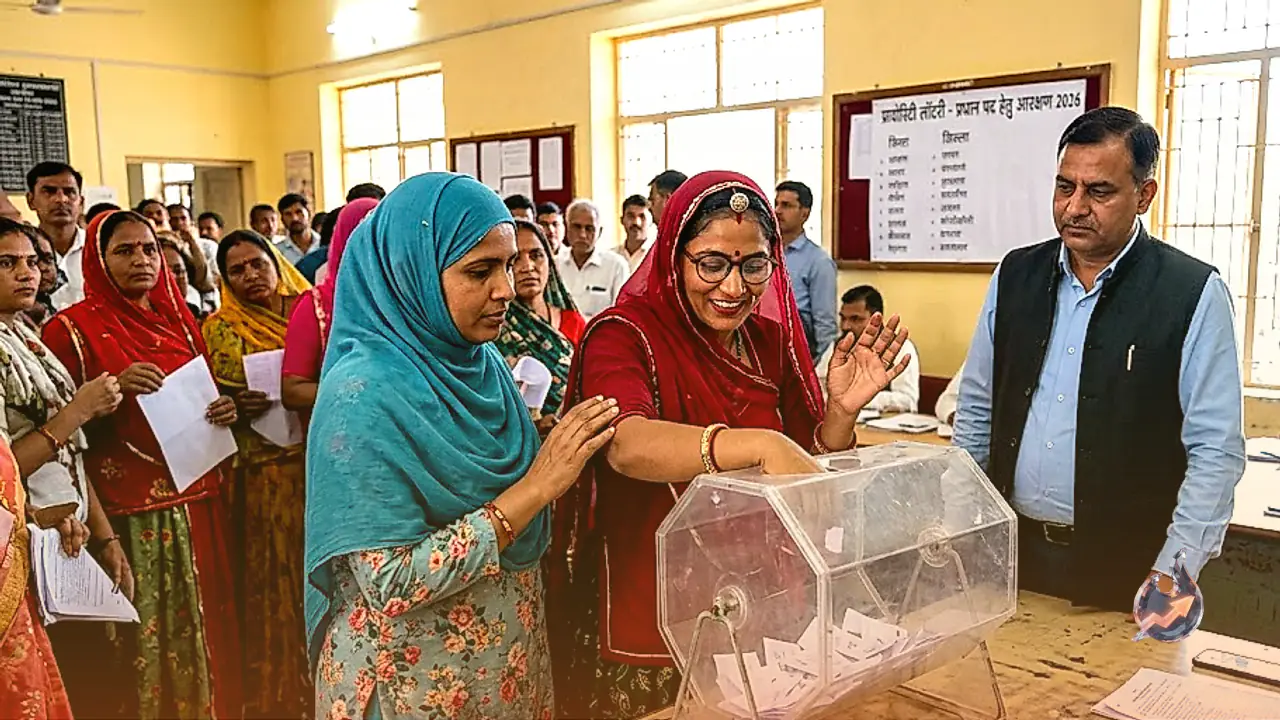

Electoral activity across Rajasthan is rapidly shifting from urban centres to rural belts following the near-total completion of civic body polls. A critical phase for the upcoming Panchayati Raj Elections 2026 unfolded on Wednesday as district headquarters finalised the reservation status for Pradhan posts through an official lottery mechanism, establishing clear boundaries for prospective candidates.
Reservation Breakdown for Jaipur District's 22 Samitis
In Jaipur district, the administrative framework for 22 Panchayat Samitis has been established, defining the electoral landscape for local leadership. Out of the 22 Pradhan positions, 4 have been reserved for Scheduled Castes (SC), 3 for Scheduled Tribes (ST), 4 for Other Backward Classes (OBC), and 11 allocated to the general category. In accordance with state statutory norms, half of all positions across categories are strictly reserved for women candidates.
Seat Allocations for SC and ST Categories
The four Panchayat Samiti Pradhan posts designated for the Scheduled Caste category in Jaipur are Kotkhawda, Tunga, Rampura Dabri, and Andhi. Within this group, Rampura Dabri and Kotkhawda have been specifically marked for SC women. Meanwhile, the Scheduled Tribe category accounts for three Samitis, namely Chomu, Amarsar, and Kishangarh Renwal, with Amarsar explicitly assigned to an ST woman representative.
OBC and General Category Configurations
The Other Backward Classes quota encompasses Jobner, Madhorajpura, Mauzamabad, and Sanganer. Among these, Mauzamabad and Jobner will see women Pradhans from the OBC category. The remaining 11 Panchayat Samitis fall under the general category, covering Govindgarh, Jalsu, Chaksu, Sambhar Lake, Jamwa Ramgarh, Dudu, Amer, Jhotwara, Shahpura, Bassi, and Phagi. Of these general category seats, six positions—Govindgarh, Jalsu, Jhotwara, Amer, Chaksu, and Dudu—are designated for general category women candidates. With these demarcations finalised, grassroots political lobbying has intensified.
Statewide Matrix Across 457 Panchayat Samitis
On the broader state level, reservation blueprints were laid out across 457 Panchayat Samitis. Under the aggregated formula, 79 Pradhan positions are earmarked for Scheduled Castes, 93 for Scheduled Tribes, and approximately 56 for Other Backward Classes. Furthermore, an estimated 228 to 229 positions remain unreserved in the open category.
Decisive Role for Women in Rural Governance
With the operational 50 percent gender quota governing Panchayati Raj institutions, women will command substantial executive power across village councils. Out of the 1.55 lakh representatives to be elected across Rajasthan, more than 77,000 seats will be filled exclusively by women. This statutory 50 percent share applies evenly within SC, ST, OBC, and open categories, ensuring parity at every tier of grassroots leadership.