






















After frying foods such as poori, pakoda, samosa, or papad, a significant amount of used cooking oil often remains in the pan. Reusing this oil repeatedly for cooking can pose serious health hazards. On the other hand, pouring leftover oil down the drain risks clogging the plumbing lines, while throwing it away feels wasteful. Finding an effective way to repurpose this excess oil is essential for every household. Fortunately, leftover cooking oil can be safely redirected into several practical maintenance tasks around the home, saving both effort and money. Here are 5 smart and effective ways to reuse leftover cooking oil.
1. Remove Sticky Sticker Residue from New Utensils
Removing price tags and brand stickers from newly purchased glass jars, plastic containers, or stainless steel utensils can be frustrating. Even when the paper tears off, a sticky adhesive layer frequently remains glued to the surface. Leftover cooking oil offers a simple solution for cleaning this stubborn glue. Apply a small amount of oil over the sticky patch and allow it to sit for 10 minutes. Then, wipe the area with a soft cloth or sponge. The oil effectively breaks down the adhesive bond, leaving the container completely clean.
2. Restore Natural Shine to Wooden Furniture
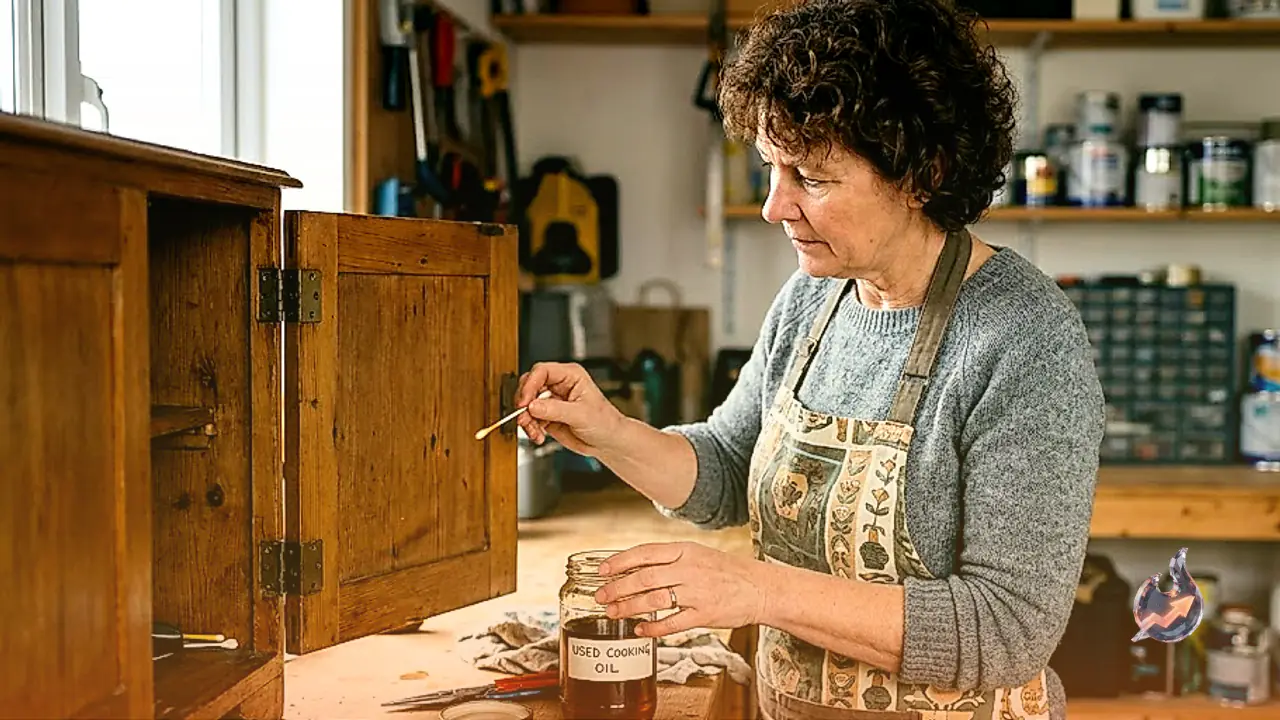
Wooden tables, chairs, cabinets, and doors tend to lose their luster over time. Restoring their original appearance does not require expensive commercial polishes. Instead, apply a tiny amount of leftover cooking oil onto a soft cotton cloth and gently rub it over the wooden surface. After applying, wipe away any excess oil using a clean dry cloth. This simple treatment hydrates the wood, removes dullness, and brings back a fresh polished look.
3. Loosen Rusted Screws, Nuts, and Bolts
Nuts, bolts, and screws exposed to moisture often develop rust, making them jam tightly and difficult to turn. Leftover cooking oil serves as an efficient lubricant in such situations. Place a few drops of oil directly onto the rusted hardware and let it soak for a short duration. The oil penetrates the metal threads, loosening the rust so that the jammed components can be unscrewed easily without damage.
4. Condition and Shine Leather Goods
Leather belts, shoes, jackets, and bags can become dry and dull over prolonged use. Rather than purchasing costly leather conditioners or discarding aging items, leftover oil can be used as a quick remedy. Dab a minimal quantity of oil onto a soft cloth and polish the leather surface with light strokes. This process restores moisture, eliminates dryness, and gives the leather items a clean, renewed luster.
5. Protect Garden Tools from Rust and Damage
Iron gardening equipment such as shears, trowels, and hand forks are prone to rusting when stored for long periods. Moisture in the air reacts with the metal, degrading the tools over time. To prevent this, apply a thin coat of leftover oil over the iron parts after each use. The oil layer forms a protective barrier against moisture, ensuring that garden tools remain rust free and functional for years.
Key Precautions for Handling Leftover Cooking Oil
Before applying leftover oil to domestic tasks, keep these important guidelines in mind. First, pass the used oil through a fine sieve or cloth to separate small food residue before storing or using it. Second, transfer the strained oil into a clean airtight bottle and store it in a cool location away from direct sun exposure. Third, avoid using oil that emits a harsh burning smell or strong rancid odor. Finally, keep in mind that repeatedly reusing cooking oil for preparing food is harmful to health. These hacks are intended solely for non culinary household tasks. If the oil has turned dark black, recycle or dispose of it safely.