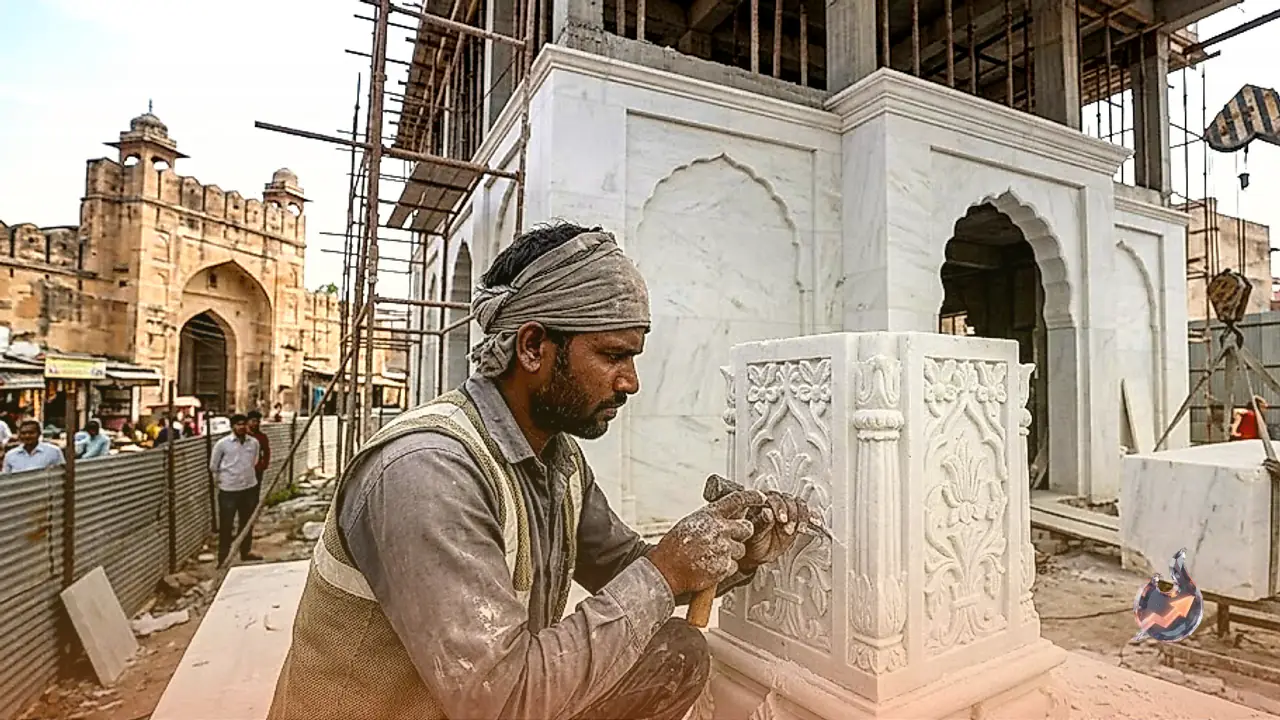


















A comprehensive redevelopment project has commenced at the historic Vijay Ganesh Temple, situated near the Fatehpuri Gate in Sikar city, Rajasthan, with a total sanctioned budget of approximately 1.25 crore rupees. Driven by a steadily rising footfall of devotees and the urgent requirement for expanded civic amenities within the complex, the ancient shrine is slated to be transformed into an imposing three-storey architectural landmark measuring approximately 33 feet in height. High-grade white marble quarried from Makrana will form the cornerstone of this major structural renovation.
The administrative team overseeing the shrine framed the expansion to address acute congestion during major religious gatherings while elevating the visitor experience. Providing expansive spaces for circumambulation and prayer alongside modern crowd-management infrastructure stands as the guiding priority. Construction teams have been assigned a strict timeline to finish all civil works on the ground level ahead of the upcoming Diwali festive season, ensuring normal daily worship remains uninterrupted as the upper levels take shape.
Artisans from Makrana to Carve Sacred Motifs
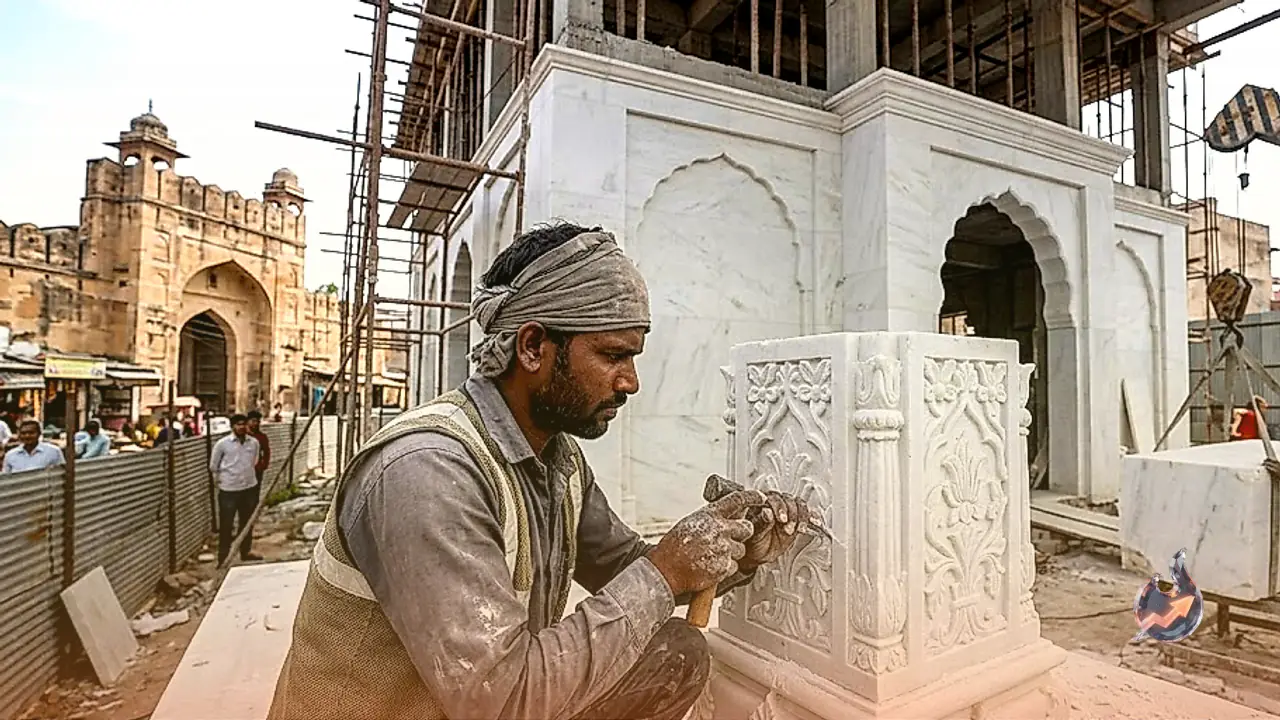
Temple priest Pawan Sharma stated that the reconstructed complex will feature comprehensive white marble cladding throughout its architectural elevations. To preserve authentic craftsmanship, slabs of original white marble are being sourced directly from Makrana. Specialized stone carvers from the same quarry region have been commissioned to chisel sacred designs, traditional religious iconography, and intricate friezes across the stone facades, embedding timeless Rajasthani temple architecture directly into the new building.
Detailing the vertical arrangement of the complex, Pawan Sharma affirmed that the original and sacred idol of Lord Ganesh will remain permanently seated at its current sanctum location on the ground floor. The layout expands vertically, with the second level dedicated to the formal enshrinement of an idol of Lord Shiva. The third tier will culminate in an ornate traditional shikhara or spire, lifting the entire sacred structure to its final towering height of roughly 33 feet above ground.
The Enduring Legend of the Clay and Dung Deity
The deepest reverence surrounding the shrine is rooted in the unique material composition of the central Ganesh deity. According to the temple mahant, the ancient idol was sculpted entirely from a sacred paste combining smooth fine clay and cow dung, rather than conventional granite, marble, or metal. The structural preservation of this non-hardened image across past decades continues to inspire deep wonder among locals. During historical monsoon seasons, heavy urban inundations routinely submerged the low-lying Fatehpuri Gate surroundings, regularly sending floodwaters spilling directly into the inner sanctum.
On numerous occasions, torrential rainfall left the idol submerged more than halfway underwater for protracted stretches. Yet, contrary to the natural tendency of unbaked clay and dung to dissolve or lose coherence in water, the deity reportedly suffered no erosion or damage whatsoever. Local worshippers came to revere this physical preservation as a divine manifestation of the deity's power, cementing the deity's reputation as Vijay Ganesh. To this day, large contingents of pilgrims from across Sikar and the wider Shekhawati hinterland undertake journeys to offer their respects before the resilient idol.
A 19th-Century Territorial Dispute and Divine Intervention
The origins of the temple are closely intertwined with local military lore from the mid-nineteenth century. According to accounts preserved by the temple mahant, an intense feud flared around 1840 between the Rao Raja Devi Singh of Sikar and Raja Puran Singh, the ruler of neighboring Kasli. During this prolonged confrontation, Puran Singh maintained a daily ritual of defiance, hurling a spear towards Nani Gate along Sikar's fortified city wall as a direct challenge of war against Devi Singh.
As hostilities escalated, Rao Raja Devi Singh ordered his artillery units to bombard Kasli with cannon fire to subdue his adversary. However, the cannonballs repeatedly failed to hit their mark, and not a single projectile could be successfully discharged into the territory of Kasli. Baffled by this inexplicable battlefield failure, the ruler consulted esteemed scholars and court astrologers to diagnose the impasse. The advisors explained that a miraculous idol of Lord Ganesh was seated inside Kasli village, acting as an invincible spiritual shield that repelled hostile attacks and guarded the populace against external harm.
Halting Chariot Marked the Sacred Ground
Upon learning the reason behind his artillery's failure, Rao Raja Devi Singh turned to Lord Ganesh, praying directly to the deity for triumph in the ongoing confrontation. Following his eventual military victory, the ruler carried the sacred Ganesh idol away from Kasli toward his seat in Sikar to venerate it properly. However, as the royal procession reached Fatehpuri Gate, the chariot bearing the sacred deity suddenly came to a complete halt, and the horses refused to take a single step further.
Interpreting the sudden immobility of the chariot as an unambiguous divine command that Lord Ganesh wished to dwell at that exact threshold, the ruler immediately ordered a temple constructed on the spot. Because the idol had bestowed decisive success in battle, it was formally venerated as Vijay Ganesh. The current 1.25 crore rupees restoration will soon unveil this sacred landmark in grand form, combining delicate Makrana stone reliefs, an upper Shiva shrine, and a 33-foot spire to welcome coming generations of devotees.