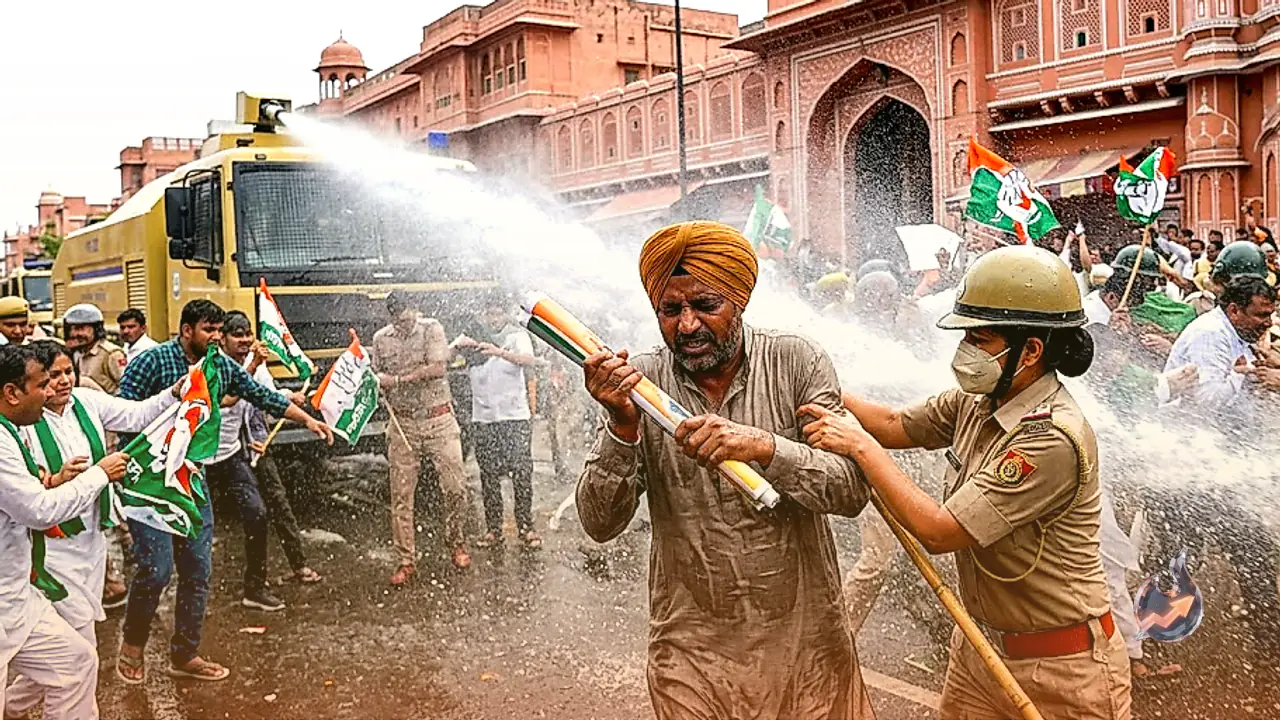














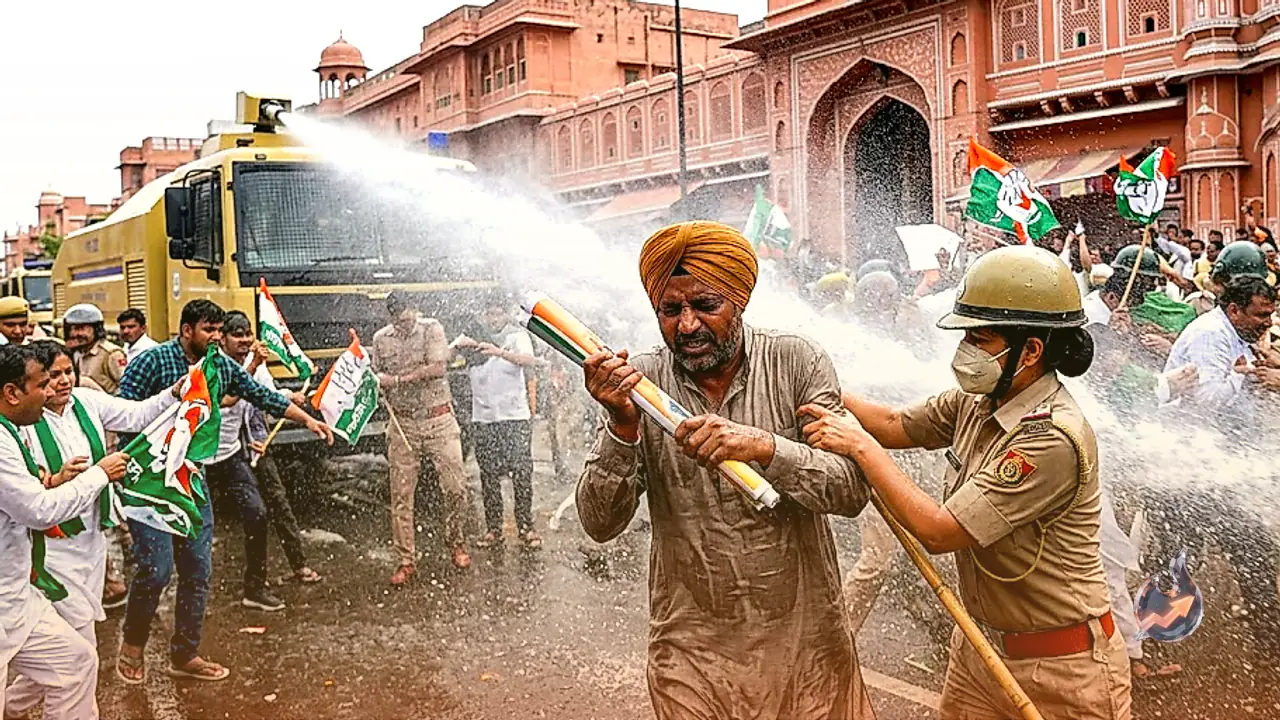

Political friction over the integrity of voter registers and election administration in Rajasthan reached the streets of Jaipur on Monday. Senior opposition figures joined hundreds of party workers in a massive demonstration, alleging large-scale voter disenfranchisement, irregularities in electoral rolls, flaws in the Special Intensive Revision process, and bias during municipal polls. As the marchers advanced toward the state election commission premises, security forces intercepted them with heavy barricades. Scuffles broke out as the crowd pushed forward, prompting police to deploy water cannons to push back the gathering, leading to the brief detention of several top political leaders.
Mass Gathering at Shahid Smarak Sparks Mobilisation
The street action was preceded by a large political rally organized at Shahid Smarak. Prominent leaders in attendance included Ashok Gehlot, party in-charge Sukhjinder Singh Randhawa, state unit chief Govind Singh Dotasra, leader of opposition Tika Ram Jully, alongside Ramkesh Meena and Amin Kagzi. Addressing the crowd, the leaders raised fundamental questions about the functioning of election machinery, the purity of voter registers, and the protection of constitutional rights. The party framed the agitation as an essential campaign against alleged systemic manipulation and vote stealing, having earlier declared their resolve to march peacefully toward the electoral commission headquarters.
Speaking from the platform, Ashok Gehlot voiced serious reservations regarding the conduct of delimitation exercises and the Special Intensive Revision initiative. He flagged growing concerns around standard election protocols and directed pointed scrutiny toward Chief Election Commissioner Gyanesh Kumar. Later sharing his reflections on social platforms, Gehlot stated that he participated in the march up to the point of court arrest. He highlighted that even while detained, party members persisted in raising pressing issues regarding the preservation of democratic norms.
Expansion of the Agitation to Rural Strongholds
State party leaders emphasized that the protest witnessed in the capital is merely the opening phase of a wider, sustained movement. Sukhjinder Singh Randhawa rallied the party cadre by affirming that they represent Rahul Gandhi's dedicated foot soldiers who refuse to yield under intimidation from the ruling dispensation. He declared that the campaign launched in the state capital would soon expand across every village and remote hamlet. He stressed that grassroots voters are entitled to transparent electoral processes and that public awareness must reach every corner of the state.
Echoing these sentiments, Govind Singh Dotasra announced that decentralized district-level agitations would follow in the coming days. Dotasra focused his critique on the specific operational aspects of the Special Intensive Revision and the broader oversight provided by election authorities. The leadership maintains that continuous scrutiny must be applied to Chief Election Commissioner Gyanesh Kumar and the decisions emerging from his office. Official administrative agencies and the governing administration, however, maintain a stance completely contrary to these accusations.
Allegations of Bureaucratic Overreach and Five Key Questions
Leader of Opposition Tika Ram Jully directed sharp criticism at the state administration, alleging deliberate misuse of government machinery to sway democratic outcomes. Jully asserted that their party commanded substantial public support and garnered higher vote tallies in statewide polling. He raised five specific queries challenging the current handling of voter roll adjustments, bureaucratic conduct, and institutional partiality. The party also renewed its accusations of unfair practices during the recent local body elections.
According to the opposition, democratic health depends strictly on whether electoral processes remain transparent and voters are fully protected from arbitrary deletions. The leadership insisted that formal representations regarding these grievances have been repeatedly submitted to election authorities without satisfactory resolution. The party underlined that unless systemic accountability is established, the legitimacy of electoral outcomes will continue to face public skepticism.
Barricade Clash, Water Cannons, and Police Detentions
Tensions peaked when the foot march progressed from Shahid Smarak toward the election commission office. Confronted by dense barricading installed along the transit route, workers attempted to force their way through. Intense jostling ensued between security personnel and demonstrators, with several activists attempting to climb over the metal structures. In response, law enforcement units triggered high-pressure water cannons, momentarily plunging the demonstration site into disarray as cold water doused the frontlines.
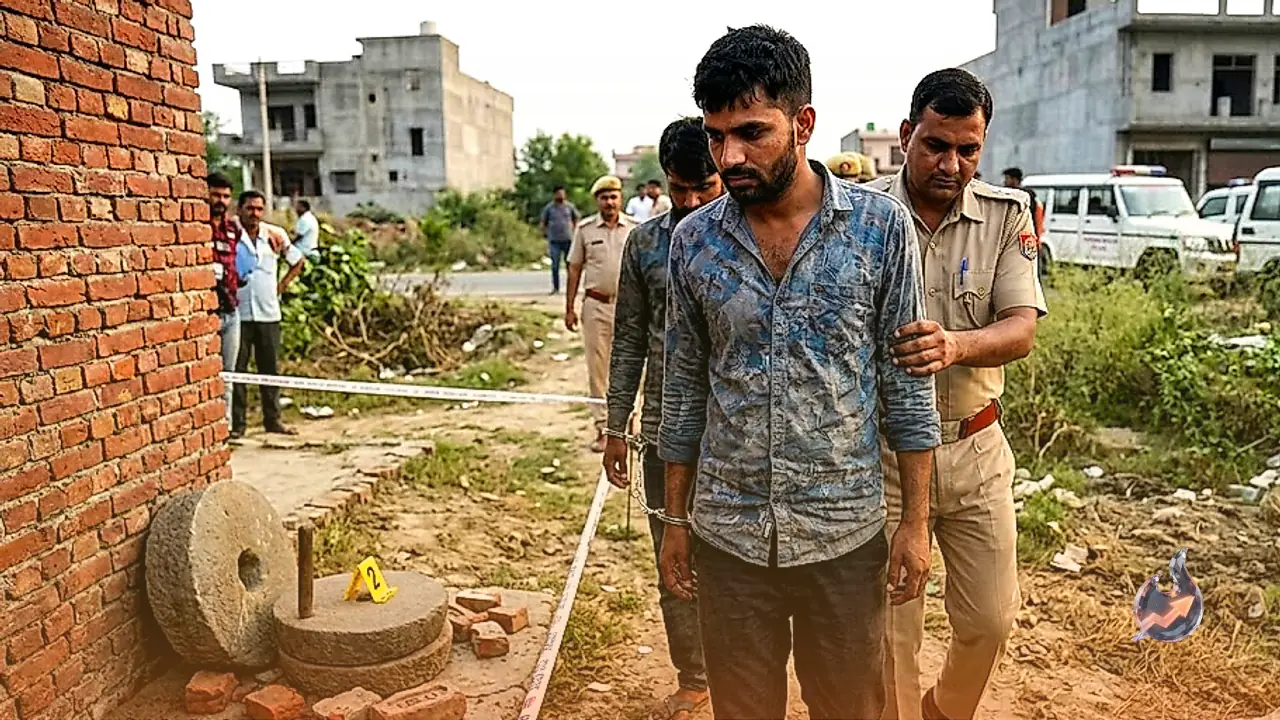
Among those caught directly in the water spray were Ashok Gehlot, Sukhjinder Singh Randhawa, Govind Singh Dotasra, and Tika Ram Jully. Police quickly cordoned off the area and took senior leaders as well as numerous party workers into custody. Detainees were placed into transport buses and police vehicles and driven to the Vidhyadhar Nagar police station, while several other demonstrators were taken to the Harmada facility. Slogans and sit-in protests continued inside the station compound until the senior leaders were released approximately an hour later. The party described the incident as an official arrest stemming from their peaceful resistance, while police maintained the intervention was strictly aimed at stopping an unauthorized assembly from breaching restricted zones.
Government Demands Hard Evidence Behind Allegations
In response to the accusations, the state government pushed back firmly against the opposition's claims. Chief Minister Bhajan Lal Sharma, speaking a day prior to the protest, called on opposition figures to place verifiable documents and empirical proof into the public domain regarding the Special Intensive Revision. The Chief Minister cautioned that casting unverified doubts upon constitutional authorities risks eroding public trust in democratic institutions.
The ruling administration underscored that questioning established election mechanisms without substantiating evidence undermines civic confidence. With the opposition determined to escalate its voter roll campaign across Rajasthan and the government insisting on rigorous proof, the standoff in Jaipur indicates that the controversy will remain a focal point of state politics well into the upcoming electoral cycle.