























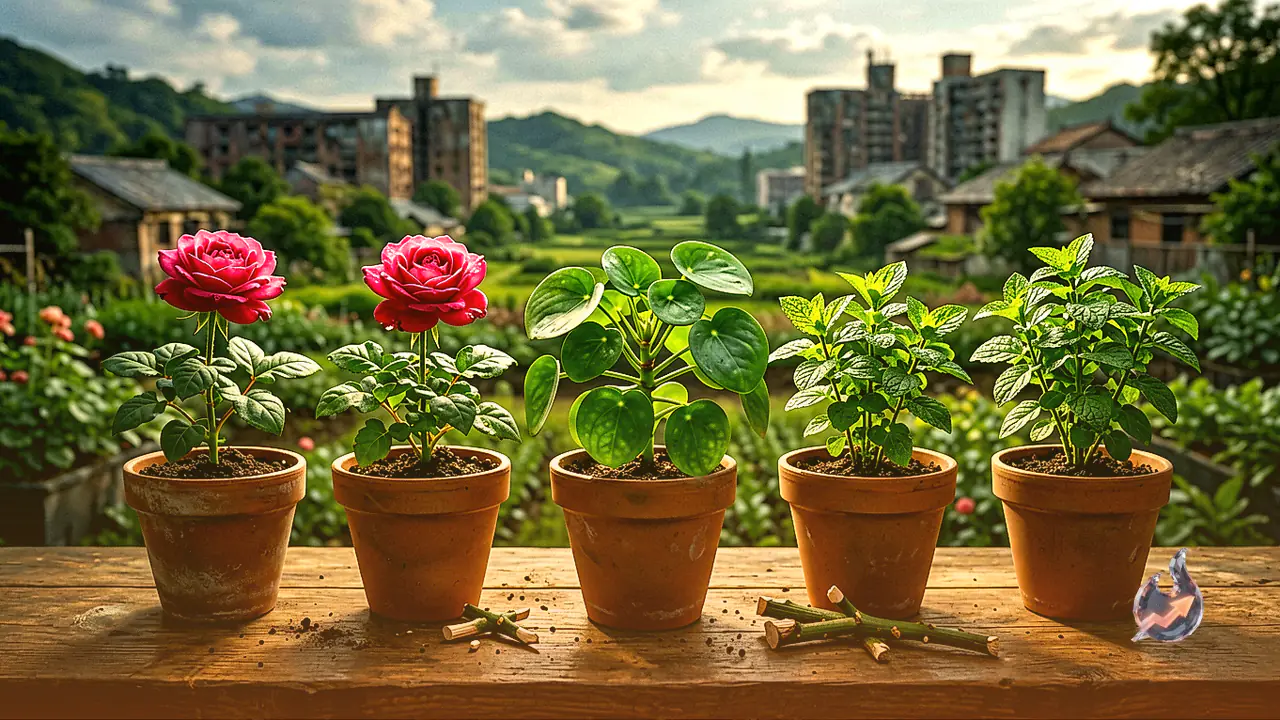

Decorating home balconies and verandas with vibrant greenery is a rewarding hobby for many nature enthusiasts. However, constantly visiting commercial plant nurseries to purchase new potted plants, seeds, or specialized growing kits can quickly become an expensive affair. Fortunately, expanding a home garden does not always require spending money. Several popular household plants can be easily multiplied using simple stem cuttings taken from existing healthy plants, completely bypassing the need for seeds. With basic care, standard soil mixtures, and proper placement, anyone can propagate new plants at home without needing specialized tools or expensive pots.
Propagating Rose and Money Plant Stem Cuttings
Rose plants are widely admired for their aesthetic appeal and fragrance, and propagating them from cuttings is remarkably straightforward. To begin, select a healthy, semi-woody branch of medium thickness from a mature rose bush. Strip away the leaves along the lower portion of the stem to ensure energy is directed toward root development rather than maintaining foliage. Insert the stem firmly into moist soil, ensuring the container allows excess water to drain freely. Place the pot in a bright area that receives plenty of indirect sunlight while protecting it from harsh direct sun rays. Under favorable temperature and moisture conditions, roots will begin to sprout from the base within a few weeks, followed by fresh green leaves.
Money plants are equally responsive to stem cutting propagation. For best results, choose a vibrant vine containing at least one or two stem nodes. Submerge the lower portion of the cutting into a clean glass bottle or jar filled with fresh water, and position it near a window receiving soft, ambient light. Within a few days, delicate roots will begin emerging directly from the nodal points. Once these roots grow strong and well-established, transfer the cutting into a pot filled with well-aerated soil. Following transplantation, water the plant consistently but moderately to avoid root saturation.
Cultivating Tulsi Varieties using Branch Cuttings
Tulsi, known for its revered cultural and medicinal properties, includes several varieties that propagate easily through stem cuttings. Cut a firm, healthy stem from a thriving plant and carefully trim off the lower foliage. The prepared cutting can be rooted either by placing it in clean water or inserting it directly into lightly moist soil. During the initial rooting phase, position the plant in a well-lit location shielded from scorching sunlight. Maintaining a steady moisture level in the soil is crucial, though waterlogging must be strictly avoided to prevent stem rot. Given proper environmental conditions, the stem will develop a sturdy root network and produce fresh leaves.
Tips for Rooting Hibiscus and Jasmine Plants
Flowering shrubs like Hibiscus and Jasmine can also be successfully multiplied using proper stem cutting techniques. Always select strong, healthy stems from mature growth rather than weak shoots. Before planting, remove the lower leaves and embed the cutting into light, moist soil mix. Careful water management is essential for these species, as excess moisture can quickly decay the cut stem. Protect the newly planted cuttings from intense direct sunlight while keeping them in a naturally illuminated environment. Root formation and new leaf growth in Hibiscus and Jasmine require patience, so maintaining consistent conditions over time is key to success.
Essential Guidelines for Soil, Water, and Sunlight Management
Multiplying existing plants through stem cuttings allows home gardeners to create a dense green oasis without incurring extra costs. Success depends on using clean containers equipped with effective drainage holes and nutrient-rich, porous soil. After inserting cuttings, keep the soil uniformly moist while strictly avoiding overwatering. Care routines should be adapted according to seasonal shifts and specific plant requirements. Provided with adequate light, balanced moisture, and gentle airflow, a modest stem cutting will steadily establish roots and transform into a flourishing new plant.