






















The monsoon season has officially intensified its grip over the desert state of Rajasthan, unleashing a wave of widespread and heavy precipitation across multiple districts early Wednesday morning. After enduring prolonged periods of suffocating humidity and scorching heat, residents woke up to a dramatically altered weather pattern. This sudden surge in monsoon activity has brought a much-needed respite, cooling down the atmosphere and completely transforming the regional climate. However, this massive weather system has proven to be a double-edged sword, bringing life-saving water for agriculture on one hand, while simultaneously triggering severe infrastructural and safety challenges in both urban centers and rural landscapes.
Severe Waterlogging Paralyzes Ajmer
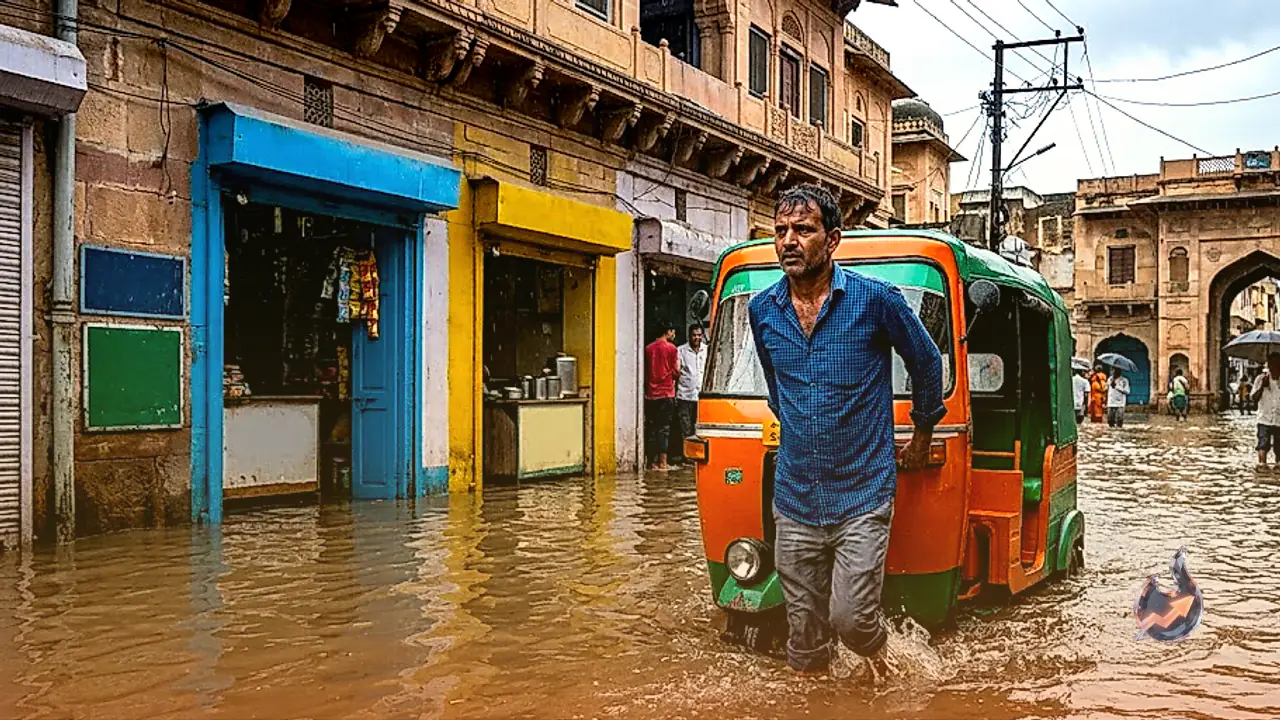
In the historic city of Ajmer, the impact of the reinvigorated monsoon was particularly pronounced. A relentless, heavy downpour lashed the city right from the early hours, fundamentally shifting the day's atmospheric dynamics. The torrential rain provided immense relief to the local population, who had been grappling with oppressive, sticky heat for several weeks. The sudden drop in temperature created a highly pleasant and refreshing environment. Nevertheless, the sheer volume of water quickly overwhelmed the city's drainage infrastructure. Continuous rainfall led to severe waterlogging across numerous low-lying residential and commercial neighborhoods. Key arterial roads were inundated, which severely disrupted the daily commute and overall traffic movement. Motorists and two-wheeler riders found themselves navigating through deeply flooded streets, facing significant mechanical troubles and delays as their vehicles struggled against the rising water levels.
Beyond the immediate urban chaos, the heavy precipitation holds a highly positive long-term outlook for Ajmer's crucial water bodies, specifically the iconic Anasagar Lake. Environmental experts and local authorities are highly optimistic that the continuous inflow from the surrounding catchment areas will substantially elevate the lake's receding water levels. This anticipated improvement in the water reservoir is critical for maintaining the region's ecological balance and securing future water supplies. Furthermore, the widespread rain has acted as a vital lifeline for the city's vulnerable stray animals and bird populations. Parched from the severe summer heat, these animals finally found easily accessible drinking water and cooler resting spots, adding a layer of ecological relief to the human joy witnessed across the city.
Rivers Breach Causeways in Baran
The situation escalated into a hydrological challenge in the Baran district, where continuous and heavy rainfall forced numerous seasonal rivers and local streams to overflow their banks. The sheer intensity of the downpour in specific blocks, notably the Chhipabarod and Chhabra regions, resulted in massive volumes of water aggressively flowing over several low-level causeways, locally known as rapats. The swelling water bodies created hazardous conditions for rural transit. In the town of Harnawadashahji, the rising currents crested over a crucial local bridge, forming a dangerous sheet of fast-flowing water. This alarming development prompted authorities to issue strict warnings, urging residents to exercise extreme caution and avoid crossing submerged structures to prevent accidents.
Highlighting the severity of the weather event in Baran, the local administration reported that the district had recorded an impressive average of 49 mm of rainfall within a concentrated 24-hour window. This substantial accumulation of precipitation inevitably led to widespread waterlogging in the district's vulnerable, low-lying areas. Residents in these neighborhoods faced challenging circumstances as floodwaters encroached upon their properties, necessitating urgent civic intervention to pump out the stagnant water and restore normalcy to the affected households.
Lifeline for Agriculture in Bundi
Further illustrating the expansive reach of the weather system, the Bundi district also experienced a rejuvenating start to the day. Heavy showers began coinciding with the first rays of the morning sun, sweeping across the main city and extending deep into the surrounding rural territories. The abrupt weather transformation shattered the grip of the prevailing severe heatwave, enveloping the district in a cool, comforting embrace. The atmospheric shift not only brought immediate physical comfort to the residents but also dramatically improved the overall mood and energy of the local communities.
For the agricultural backbone of Bundi, this timely rainfall is being celebrated as an absolute blessing. Farmers are expressing immense relief and optimism, viewing the downpour as a critical lifeline for their standing Kharif crops. The timely arrival of this moisture is expected to be incredibly beneficial for the current agricultural cycle. Experts note that the deep soil penetration from the heavy showers will significantly increase soil moisture retention, which is a fundamental requirement for the robust growth and development of the crops. This natural irrigation drastically reduces the financial burden on farmers who would otherwise rely on expensive artificial watering methods, setting a positive stage for a potentially bountiful harvest season.
Tragic Lightning Strike in Kota
Tragically, the fierce weather conditions were not without fatal consequences. A deeply saddening incident was reported from the Kota district, underscoring the lethal power of monsoon storms. In the jurisdiction of the Ranpur police station, a sudden and violent lightning strike claimed the life of a young man. The deceased victim was quickly identified by authorities as Neeraj, a resident of the Cable Nagar locality. According to initial reports, the young man was simply walking on the roof of a building when the fatal bolt of lightning struck from the turbulent skies. The abruptness of the strike left absolutely no time for emergency response or medical intervention.
Following the devastating incident, local police units immediately rushed to the location to secure the area and initiate a formal investigation into the circumstances surrounding the unnatural death. As the monsoon establishes its firm presence across Rajasthan, the varied impacts serve as a stark reminder of nature's dual capacity. While the rains have successfully mitigated the oppressive heat and provided an essential boost to the agricultural sector, the simultaneous threats of urban waterlogging, rapidly overflowing water bodies, and fatal lightning strikes necessitate a heightened state of public vigilance. The administrative machinery remains on high alert, continuously monitoring sensitive zones and advising the population to stay safe while the state navigates this active phase of the monsoon.