



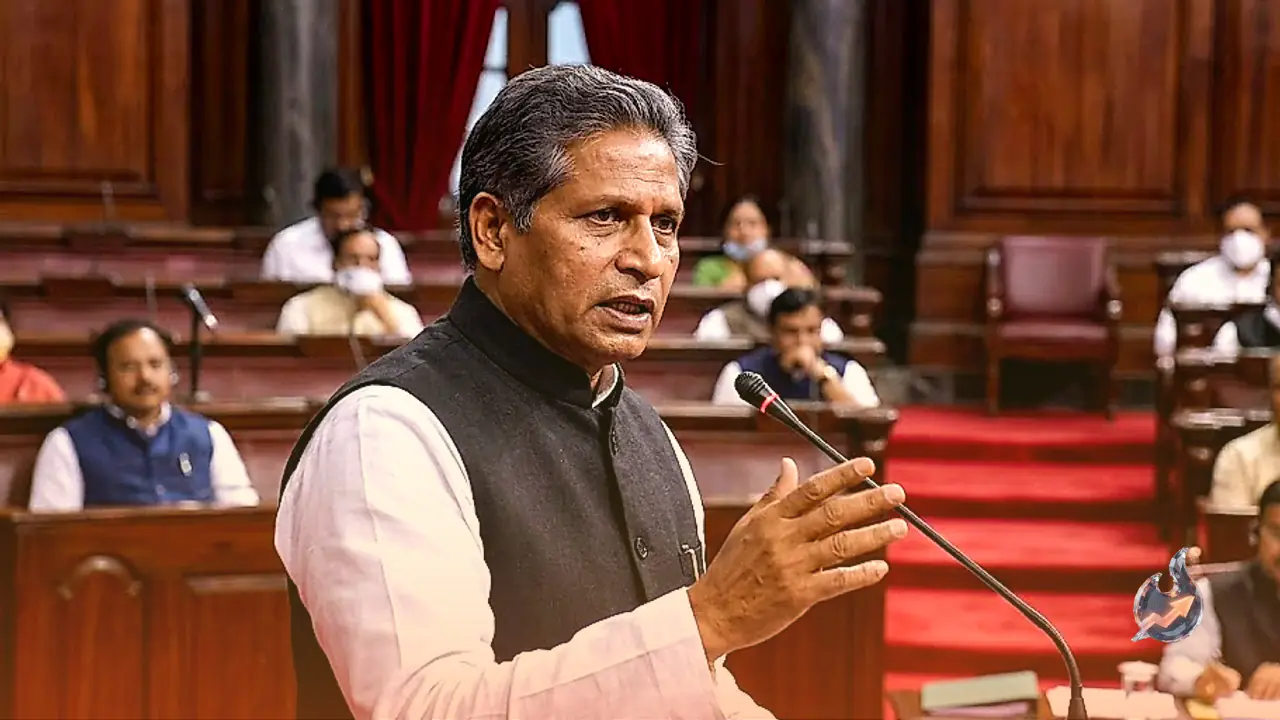





















Amid the increasing integration of Artificial Intelligence (AI) into the legal domain, Chief Justice of India Justice Surya Kant delivered a pivotal address emphasizing the need for forward-thinking leadership in legal education. Speaking at the Vice-Chancellors' Conference 2.0 hosted at the National Law University (NLU) in Jodhpur, CJI Surya Kant highlighted that the legal profession can no longer afford to delay or hesitate in adopting emerging technologies. He called upon National Law Universities across the country to take the lead in steering technological transformations rather than merely adapting to them after they occur. The Chief Justice underscored that regardless of how rapidly technology advances, the foundational pillars of the legal system, including justice, fairness, and human discretion, must remain steadfast and uncompromised.
Rejecting Blanket AI Bans in Favor of Supervised Adoption
Addressing the debate surrounding Generative AI in academic institutions, CJI Surya Kant firmly rejected the notion of imposing complete bans on AI tools within law schools. He stated that instead of isolating legal education from technological realities, institutions must educate students on both the immense possibilities and inherent limitations of AI. To achieve this, he advocated for fostering transparent and monitored utilization of AI tools within classroom environments. The Chief Justice acknowledged valid concerns regarding potential over-reliance on automated systems, such as the weakening of independent analytical thinking and the risk of accepting factually incorrect AI outputs that are presented with high confidence. However, he maintained that the remedy lies not in prohibition, but in robust training. Students must be equipped to question AI-generated outputs, verify factual assertions, and exercise independent critical judgment rather than placing blind trust in automated results.
The Transformation of Legal Workflows and Future Capabilities
Outlining the future landscape of legal practice, CJI Surya Kant noted that future law graduates and legal practitioners will routinely interact with advanced digital tools capable of analyzing thousands of judicial precedents within seconds. Artificial intelligence is already reshaping core legal operations, including automated legal research, contract drafting, due diligence investigations, digital evidence management, and alternative dispute resolution mechanisms. Law schools, he emphasized, must serve as the primary frontline for this technological evolution. However, the Chief Justice cautioned that technical literacy alone is insufficient. A student who merely accepts the conclusions generated by an AI application will gradually become overly dependent on technology. Conversely, a student trained to interrogate AI assumptions, cross-examine data points, and arrive at independent conclusions will harness technology constructively.
Leadership Role for Law Universities in Defining Tech Policy
CJI Surya Kant warned that educational institutions that resist or attempt to evade technological change risk diminishing their societal relevance in the coming years. He emphasized that the fundamental goal of legal education should extend beyond passively adjusting to technological shifts. Instead, law universities must actively shape how technology molds the future of the administration of justice. Technological innovation must remain subordinate to the rule of law and its core institutional values. While digital tools should be deployed to make judicial processes faster, more efficient, and accessible, technological speed must never come at the expense of procedural fairness or human wisdom.
Focusing Research on Digital Justice, Data Security, and Institutional Collaboration
Stressing the imperative for academic synergy, the Chief Justice urged National Law Universities across India to deepen inter-institutional collaboration. He called for rigorous academic research addressing the evolving intersection of law and technology, specifically focusing on algorithmic accountability, data privacy, expanding digital access to justice, and technological integration in dispute resolution. CJI Surya Kant concluded with a definitive message: AI is designed to augment, not replace, judicial officers and legal advocates. While technology can significantly enhance the speed of legal proceedings, it must never diminish the fairness, equity, and human empathy essential to true justice.