




















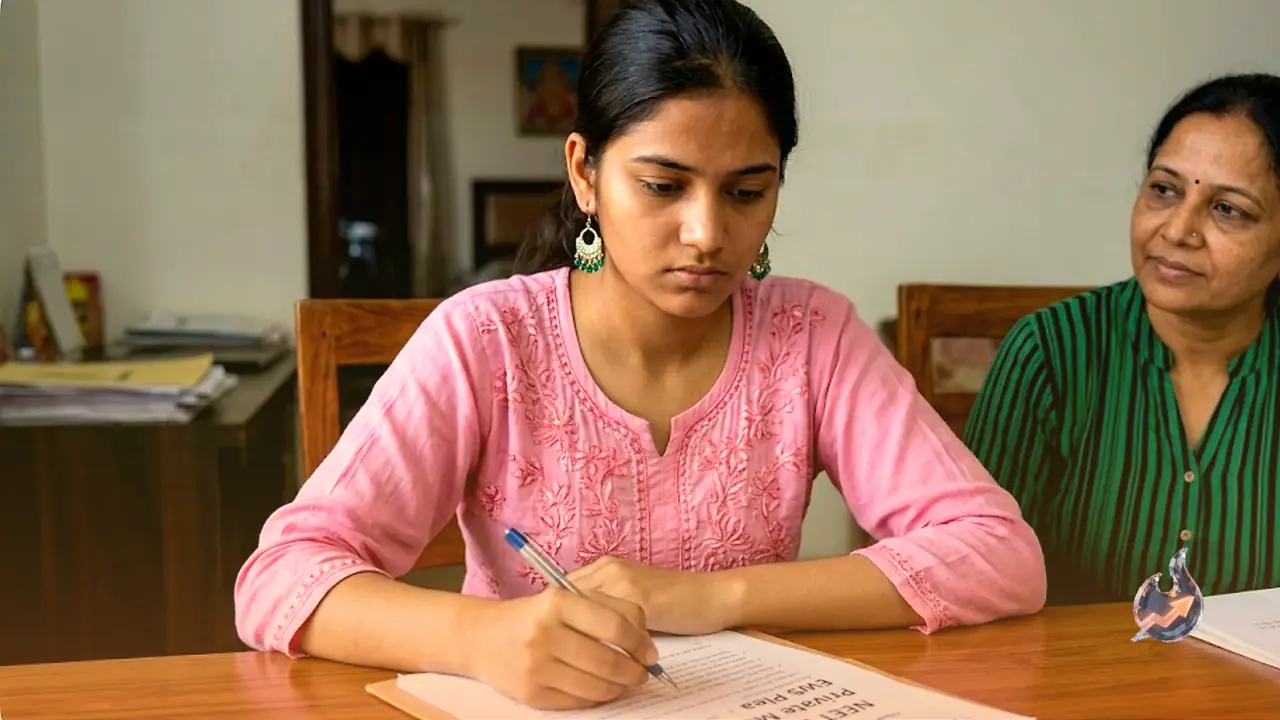

Across the country there are countless families with limited earnings but a big dream of seeing their child become a doctor. That very tension reached the Supreme Court through a petition by a NEET-UG student from Rajasthan. His argument was simple: if a family's annual income must stay below a maximum of 8 lakh rupees to qualify for the Economically Weaker Section (EWS) benefit, then what is the point of EWS seats in private medical colleges that charge between 18 and 25 lakh rupees a year?
The top court did not agree with that line of reasoning. Dismissing the petition filed by student Harshvardhan Singh, the court made it clear that private medical colleges cannot be pushed to charge fees the way government colleges do. It also pointed to an alternative, saying a student who cannot bear the fee can turn to support such as scholarships or subsidies.
The Whole Fight Was Over the Income Fee Gap
That gap was the foundation of the petition. On one side, the upper limit on a family's annual income to fall under EWS is 8 lakh rupees, and on the other, tuition at private medical colleges runs from 18.9 lakh rupees to as much as 25 lakh rupees a year. The student's side argued that this arrangement is completely illogical and creates a serious hurdle for EWS students. The plea asked how a family earning 8 lakh could possibly pay fees of up to 25 lakh, and how the two figures could sit together at all. On that basis, the student sought relief.
The same matter had already been turned down by the Rajasthan High Court earlier. In its ruling, the High Court held that the fee structure set for private medical colleges is legally sound. It also said the state's fee regulatory committee had fixed the fees in line with the Supreme Court's guidelines.
Government and Private Institutions Are Not the Same
Hearing the appeal against the High Court's decision, Justice BV Nagarathna said no one can expect private educational institutions to charge fees on par with government ones. The court explained that self-financing institutions and government colleges simply operate in very different ways. Justice Nagarathna added that government medical colleges receive grants from the state government, whereas private institutions cover their entire running costs on their own. Merely because a private college charges higher fees, it cannot be forced to charge like a government college.
Pressure for Lower Fees Could Mean Fewer Doctors
During the hearing, the court also underlined that while capitation fees are banned, that does not mean colleges cannot charge their normal fees. According to the court, if private medical colleges were compelled to charge lower fees, their participation in medical education itself could shrink, even as the country still needs more doctors. In its order, the Supreme Court said it found no reason to interfere with the Rajasthan High Court's decision and therefore dismissed the petition. The court did, however, clarify that if any legal question arises from this matter in the future, it has been left open.