



















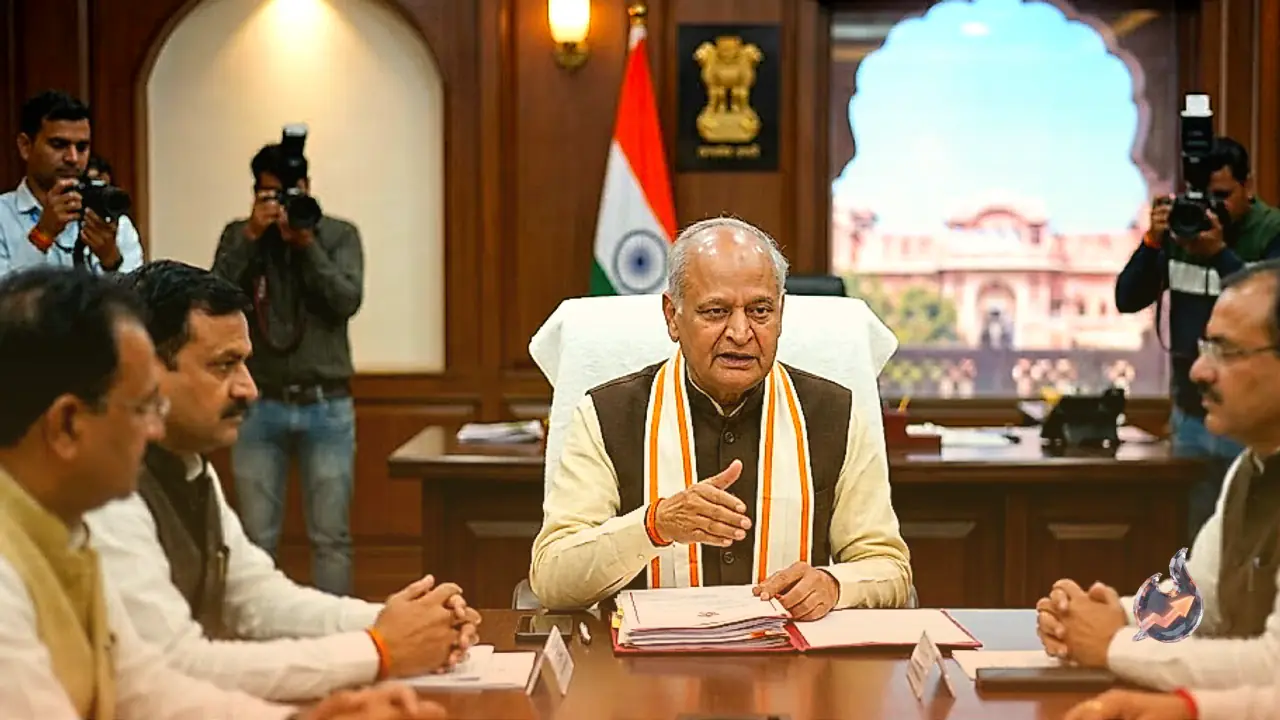

The Rajasthan state government has enacted a series of structural policy reforms aimed at streamlining administrative processes, expanding agricultural processing infrastructure, and improving labor rights. In a cabinet meeting presided over by Chief Minister Bhajan Lal Sharma, approval was granted to six comprehensive proposals. The measures encompass synchronized local government polls, implementation of Backward Class reservation frameworks, fresh agricultural trade policies, and updated wage adjustment cycles for workers.
Single Poll Schedule for Panchayat and Municipal Bodies
A flagship decision taken during the cabinet session is the rollout of a One State One Election framework for local governance in Rajasthan. Under this newly approved system, elections for Panchayati Raj institutions and urban municipal bodies will take place concurrently rather than through staggered schedules. The administration projects that conducting simultaneous polls will eliminate repeated enforcement of election codes of conduct, optimize the deployment of government staff, and result in substantial financial and operational savings for the state exchequer.
Approval of OBC Commission Recommendations for Local Polls
The cabinet formally accepted the recommendations submitted by the OBC Commission regarding reservation in local elections. This decision paves the way for granting reservation benefits to Other Backward Classes in both municipal and Panchayati Raj polls. With the reservation criteria finalized, election authorities will initiate the lottery procedure to designate reserved electoral seats across various districts.
Rajasthan Agriculture and Food Park Policies 2026
To incentivize investment in agrarian infrastructure, the government approved the Rajasthan Agriculture and Food Processing Policy 2026 alongside the Rajasthan Food Park Development Policy 2026. These initiatives focus on building processing capacity for fruits, vegetables, spices, oilseeds, pulses, milk, honey, and medicinal plants. The policy roadmap emphasizes creating cold storage networks, warehouses, and processing units in rural pockets, while facilitating the creation and management of world-class food parks to strengthen agricultural value chains and enhance farmer livelihoods.
Bi-annual DA Revisions and Revised Working Hours for Laborers
Significant decisions were also adopted regarding workforce welfare, incorporating updated regulations for daily working hours. Most notably, the Dearness Allowance (DA) provided to industrial workers will now undergo revision twice a year instead of once annually. Government officials emphasized that bi-annual adjustments will offer better insulation against inflation, enhance worker income stability, and support harmonious industrial growth across Rajasthan.
Statewide Har Ghar Tiranga Drive and Recent Cabinet Context
The cabinet finalized plans to conduct the statewide Har Ghar Tiranga campaign from August 9 to August 17. During this week-long event, the national flag will be hoisted across educational institutions, government offices, commercial buildings, and households alongside patriotic assemblies. This decision follows previous cabinet approvals, including the New Industrial Development Policy 2026 designed to expand electric vehicle charging networks, and the removal of election disqualification rules for individuals with more than two children contesting local body polls.