





















In Rajasthan's Mewar region, a meal rarely feels complete without a small bowl of tangy tomato chutney sitting beside the rest of the spread. Tomatoes are usually treated as a base for other vegetable dishes, but in cities like Bhilwara they get a starring role of their own, turned into a chutney that sharpens the flavour of everything else on the plate. Over generations, households across the region have kept making their own version of it, which is part of why it now counts as a signature Mewari flavour. What makes it stand out is how little effort it demands: barely five minutes from start to finish, and no special or expensive ingredients either.
What the chutney actually needs
Manju Devi, who lives in Bhilwara's R.K. Colony, says this fast-cooking chutney suits people who rush out the door to office or school every morning, or anyone whose daily routine leaves no time to stand over the stove. She points out that when guests show up unannounced, or when a household simply wants a fresh flavour on the everyday table, this simple chutney turns out to be a reliable fallback. It comes together with a few cloves of garlic, salt and red chilli powder to taste, alongside 2 to 3 ripe tomatoes and a single green chilli. Anyone looking to deepen the flavour further can stir in a little cumin and coriander seed as well. Every quantity here is flexible, adjustable to how many people are eating and how much heat they can handle.
The five-minute method
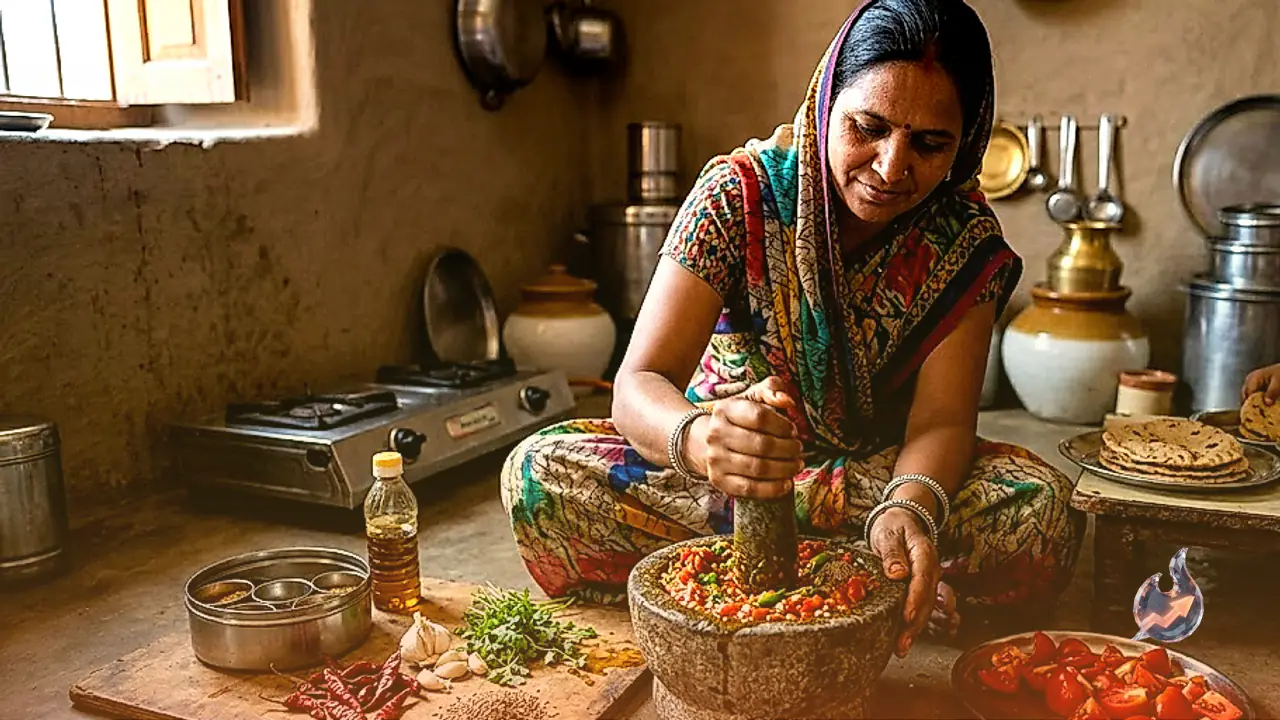
The process starts with washing and chopping the tomatoes, green chilli and garlic together so the rest of the cooking moves quickly. A kadhai is then set on the flame with a little oil; once it's hot, cumin seeds go in, and as soon as they crackle, the garlic and green chilli follow for a brief fry. The chopped tomatoes are added next, seasoned with salt and red chilli powder to taste, and everything is stirred together well. It's left to cook on a low flame until the tomatoes turn completely soft, after which the flame is switched off and the mixture is allowed to cool for a few minutes. Finally, the cooled mixture is crushed using a traditional sil-batta stone, a mixer, or even the back of a spoon, pounded to a coarse texture that gives the chutney its rustic, homemade character.
What to eat it with
The finished chutney can be spooned into a bowl and finished with a scattering of chopped coriander for extra aroma. It goes naturally with roti and paratha, and works just as well alongside dal-baati, plain rice or virtually any simple home-cooked meal. Against heavier or drier dishes, it acts as a balance, its sour, spicy and distinctly rustic character cutting through and lifting the rest of the plate. That balancing act is exactly why this chutney keeps finding its way back onto Mewari dining tables.