



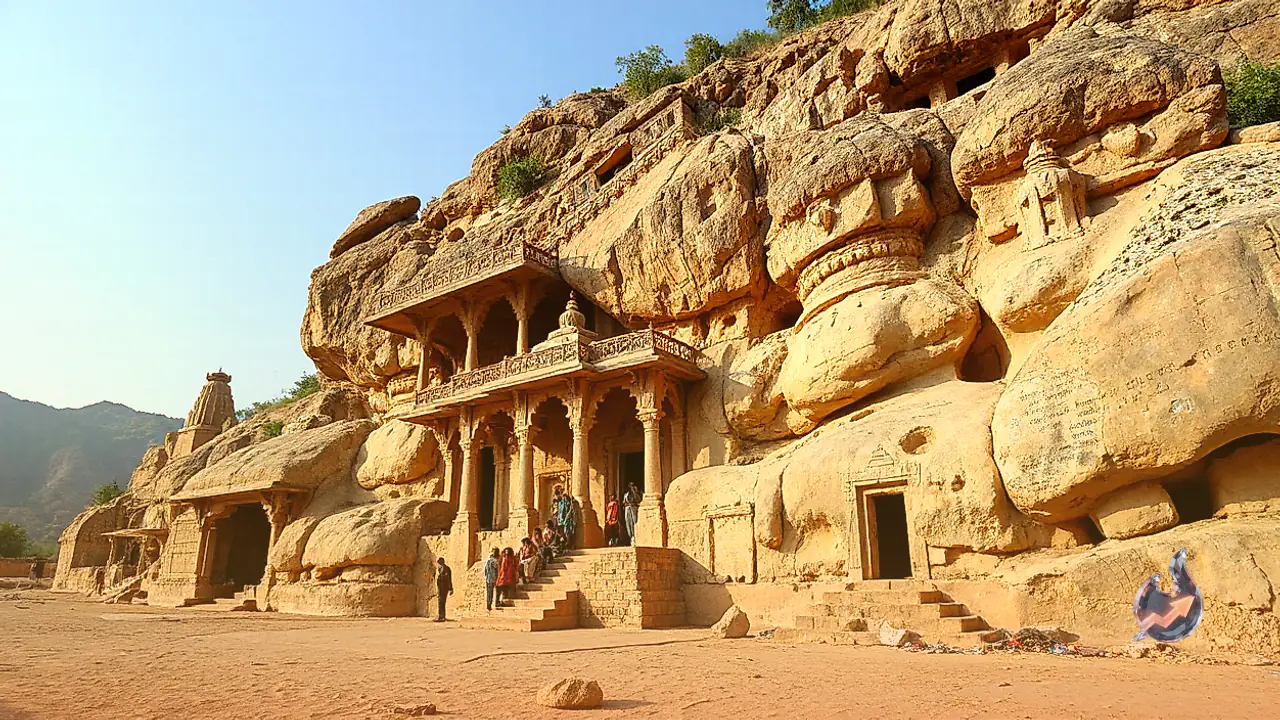
















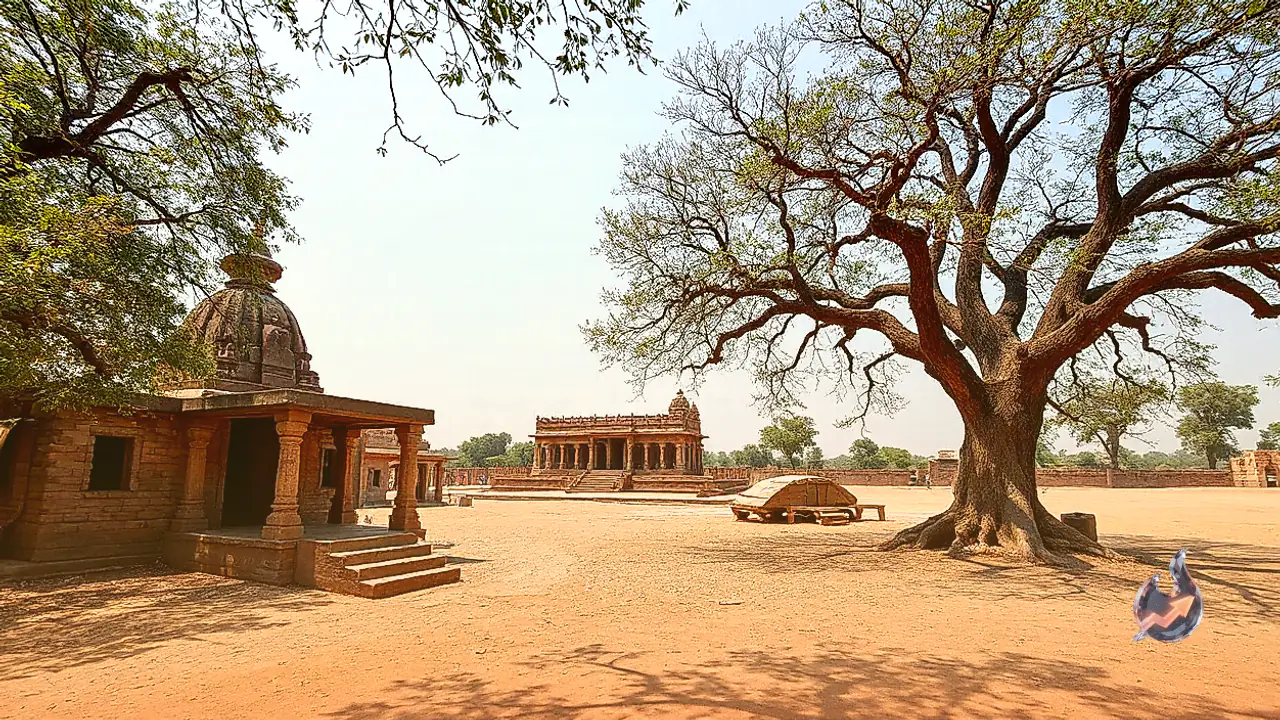

Tirtharaj Machkund in the historic district of Dholpur, Rajasthan, holds a distinctive position among the country's ancient pilgrimage centres. At the heart of this sacred complex lies the ancient temple of Bhuteshwar Mahadev, drawing devoted pilgrims from across India and beyond. What distinguishes this revered site from most conventional Hindu shrines is that the holy Shiva lingam is not housed inside a concrete sanctum or structural sanctum sanctorum. Instead, it rests out in the open, nestled beneath the canopy of a venerated, centuries-old Pilu tree. Devotees believe a visit to the Machkund holy grounds remains incomplete without paying respects to this open-air manifestation of Lord Shiva.
The Legend of Kalyavan and King Machkund
The spiritual prominence of this sacred shrine is directly connected to episodes from the Dwapara Yuga involving Lord Krishna and the ascetic warrior King Machkund. According to traditional accounts, after Lord Krishna strategically orchestrated the destruction of the demon Kalyavan through King Machkund, the king found himself deeply distressed over the sin of Brahmahatya. Seeking redemption, the king turned to Lord Krishna for spiritual counsel and guidance.
Lord Krishna advised King Machkund to conduct an extensive purificatory yajna on this very land. Preparations were made according to Vedic rites, and all celestial deities were summoned to grace the event, with an earnest invocation directed toward Lord Shiva. Moved by the rigorous austerities, devout prayers, and chanting conducted beneath the Pilu tree, Lord Shiva manifested in person, blessing the ceremony with divine success. Since that sacred occasion, Lord Shiva has been worshipped on this ground as Bhuteshwar Mahadev, a reverence that has been maintained through uninterrupted oral and religious traditions.
The Sacred Sarovar and Neighbouring Shrines
One of the remarkable aspects of the Bhuteshwar Mahadev site is the living presence of the venerable Pilu tree, which stands intact in its natural form beside the sacred lingam. Adjacent to the shrine lies the renowned Machkund Sarovar, an expansive holy lake whose waters enhance the sanctity and tranquil atmosphere of the pilgrimage area.
The perimeter around the reservoir houses several other ancient places of worship. Prominent among them are a shrine dedicated to Lord Hanuman and the historic Narmadeshwar Mahadev temple. Pilgrims visiting the Machkund precinct traditionally circumambulate the lake, offering prayers across these interconnected holy shrines to seek divine blessings and spiritual merit.
Congregations During Sawan and Mahashivratri
While pilgrims visit the Dholpur shrine throughout the year, the religious fervour intensifies noticeably during the auspicious month of Sawan and on the festival of Mahashivratri. Devotees travel long distances to perform the traditional jalabhisheka ceremony, bringing water drawn directly from the sacred Machkund Sarovar to bathe the Shiva lingam.
Devotees hold a firm belief that pouring the holy water of Machkund Sarovar over Bhuteshwar Mahadev alleviates life difficulties and washes away past misdeeds. The site is also regarded as an auspicious venue for conducting specialised rituals aimed at mitigating Kaal Sarp Dosh in one's astrological chart. The abiding faith that sincere worship here removes distress and obstacles continues to cement the shrine's standing as one of Dholpur's most prominent centres of religious tourism.