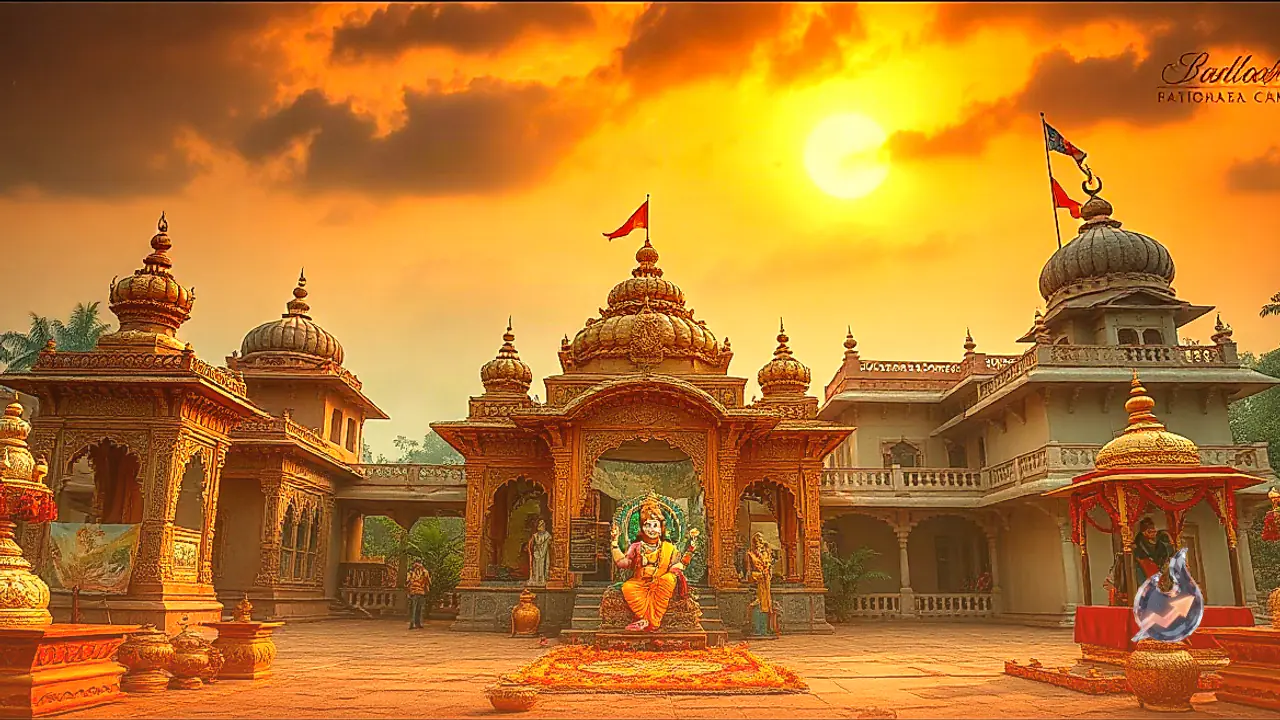

























The government of Andhra Pradesh has resolved to accelerate its ambitious initiative to construct 5,000 new temples across the state. During a comprehensive review meeting with senior officials from the Tirumala Tirupati Devasthanams (TTD) and the Endowments Department, Chief Minister N. Chandrababu Naidu instructed authorities to expedite site finalization. He emphasized that construction work must commence immediately once land parcels are finalized, ensuring that remote and socio-economically weaker habitations gain access to spiritual infrastructure.
Status of Proposals and Priority Allocations
Presenting the progress report during the meeting, TTD Executive Officer Muddada Ravi Chandra stated that 4,192 proposals for temple construction have been received from 161 assembly constituencies spanning 28 districts. Out of the planned footprint, the construction of 967 temples has already been completed successfully.
Officials explained that the temple building project operates across three distinct categories designed to foster social cohesion. High priority is accorded to habitations populated by Scheduled Caste (SC) communities, Scheduled Tribe (ST) areas, coastal fishermen settlements, economically weaker section colonies, and general residential localities. Department officials noted that finalizing land plots promptly will allow remaining projects to be executed rapidly.
Utilization of Srivani Trust Funds and Volunteer Network
Chief Minister N. Chandrababu Naidu directed that financial resources accumulated under the Srivani Trust should be deployed for building shrines and organizing spiritual programs. He urged TTD management to broaden the scope of its outreach activities aimed at promoting Hindu culture and spiritual awareness across every corner of the region.
A significant highlight of the meeting was the strategic utilization of human resources. TTD currently possesses a registered roster of approximately 11.8 lakh Srivari Seva volunteers. The Chief Minister proposed mobilizing these dedicated volunteers for daily operations and maintenance at the newly established shrines. Furthermore, he asked officials to explore forming local executive committees comprising board members, devotees, and Srivari Seva volunteers for effective shrine governance.
Domestic, Global Expansion and Specialized Priest Training
Expanding the footprint beyond state borders, the administration envisions constructing Lord Venkateswara temples across other parts of India and internationally. The Chief Minister advised reaching out to state governments in other capital cities to identify suitable locations for new shrines. Additionally, noting requests from nations such as Mauritius, he instructed officers to evaluate international requests to establish Lord Venkateswara temples as global spiritual nodes.
To support the operational requirements of thousands of new places of worship, ensuring a steady supply of qualified priests is essential. Chief Minister Naidu directed the institution of specialized priest training courses to educate candidates in ritualistic procedures. Authorities were tasked with preparing a comprehensive roadmap encompassing idol consecration (Murti Sthapana) and priest capacity building.
Restoration of Ancient Shrines and Digital Database Creation
Alongside new construction, historic preservation remains a key pillar of the state policy. The Chief Minister ordered the restoration of 1,000 existing ancient temples, instructing officials to place special emphasis on rejuvenating historic Shiva shrines and Shaktipeeths.
To streamline administrative oversight, the government is launching a complete digital inventory of all temples in Andhra Pradesh. Comprehensive management frameworks are being prepared in advance to manage 28,000 temples under the Endowments Department, 65 shrines directly administered by TTD, and the 5,000 newly proposed temples.