





















Preparations for the sacred festival of Sharad Navratri have begun in full swing across the country. According to traditional dates, Sharad Navratri commences this year on Sunday, 11 October, and concludes on 19 October, followed by the celebration of Vijayadashami on Tuesday, 20 October. During these nine days, devotees offer prayers to the various manifestations of Goddess Durga. Many pilgrims mark this auspicious period by traveling to sacred Shaktipeeths to seek divine blessings. Among the 51 revered Shaktipeeths and the unique religious tradition of Maharashtra's three and a half Shaktipeeths, Saptashrungi Shaktipeeth occupies an exceptionally holy place. Popular belief holds that a pilgrimage to this hill shrine liberates devotees from life troubles and removes spiritual afflictions.
The Tradition of Three and a Half Shrines and the Ardha Peeth Status
In Maharashtra, the sacred landscape includes a distinctive heritage known as the three and a half Shaktipeeths. Under this religious convention, three shrines are recognized as complete seats of power, while the fourth, Saptashrungi Devi, is revered as an Ardha Shaktipeeth, meaning a half seat. Tulja Bhavani in Tuljapur, Mahalakshmi in Kolhapur, and Renuka Mata in Mahur are considered the three complete Shaktipeeths. Saptashrungi Devi, situated high upon the peaks, is worshipped in her Kumari, or maiden girl, manifestation. It is this youthful form that bestows the status of an Ardha Peeth upon the holy sanctuary.
The Legend of Sati's Right Arm on the Seven Peaks
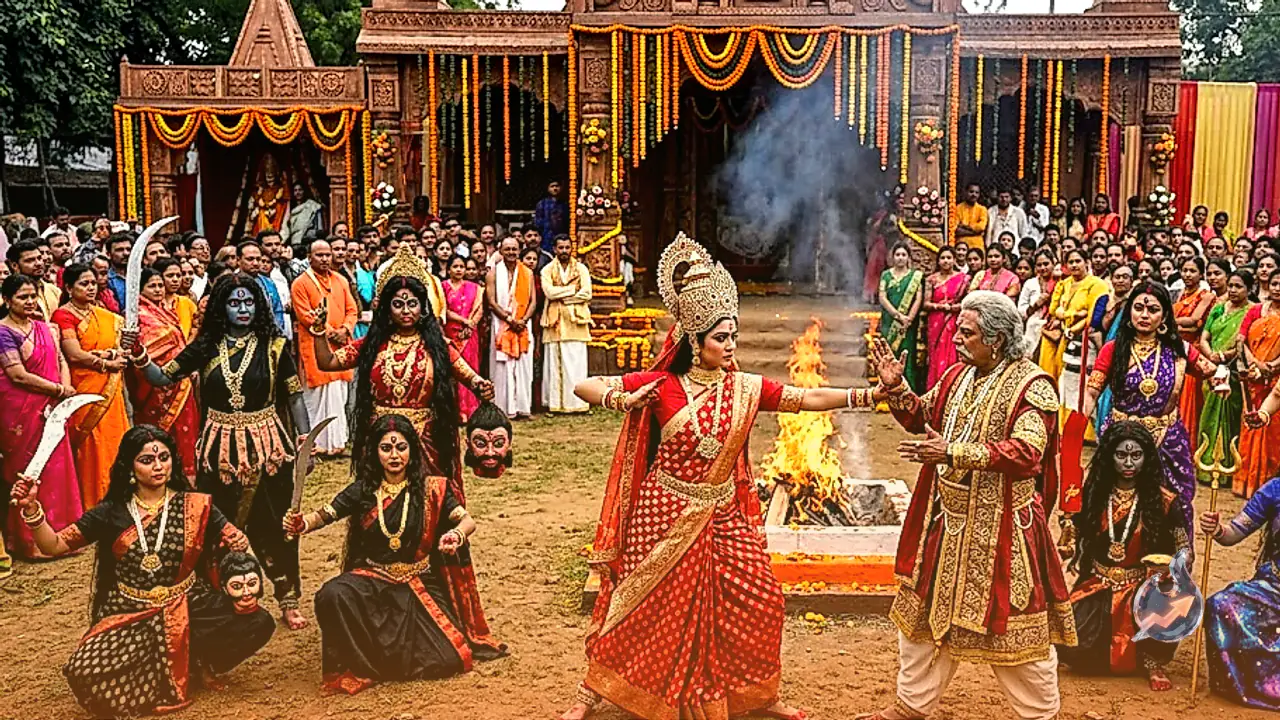
The mythological origin of Saptashrungi is tied to famous narratives recorded in the Shiva Purana and Devi Purana regarding the sacrifice of Goddess Sati and the sorrow of Lord Shiva. According to these sacred texts, King Daksha organized an elaborate fire sacrifice but deliberately chose not to invite Lord Shiva and Goddess Sati. Sati attended despite the lack of an invitation, but when Daksha openly insulted Lord Shiva before the gathering, she found the humiliation unbearable and gave up her life by stepping directly into the flames of the sacrificial fire.
Enraged and heartbroken by Sati's death, Lord Shiva lifted her mortal remains onto his shoulder and commenced the universe-shaking dance of cosmic dissolution, the Tandava. To rescue the universe from annihilation, Lord Vishnu intervened with his Sudarshana Chakra, cutting Sati's body into different segments. According to belief, Sati's right arm fell upon the seven mountain peaks known as Saptashring in the Vani region near Nashik in Maharashtra. This divine occurrence cemented the site's enduring place among the 51 Shaktipeeths and the sacred shrines of Maharashtra.
Resting After the Battle with Mahishasura and the Sage Markandeya
The Bhagavata Purana relates that after manifesting as Durga to slay the demon Mahishasura, the Goddess remained in an intensely wrathful state. To calm her fierce disposition and find rest, she journeyed to these seven peaks of the Sahyadri range and made them her abode. At this sacred vantage, pilgrims witness only her gentle, serene, and softened aspect rather than her full terrifying rage.
Tradition also holds that the revered sage Markandeya composed the Devi Mahatmya on these very grounds, chronicling the boundless glory and victories of the Divine Mother. Observers note that the neck of the deity idol tilts noticeably to one side. According to lore, while sage Markandeya was chanting the Durga Saptashati seated on the opposing mountain, the Goddess tilted her head toward him to listen intently to his verses of praise.
An Eight-Foot Vermilion Deity Described in the Markandeya Purana
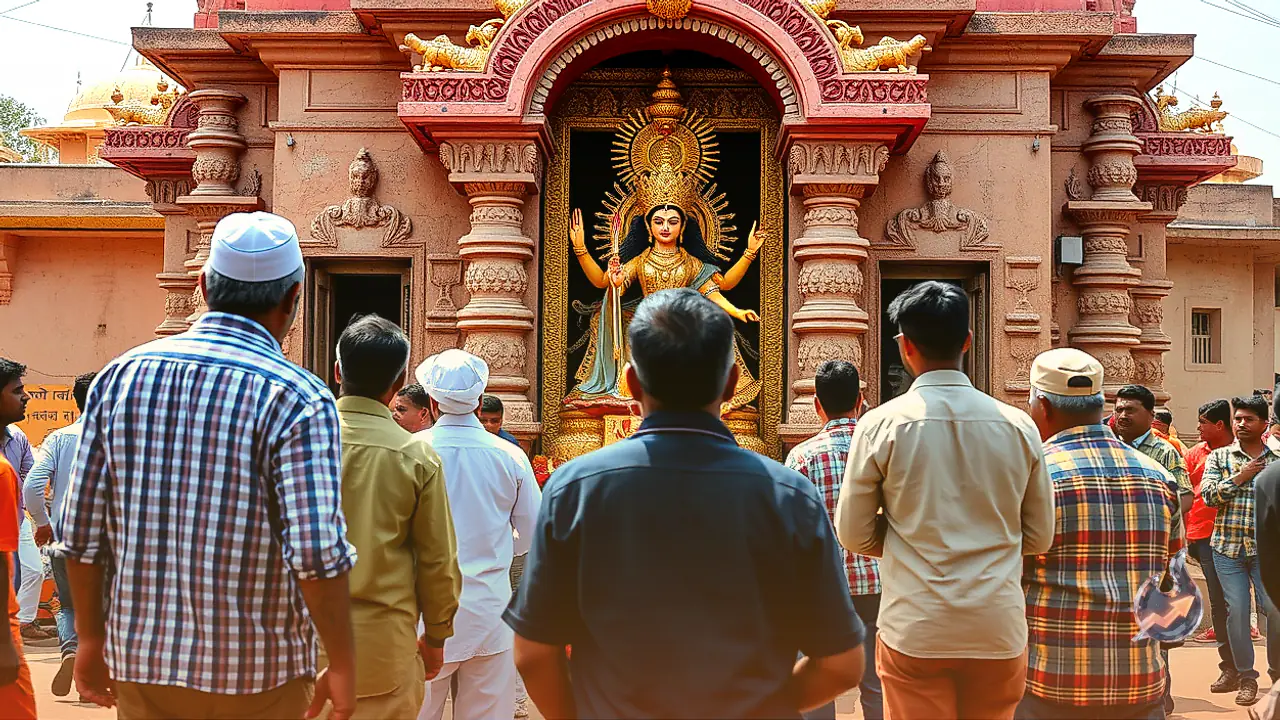
According to the Devi Mahatmya within the Markandeya Purana composed by sage Markandeya, the sacred idol of Saptashrungi Devi is a manifestation of Mahalakshmi herself. Possessing eighteen arms, she is known as Ashtadashabhuja, though certain traditional references also speak of her as Ashtabhuja, or eight-armed. The grand idol measures approximately 8 feet (2.4 meters) in height. Because the sacred figure is completely coated with vermilion, it glows in a radiant, deep saffron or orange hue.
Eighteen Arms Bearing Sacred Divine Weapons
Across her eighteen hands, Saptashrungi Devi holds an array of sanctified implements and weaponry bestowed by the gods. These sacred items include the trishula (trident) of Shiva, the Sudarshana Chakra of Vishnu, the shankha (conch) of Varuna, flames from the fire god Agni, the bow and arrow of Vayu, the vajra (thunderbolt) and bell of Indra, the cudgel (danda) of Yama, the akshamala (rosary of beads) of Daksha, and the kamandalu (water pot) of Brahma. Furthermore, she carries the radiant rays of the Sun god Surya, the sword and shield of Kali, the battle-axe (parashu) of Vishwakarma, the wine cup of Kubera, and a heavy mace (gada), standing ready to shield her devotees from harm.
Mountain Heights, Three Cave Gateways, and Devotional Customs
The sanctuary of Saptashrungi Devi is perched roughly 65 kilometers away from Nashik, set atop the 4,800-foot-high Saptashring mountain. The geography around the shrine is dramatic, bordered on one side by a sheer cliff drop and on the other by soaring rock faces. Pilgrims ascend approximately 472 steps to arrive at the main sanctum.
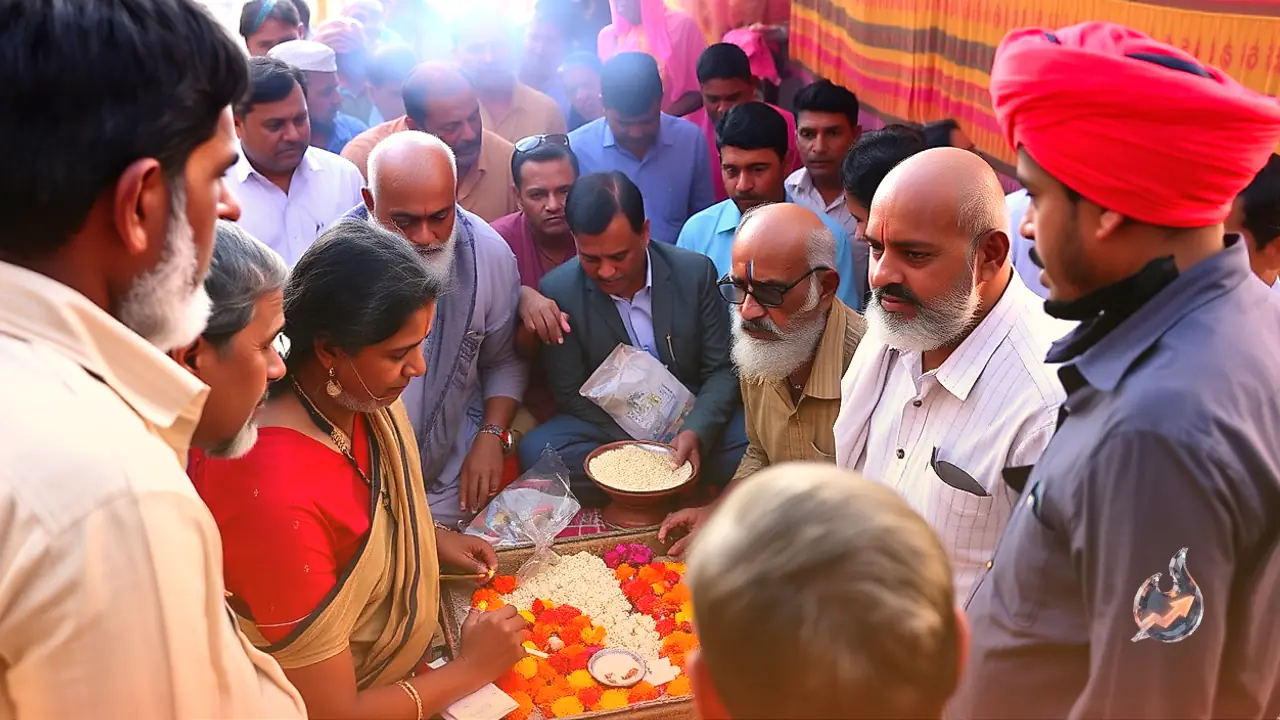
Devotees access the cave shrine to view the deity through three dedicated portals known as Shakti Dwar, Surya Dwar, and Chandra Dwar. During the festival of Navratri, worshippers perform the ceremonial godh bharai for the Goddess. For this ritual offering, pilgrims bring coconuts, traditional chunri fabrics, sarees, bangles, vermilion, fresh blossoms, and sweets. Believers revere the Goddess for extending blessings through her eighteen hands, and those who visit are traditionally offered pooran poli as the holy prasad.