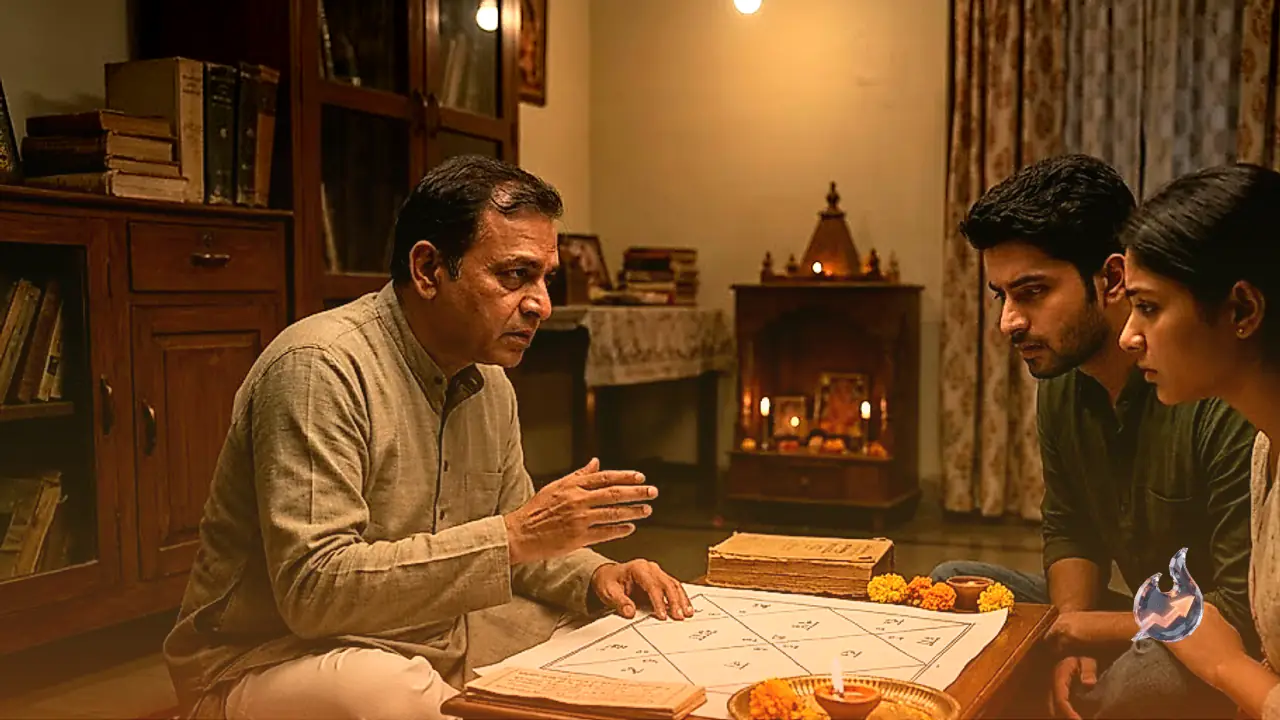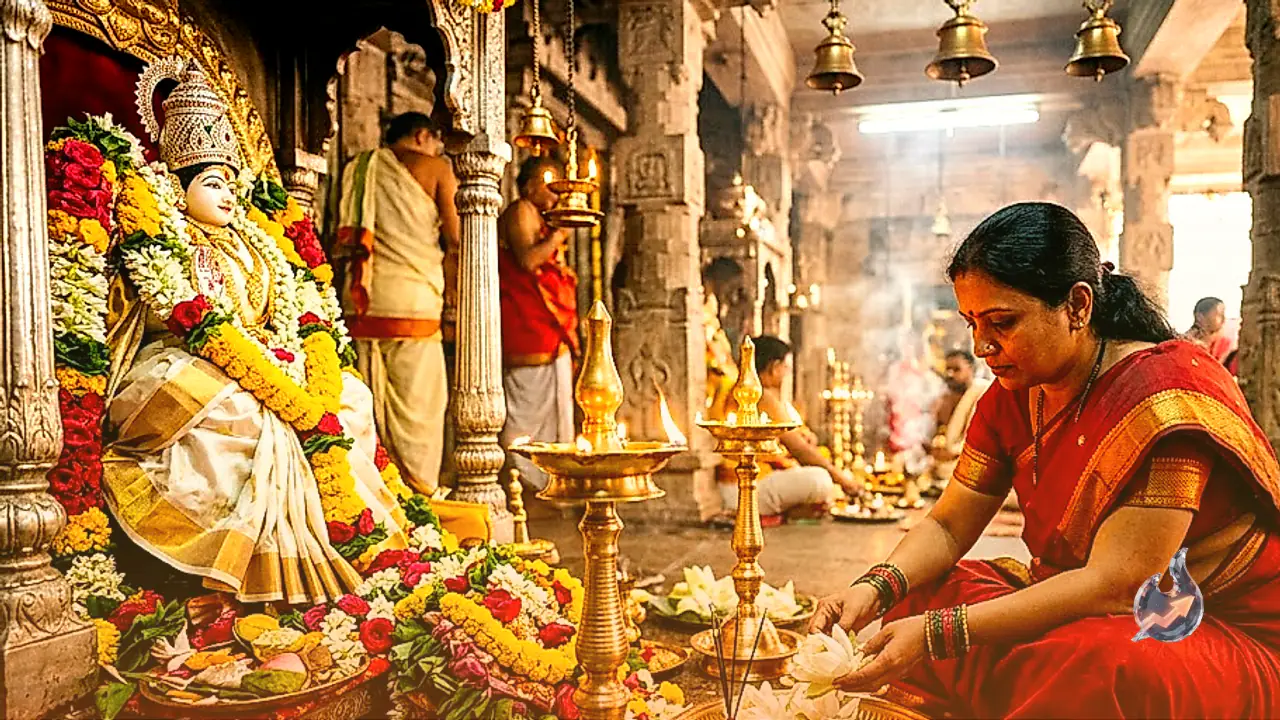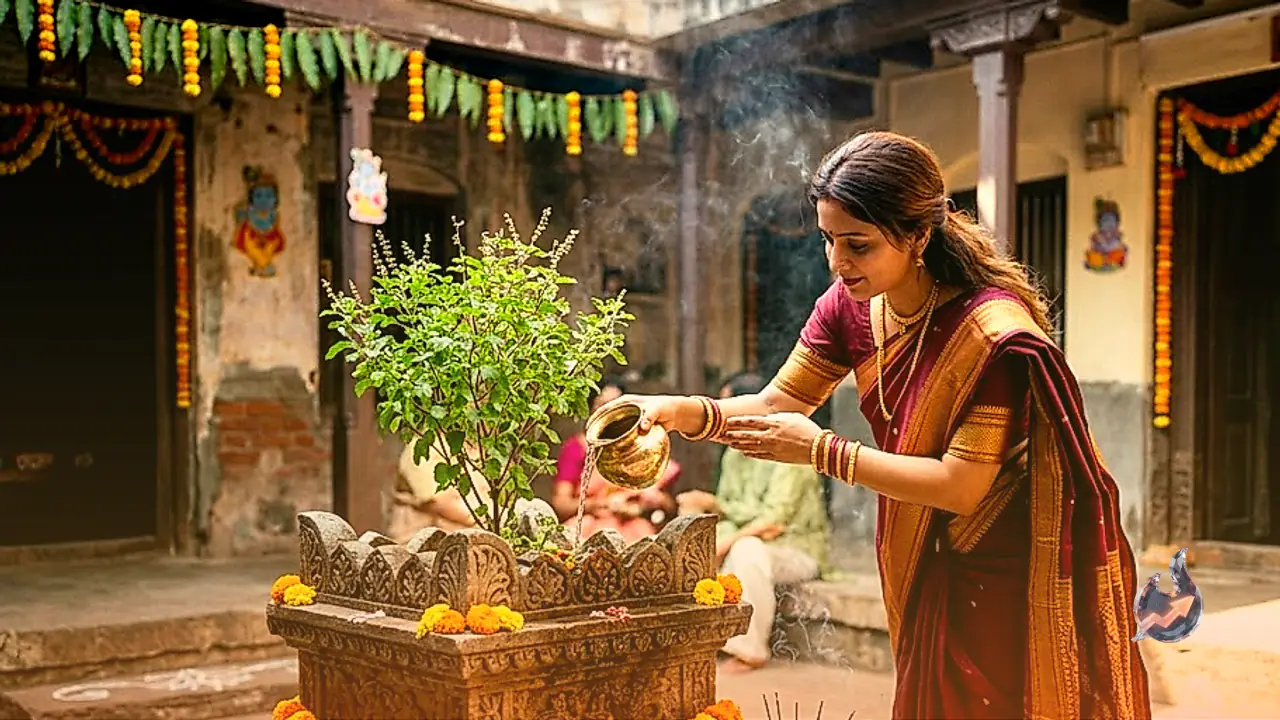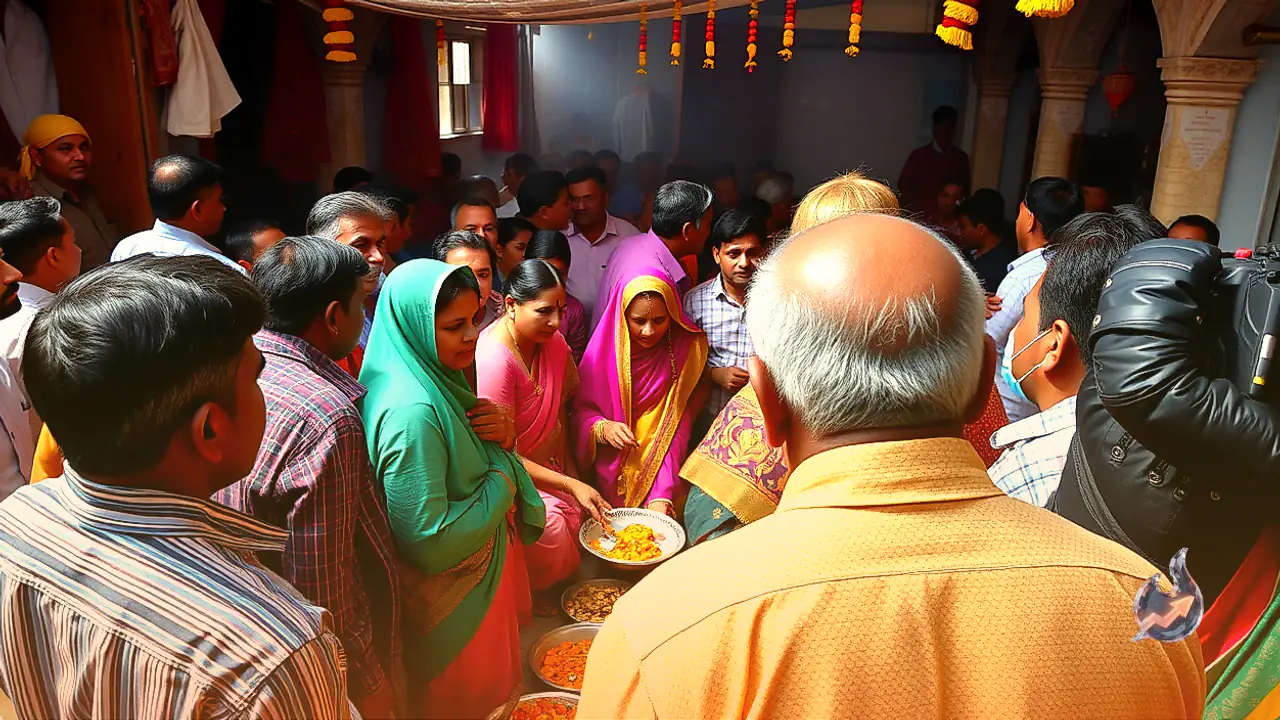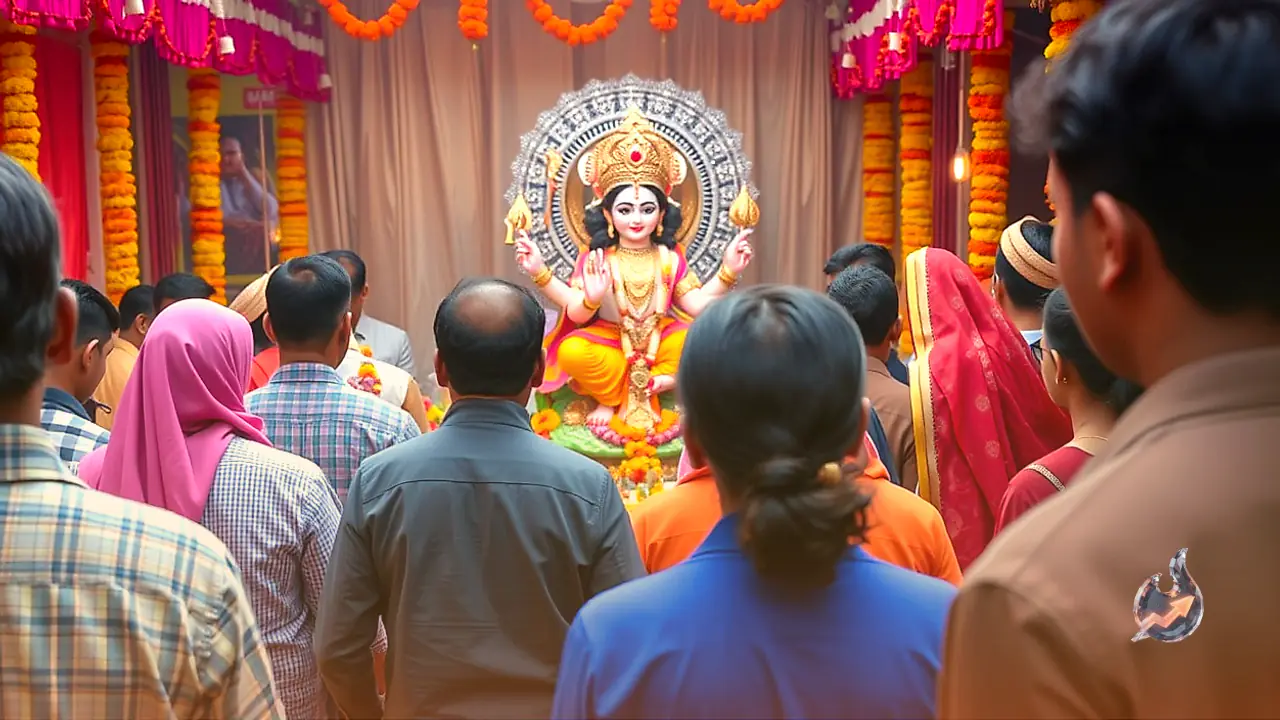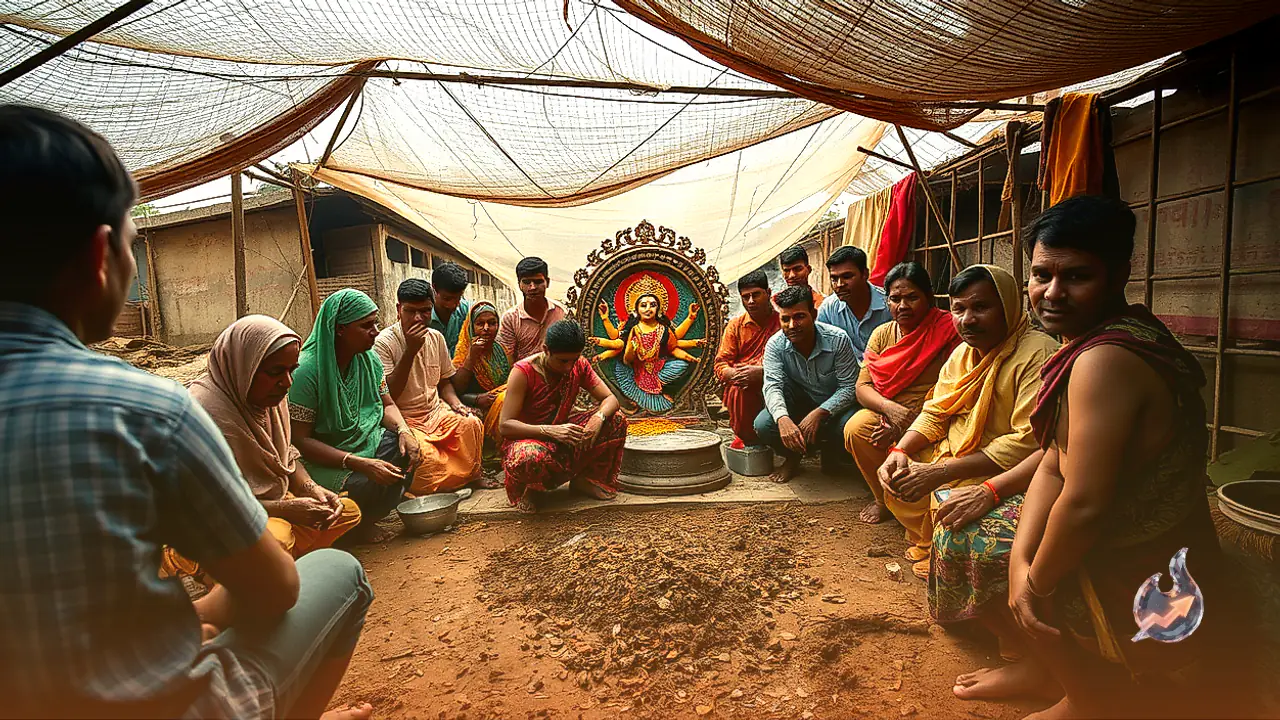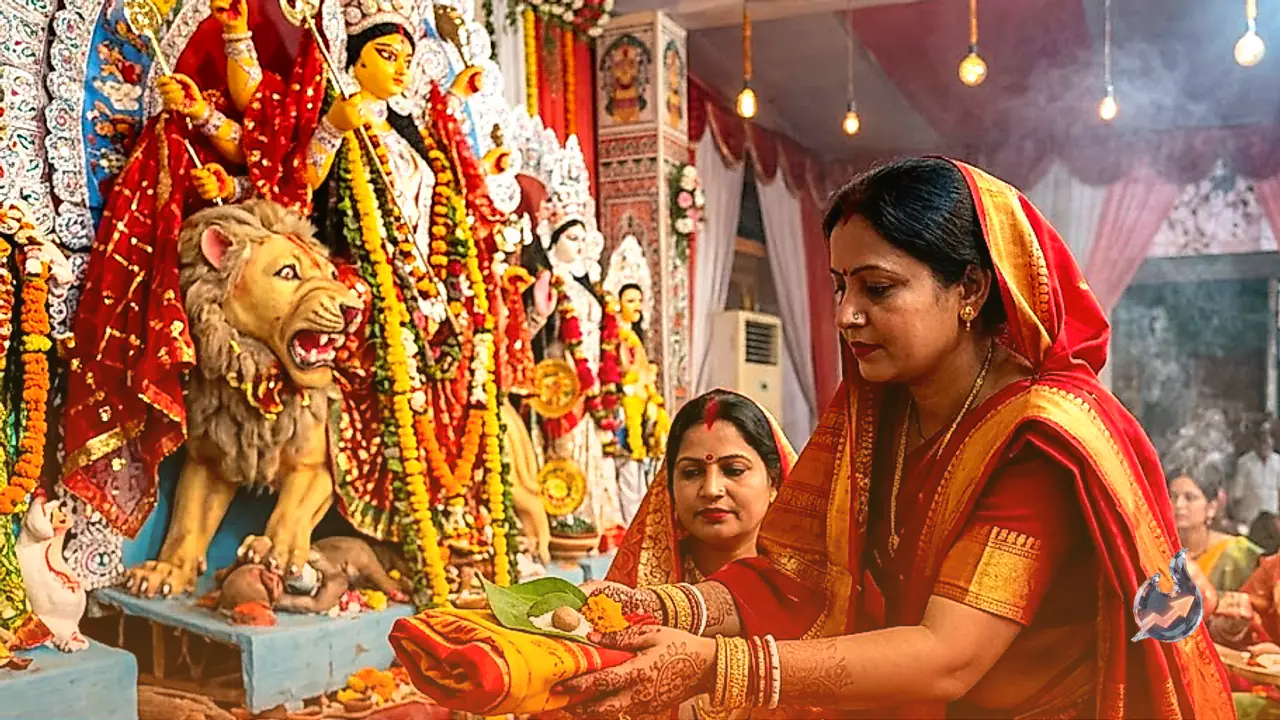

During the nine sacred days of Shardiya Navratri, devotees across India immerse themselves in worshiping the nine manifestations of Goddess Durga. Alongside scriptural rites, rich folk traditions deepen this spiritual bond. One of the most heartfelt rituals is observed across Bihar and the Mithilanchal belt, known as filling the Khoicha for Mother Durga. Folk tradition lovingly regards Goddess Durga not merely as an all-powerful deity, but as a beloved daughter arriving at her maternal home. When a married daughter prepares to depart for her marital home, her elders fill the fold of her saree with auspicious gifts and blessings. Similarly, on the Ashtami and Navami tithis, married women perform this ceremony before the deity to pray for the longevity of their spouses, the welfare of their children, and lasting familial prosperity.
The Cultural and Spiritual Significance of Khoicha
In Mithila culture, offering a Khoicha represents genuine affection, respect, and deep-seated hospitality. A daughter is never allowed to leave her parental house empty-handed. Her saree's hem is packed with rice, grass blades, turmeric, and vermilion, wishing her an unbroken journey filled with abundance. Extending this domestic affection to the Divine Mother, devotees celebrate Her nine-day stay and offer farewell gifts with reverence. It is believed that pleasing Goddess Durga with a traditionally bundled Khoicha safeguards the household from hardships and guarantees that the family remains blessed with wealth, food grains, and sustained matrimonial happiness.
Complete Checklist of Essential Khoicha Offerings
Performing this sacred farewell requires specific ceremonial items that carry auspicious symbolic value. Devotees collect the following objects before sitting for the prayer
- A fresh red cloth
- A traditional saree
- Complete matrimonial cosmetics (vermilion or sindoor, bindi, bangles, alta, and nail polish)
- Fresh seasonal fruits
- Traditional sweets
- 5 whole betel leaves (paan)
- 5 whole areca nuts (supari)
- 1 dry coconut with husk
- Unbroken raw rice grains (akshat)
- Sacred green durva grass
- A whole piece of dry turmeric
- Voluntary cash offering (dakshina)
Step-by-Step Method to Perform the Ritual
The ritual should be conducted with utmost purity, devout mindfulness, and concentration. Begin by laying out a clean red cloth on a clean surface in front of the idol or image of Goddess Durga. Carefully arrange the saree upon the fabric, accompanied by the adornment articles, including the sindoor, bangles, foot dye, bindi, and other cosmetics. Next, place the 5 betel leaves, 5 areca nuts, coconut, currency, fresh fruits, confections, flowers, unbroken rice grains, durva sprigs, and turmeric knot directly onto the cloth.
Light a ceremonial lamp and fragrant incense sticks beside the offerings. Stand or kneel with folded hands, silently petitioning the Mother Goddess for your family's happiness, the sound health of your children, and the extended lifespan of your partner. Humbly seek forgiveness for any shortcomings committed during the ritual. Once the prayer concludes, tie the corners of the red fabric securely into a bundle and place the sanctified Khoicha lovingly at the feet of Goddess Durga.
Auspicious Timings for Maha Ashtami and Maha Navami in 2026
The Khoicha ceremony is customarily performed during the peak concluding phases of Shardiya Navratri, specifically on Ashtami or Navami tithis. The astrological schedule for 2026 stands as follows
Maha Ashtami (Maha Durgashtami): The Ashtami tithi begins on 18 October at 8:27 AM. It concludes on 19 October at 10:51 AM.
Maha Navami: The Navami tithi starts immediately thereafter on 19 October at 10:51 AM. The tithi reaches its completion on 20 October at 12:50 PM. Devotees observe their fast-breaking rituals and Khoicha offerings within these precise chronological windows.