























The holy month of Sawan, dedicated to the worship of Lord Shiva, is set to begin on Thursday, 30 July, and will conclude on Friday, 28 August, corresponding with Sawan Purnima. Additionally, the first Monday fast of this auspicious period will be observed on 2 August. Throughout this month, devotees adhere to strict spiritual disciplines including fasting, performing rudrabhisheka, offering prayers, and consuming sattvik meals. However, both religious scriptures and traditional health practices place strict prohibitions on certain dietary items. Products derived from milk and curd, such as kadhi and raita, are specifically listed among the foods to avoid, as consuming them during this season significantly increases the risk of various health complications.
Key Dates of Sawan and the Importance of a Sattvik Lifestyle
From a spiritual perspective, the month of Sawan represents self-restraint, penance, and a commitment to purity. Traditional practices strongly advise against consuming heavy or tamsik food items during this period. Culturally, reducing or completely eliminating curd, kadhi, and overly sour foods is widely recommended. Since cool, pure, and sattvik offerings are traditionally presented to Lord Shiva, it is believed that devotees should also consume light and easily digestible meals to support their spiritual practices and maintain physical discipline.
Ayurvedic Perspective: Weak Digestion and Increased Kapha
According to Ayurvedic principles, Sawan coincides with the peak of the rainy season. During this time, atmospheric humidity reaches very high levels, which naturally dampens and weakens human digestive capacity. Ayurveda classifies curd as guru, meaning heavy to digest, and recognizes its tendency to aggravate kapha in the body. Consuming curd or curd-based dishes during the monsoon can trigger an excess build-up of kapha, leading to throat irritation, coughs, colds, and sluggish digestion. Consequently, Ayurveda explicitly cautions against consuming curd during the monsoon season, particularly at night.
Environmental Factors: How Rain Affects Milk and Dairy Quality
There is also a compelling biological reason why dairy products like milk, curd, and kadhi are avoided during Sawan. The intense rainfall causes wild weeds and unwanted grass to sprout profusely across open lands. These wild grasses host numerous tiny insects and larvae. When cattle such as cows and buffaloes graze outdoors, they ingest these insect-infested weeds, which directly alters and degrades the quality of their milk. Consuming milk or milk-derived products produced under these conditions is considered detrimental to human health, prompting the traditional restriction during Sawan.
Dietary Guidelines: What to Eat and What to Avoid During Sawan
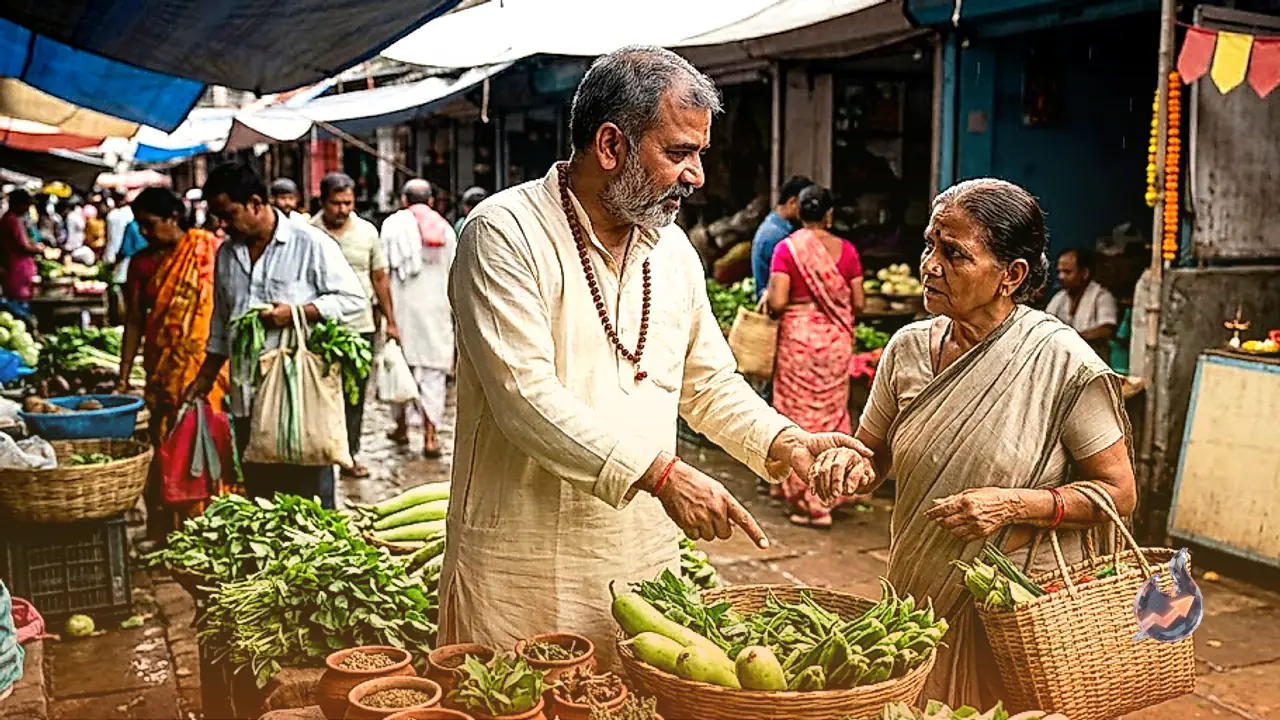
Health specialists and scholars recommend opting for light, nutrient-dense, and easily digestible foods throughout Sawan. Meals should ideally feature fresh fruits, green vegetables, moong dal, bottle gourd (lauki), ridge gourd (torai), and pointed gourd (parwal), accompanied by modest amounts of ghee. The dietary rules observed during Sawan are designed not only as spiritual obligations but also as practical health precautions against seasonal illnesses. Adopting a balanced and wholesome diet allows individuals to carry out their religious devotion while keeping their bodies healthy and vibrant.