



















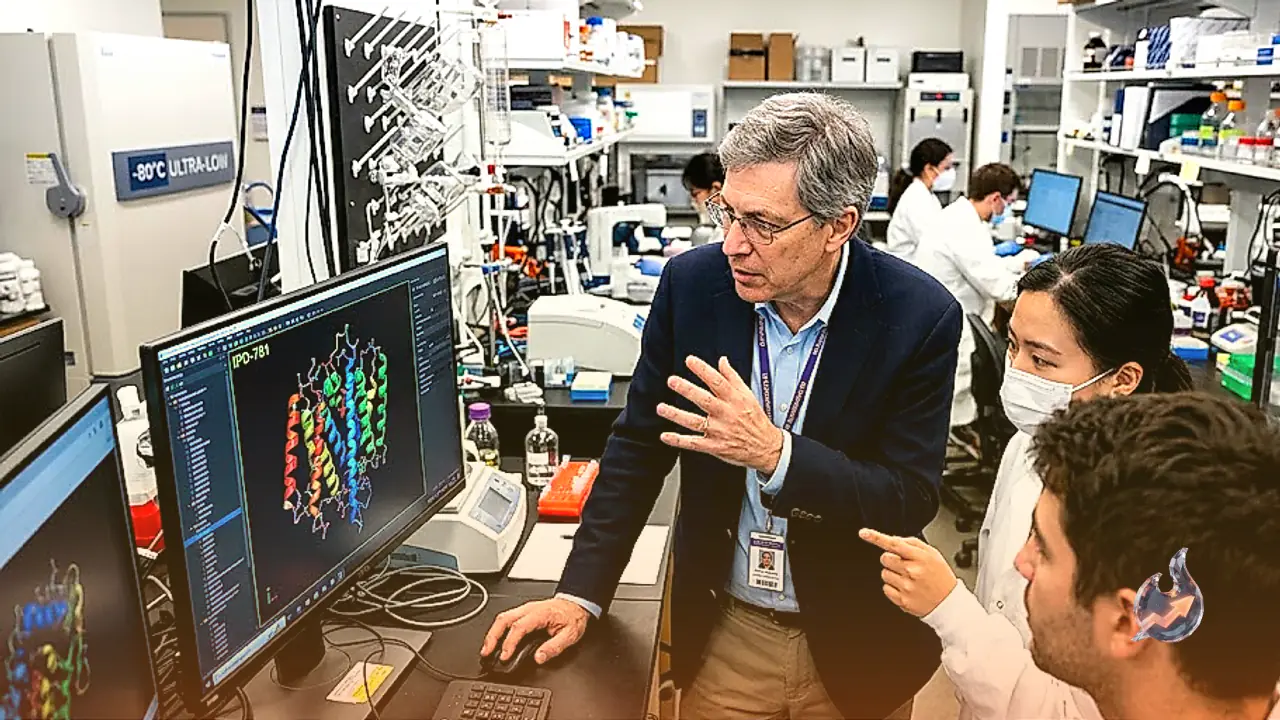

Across billions of years of evolutionary history, biological life on Earth has generated countless elegant biochemical systems, yet natural evolution has explored only a narrow corridor of what physics and chemistry permit. To venture into the vast expanse of uncreated biology, a collaborative initiative has been launched by the Allen Institute, a Seattle-based biomedical research nonprofit, working alongside the University of Washington and the Fred Hutchinson Cancer Center. This scientific endeavor focuses on constructing computational databases, predictive models, and software tools intended to serve as foundational seeds for next-generation medicine and biotechnology. Among the principal researchers guiding this effort is David Baker, who shared the 2024 Nobel Prize in Chemistry for pioneering computational protein design. The transformative potential of these computational biology methods is already drawing comparisons to pivotal shifts in human history, including industrialization, electrification, and the digital computing revolution.
Venturing Beyond Evolution to Design Unnatural Molecules
For centuries, the biological sciences have concentrated almost exclusively on deciphering and modifying mechanisms already refined by evolutionary pressures. Designing functional molecules that nature never conceived represents an entirely novel paradigm. Serving as chief scientific officer at AI BioDesign, David Baker emphasizes that nature has sampled merely a fraction of physically and chemically viable molecular combinations. This realization unlocks an extraordinary frontier of functional design, enabling researchers to envision targeted molecular architectures tailored to urgent global challenges. Central among the initiative's stated ambitions is the engineering of innovative therapeutics capable of tackling cancer and neurodegenerative disorders, alongside specialized catalytic enzymes engineered to break down synthetic plastic pollutants accumulating across marine environments.
Mitigating the Risks of Uncharted Biological Spaces
Exploring biological terrain that has never undergone evolutionary stabilization naturally raises substantial technical and safety concerns. The hazards of generating synthetic biological structures closely mirror those associated with any powerful biotechnological intervention, including unexpected interactions with living biological organisms, unintended ecological disturbances, and the perennial danger of malicious misuse. David Baker points out that modern computational workflows grant researchers an unprecedented preventative advantage by enabling thorough threat evaluations before physical chemical synthesis ever occurs. Proposed molecular designs can be rigorously filtered through computer simulations, subjected to exhaustive containment testing within controlled physical laboratories, and vetted across increasingly realistic experimental stages before any real-world deployment is even contemplated.
From Accelerated Therapeutics to Biological Computing
Proteins function as nature's microscopic engines, responsible for assembling and sustaining all organic structures on Earth. Unlocking their comprehensive utility demands the formulation of systematic engineering principles that can transform previously unimaginable molecular concepts into reality. The envisioned scope extends from novel pharmaceutical compounds to synthetic enzymes and even biological computers. Baker outlines ambitious milestones for computational protein architecture, describing an operational future where therapeutic countermeasures for newly identified pathogens can be synthesized within weeks rather than requiring decades of trial. This vision encompasses environmental restoration where engineered biocatalysts neutralize hazardous industrial waste, climate-resilient agricultural crops engineered to endure hostile climatic conditions, and nanoscale molecular machines capable of extracting vital mineral resources from industrial discarded materials to sustain critical physical infrastructure.
The Balance Between Machine Learning Predictive Power and Mechanistic Insight
As computational models demonstrate soaring proficiency, the prospect arises that artificial intelligence might construct highly functional biological components whose underlying physics confound human researchers. Scientific discovery has historically unfolded through iterative stages, an architecture clearly reflected in machine learning's integration with molecular engineering. Investigative science routinely begins by identifying functional empirical patterns, with complete mechanistic comprehension following well afterward. Machine learning excels at this primary observational phase, massively elevating the capacity to spot complex structural motifs that can be directed toward practical design. While robust experimental verification provides sufficient justification to advance vital applications, achieving fundamental mechanistic understanding remains essential. Much of today's scientific limitations stem from missing baseline parameters, a core data challenge that the AI BioDesign research program directly seeks to resolve.
Governance Frameworks and Mandatory Synthetic DNA Tracking
The acceleration of molecular engineering necessitates precise boundaries regarding what classes of molecules should remain off-limits regardless of technical feasibility. Project evaluations must continually weigh projected societal advantages against potential adverse outcomes. Innovations targeted at overcoming chronic health crises, ecological destruction, and broader humanitarian vulnerabilities present a compelling imperative for active development. Conversely, any molecular architectures that could compromise public biosafety, societal security, or planetary ecological stability demand heightened scrutiny and stringent institutional limits. Baker emphasizes that regulatory structures must mature in tandem with generative artificial intelligence and synthetic biology. Among these critical safeguards, he advocates for mandatory tracking and permanent registration of all commercial synthetic DNA production, documenting exact genetic sequences alongside purchaser identities to construct an enforceable barrier against deliberate bio-technological abuse.