
A massive elephant seal residing in the southeastern region of an island has captured public attention, transforming into a local mascot and a viral internet sensation due to his annual land-based excursions.
The Growing Disruptions and Challenges
Weighing over 2,000 pounds, the animal undergoes an annual biological shedding process where he replaces his top layer of epidermis and fur. This yearly routine has created significant administrative headaches as the creature damages walkways, flattens bollards, breaks through fences, and rams into vehicles. Furthermore, managing the intense public fascination has proven costly, with officials spending tens of thousands of Australian dollars to maintain safe boundaries between onlookers and the heavy marine mammal.
Faced with these logistical hurdles, the Tasmanian government decided to formalize an official response. The Department of Natural Resources and Environment released a 27-page dossier titled Neil the Seal Management Plan to establish a clear regulatory framework addressing the recurring challenges tied to the animal's presence.
Monitoring and Hands-Off Approaches
A specialized task force has been assigned to track the animal's daily whereabouts. According to the document, the team adopts a hands-off, non-intervention strategy whenever the creature hauls out in isolated areas. Personnel monitor movements from afar, deploying warning signs to inform the public while enforcing safe distances. If onlookers attempt to approach the animal, security teams are authorized to intervene for the protection of both citizens and the wildlife.
Hazing and Enrichment Strategies
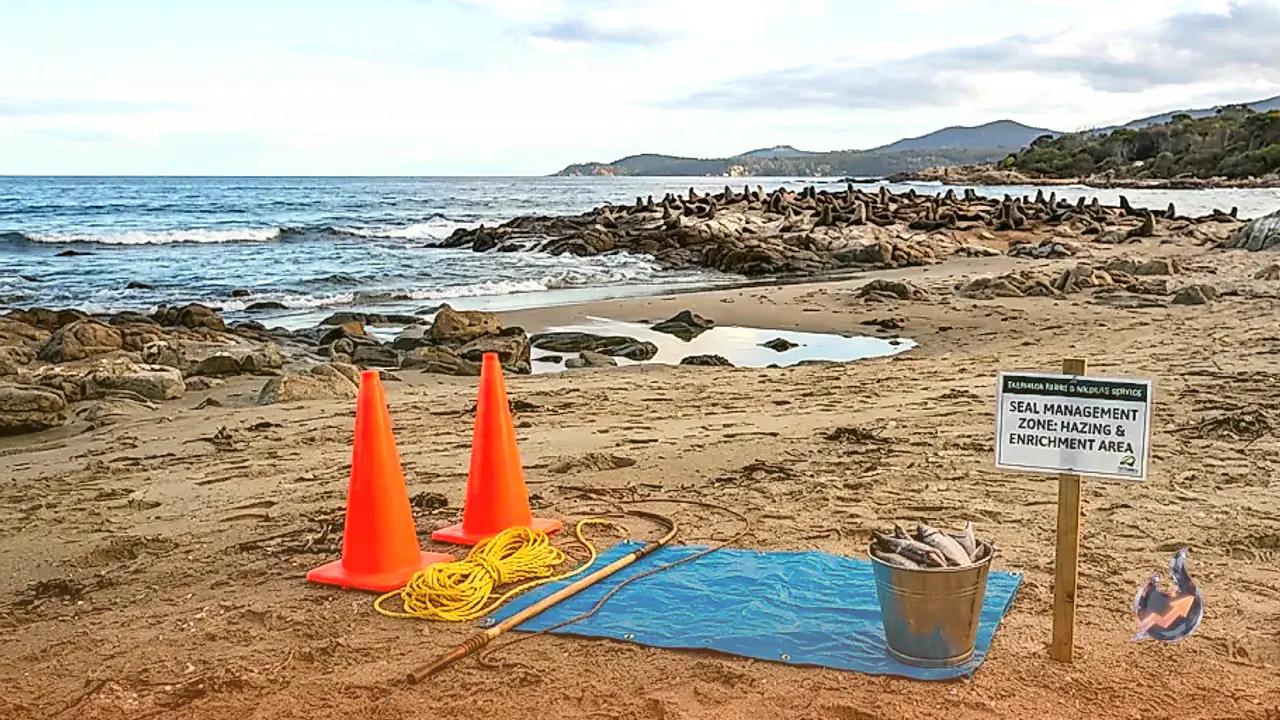
A secondary contingency focuses on active on-site management should the animal come ashore near public roads and critical infrastructure. One proposed tactic involves hazing, described as a non-violent method utilizing deterrents and negative associations through controlled visual, tactile, and vocal stimuli to compel the animal to relocate. The dossier notes that the creature frequently adapts to standard tactics, requiring the task force to continuously innovate.
Additionally, officials proposed seal enrichment initiatives to redirect natural exploratory behaviours toward durable decoy items designed to withstand heavy interaction. Despite preventative measures, authorities caution that significant events like road closures or health incidents remain possible, urging the public to contact the Marine Mammal Hotline at 0427 WHALES during emergencies.