























The unfathomable depths of the cosmos have always captivated human curiosity, holding as many hidden mysteries as the unexplored ocean floors. While humanity understands a fraction of these celestial wonders, countless others remain entirely unidentified. For Dutch astronomer Amina Helmi based at the University of Groningen in the Netherlands, decoding the complex history of our very own Milky Way galaxy has been a lifelong professional pursuit. Her deep dedication to unraveling stellar evolution recently earned her the prestigious Kavli Prize, acknowledging her groundbreaking work in solving a mystery billions of years in the making.
Born in Argentina, the 55-year-old researcher is widely regarded as a global leader in the specialized field of galactic archaeology. Astronomers often treat individual stars much like biological fossils to reconstruct ancient history. According to Helmi, the specific chemical elements locked inside a star tell the authentic story of its birth, preserving permanent chemical signatures of the environmental conditions where it first ignited. Helmi draws a direct parallel between stellar chemistry and human DNA, noting that by examining these chemical structures, scientists can accurately determine where and under what atmospheric conditions ancient stars were formed.
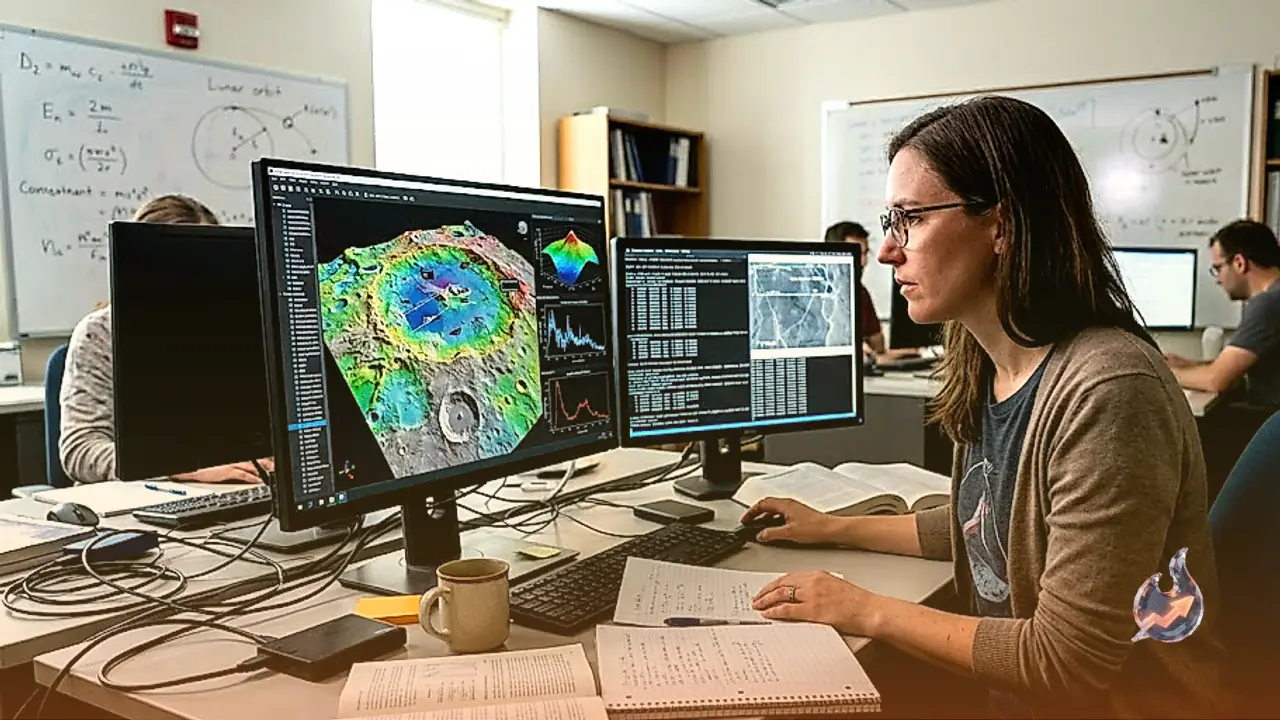
Her scientific endeavors extend far beyond simply peering through high-powered telescopes into the night sky. She meticulously processes massive datasets containing upwards of billions of individual records detailing stellar trajectories, precise spatial coordinates, and other vital astrophysical metrics. The European Space Agency’s Gaia mission provided a critical turning point for her research, delivering hyper-precise movement and position data for roughly 1.5 billion stars. Leveraging this unprecedented dataset, Helmi and her dedicated research team pieced together a compelling narrative of the Milky Way’s turbulent youth.
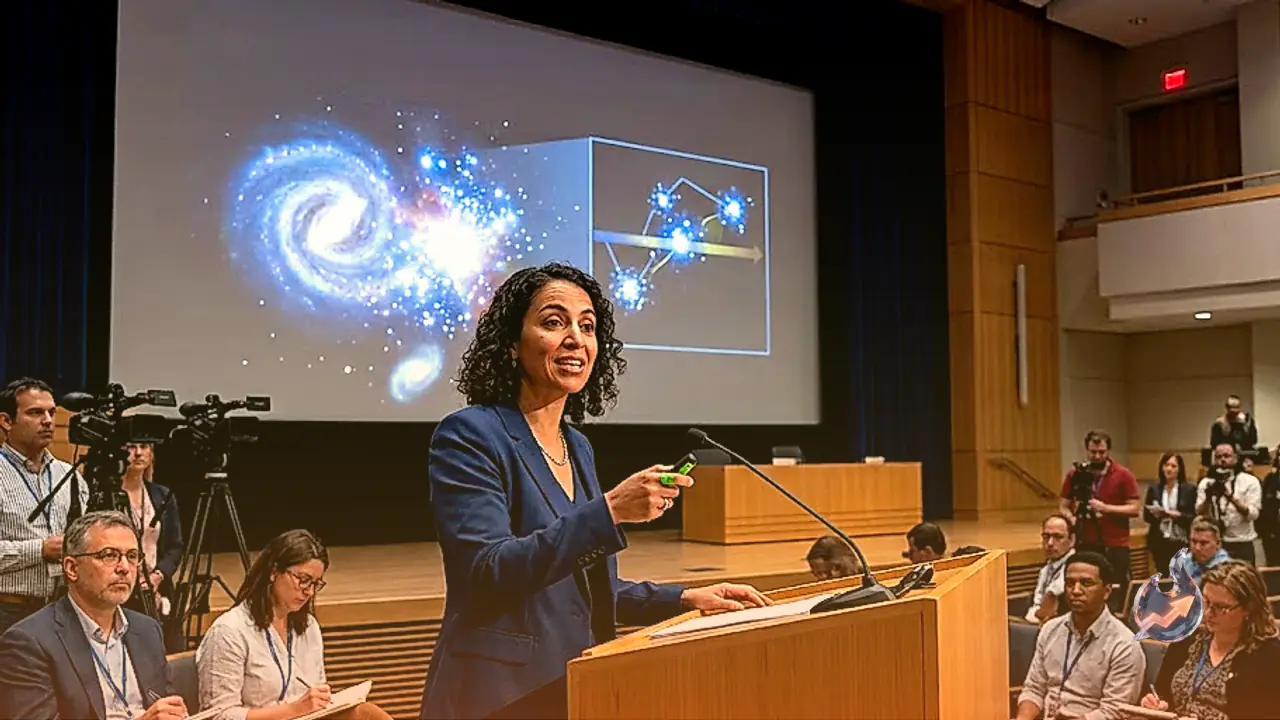
Roughly 10 billion years ago, long before our Sun and many familiar celestial bodies ever existed, a dramatic cosmic event took place. A smaller galaxy collided head-on with the growing Milky Way in a cataclysmic encounter. This ancient companion galaxy is known to researchers as Gaia-Enceladus. Following the impact, the two stellar systems merged into a single entity, triggering a massive wave of star formation that fundamentally reshaped the architecture of the Milky Way. Even today, vast stellar structures looping around our galaxy carry the chemical fingerprints of this ancient cataclysm.
This major discovery upended long-held scientific assumptions that the Milky Way grew gradually and smoothly over endless epochs. Instead, Helmi’s research proved that our home galaxy was forged through multiple violent collisions and mergers with smaller galactic neighbors. For this monumental contribution, Amina Helmi was awarded the Kavli Prize alongside Vasily Belokurov and N. Wyn Evans, sharing a prestigious one million dollar cash prize. Helmi admitted that upon learning of the honor, she was completely stunned, describing the accolade as the closest equivalent to a Nobel Prize in her specialized academic discipline. Concluding her observations, she pointed out the striking contrast between the Milky Way's violent past and its current peaceful state, noting that the galaxy experienced its most ferocious phases roughly 10 billion years ago and has since settled into a serene adult maturity.