



















In contemporary cognitive science, the physical architecture of memory is overwhelmingly viewed through the lens of complex brain structures, neural firings, and synaptic junctions. Yet, an intriguing line of biological inquiry continues to ask whether living tissue can store experience at a purely biochemical level, independent of a conventional brain. At Harvard University, a neuroscience team led by Sam Gershman set out to rigorously test one of the most eccentric chapters in twentieth-century behavioral psychology. Six decades ago, researchers claimed that arrow-headed flatworms could not only master learned reflexes through conditioning, but that ground-up fragments of those trained creatures could physically pass that retained knowledge along to untrained peers who consumed them. To resolve whether this midcentury sensation held genuine merit or was merely an artifact of flawed observation, modern researchers decided to stage a meticulous, ground-up replication.
Wading Through Freezing Waters for Wild Specimens
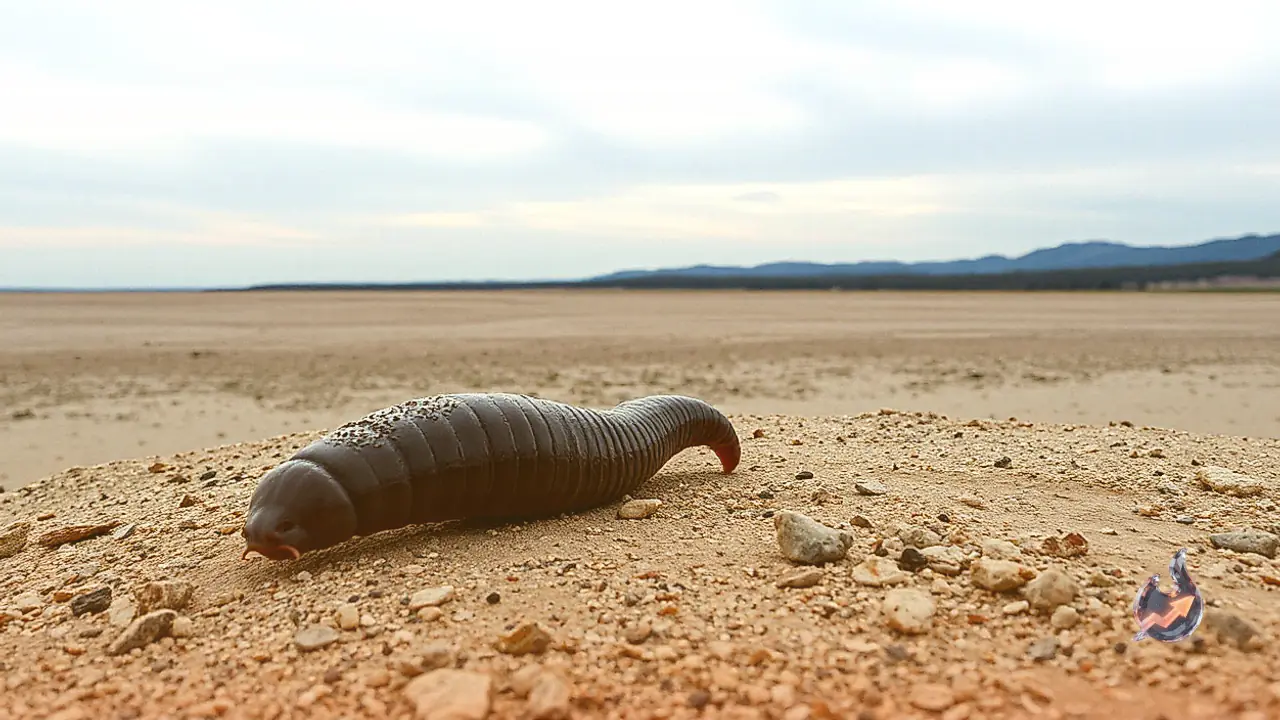
The practical legwork of the Harvard investigation fell largely to research assistant Kelso, who discovered early on that verifying historical biology requires dealing with finicky living creatures. Standard model organisms for laboratory research are typically procured through specialized biological supply vendors. However, when commercially sourced planarians proved inadequate for rigorous behavioral testing, Gershman instructed Kelso to capture wild populations from natural aquatic habitats. Planarians represent one of the most primitive animal groups possessing bilateral symmetry alongside an elementary brain, making their neurological capabilities a subject of deep interest.
Kelso's search began under grueling conditions along the icy margins of the Charles River, breaking through thick surface ice with a hammer in an effort to extract freshwater specimens. When those river specimens failed to perform inside the testing apparatus, the search broadened significantly. In March 2025, field excursions took the research effort to running streams around Eugene, Oregon. By June of that year, Kelso was traversing lakes across Michigan in full-length wading gear, drawing puzzled looks from families gathering for shorefront picnics. The collection process involved lifting submerged rocks, dangling baited strings with meat scraps, and cross-referencing maps from an archival field guide on local triclads. Despite capturing abundant wild flatworms across diverse geographic pockets, the harvested populations uniformly refused to exhibit conditioned behavior inside the laboratory.
Midcentury Conditioning and the Cannibalism Hypothesis
The historical precedent for these trials originated during the 1960s with behavioral psychologist James McConnell, whose investigations at the University of Michigan gripped the scientific imagination. Borrowing foundational principles from classical conditioning, McConnell paired flashes of intense illumination with mild electrical shocks delivered across a water chamber. After dozens of exposures, the subjects learned to contract their bodies in defensive anticipation of the shock whenever the light appeared. Because planarians possess extraordinary regenerative biology, capable of rebuilding an entire mature body from a fragment as minuscule as 1/279th of the original organism, McConnell explored what happened when conditioned worms were surgically bisected.
Severing the worms produced two fully regenerated individuals. As expected, the end retaining the original head preserved the conditioned reflex. Surprisingly, the tail piece that generated an entirely fresh head and primitive neural cluster also retained the defensive contraction response. Concluding that information must reside across somatic tissue rather than remaining confined to cerebral cells, McConnell expanded the protocol. Trained specimens were minced into an emulsion and fed directly to untrained flatworms belonging to cannibalistic species. In subsequent evaluations, these recipient worms appeared to acquire the conditioned light avoidance at an accelerated pace, sparking assertions that physical memory units, or engrams, had been absorbed through digestion.
Public Sensation, Editorial Wit, and Growing Pushback
During the post-discovery era of the DNA double helix, the scientific community was primed to consider how nucleic acids and protein structures might archive complex behavioral instructions. McConnell argued that memory traces were physically stamped into ribonucleic acid chains. Possessing a natural flair for public communication honed during an earlier stint in radio broadcasting, he embraced widespread publicity, giving interviews to national magazines and bringing his flatworms onto evening entertainment television programs. He openly speculated about an era when educational knowledge might be swallowed as concentrated pills or dietary supplements.
To bypass traditional academic skepticism, McConnell launched an unorthodox periodical titled The Worm Runner's Digest. Operating as an irreverent hybrid of peer-reviewed reports, science fiction tales, cartoon strips, and philosophical satire, the publication reached thousands of global subscribers. However, this blend of whimsy severely undermined his standing among orthodox researchers. By the mid-1960s, independent teams attempting to reproduce the memory cannibalism phenomenon encountered deep inconsistency. In 1965, Nobel laureate Melvin Calvin attempted replication using McConnell's specific hardware designs and former research personnel, yet failed to observe the reported outcomes. The scientific mainstream gradually shifted its attention to rodents, birds, and other animals, causing planarian memory paradigms to fade quietly from serious grant portfolios. McConnell shuttered his facility in 1971 and passed away in 1990, leaving behind a legacy treated largely as an academic warning against unrestrained confirmation bias.
Unresponsive Worms and the Search for Archival Clues
When Gershman's contemporary Harvard laboratory set out to systematically evaluate the foundational conditioning phase, the flatworms failed at step one. Across extensive trials documented on biorxiv.org in April 2026, the worms refused to demonstrate reliable light-cued contractions, rendering the secondary memory transfer phase impossible to test. The team consulted outside flatworm laboratories, altered exposure parameters, examined preserved historical inductoriums at the Harvard Science Museum, and employed automated computer-vision pipelines to scrutinize worm movements without introducing human scoring error.
A critical historical breakthrough emerged when Kelso tracked down Daniel and Reeva Kimble, nonagenarian former collaborators of McConnell residing in Eugene, Oregon. Sifting through preserved paper archives of the Digest stored in their residence, the visiting scientists reviewed original protocols while gathering local freshwater fauna. Sourcing additional wild worms from the exact Michigan waters McConnell had fished decades earlier produced no better outcome. Across roughly a dozen distinct biological strains, zero measurable learning materialized. Researchers like Snyder noted that earlier observers likely conflated benign navigational turns with authentic defensive body contractions, swept along by the charismatic enthusiasm of laboratory leadership. While some theorized that decades of environmental contamination might have altered wild planarian genetics, evolutionary logic suggests these resilient, regenerating organisms simply face little selective pressure to preserve learned warnings about physical damage.
Molecular Memory Re-emerges in Slugs and Nematodes
Despite the failure of planarians to support midcentury claims, the foundational premise that biochemical messengers can transfer behavioral states has found surprising vindication across different model systems. In 2018, neuroscientist David Glanzman at the University of California, Los Angeles, demonstrated that marine mollusks of the species Aplysia californica could receive defensive sensitization through injected ribonucleic material extracted from previously stimulated donors. The finding demonstrated that specific aspects of long-term behavioral sensitization can indeed be conveyed through molecular vehicles.
Further corroborating evidence arrived in 2021 through research conducted by geneticist Coleen Murphy at Princeton University. Her laboratory established that microscopic roundworms, specifically Caenorhabditis elegans, can assimilate pathogen-avoidance behaviors either by consuming pureed cohorts or by swimming through biological media left behind by trained worms. This horizontal behavioral transmission depended on a specific retrotransposon known as Cer1. Parallel investigations at the Indian Institute of Science indicated that trained nematodes discharge extracellular lipid vesicles carrying actionable genetic cargo to naive counterparts. Recognizing these robust mechanisms, Gershman's Harvard group is now redirecting its resources toward C. elegans, pursuing the genuine frontiers of non-synaptic cellular memory in an organism whose learning capacity is consistently verifiable.