
















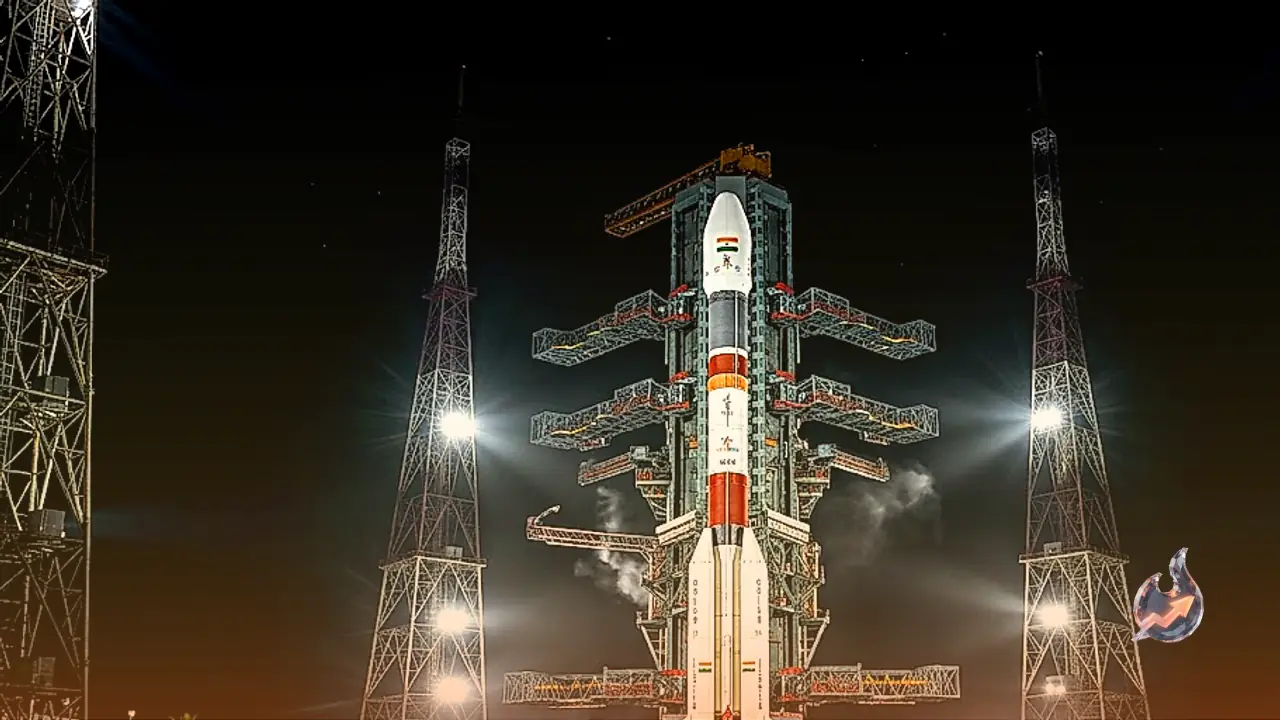

A major milestone in India's space endeavors is slated for the night of October 30, with a heavy-lift rocket scheduled to ascend from the Satish Dhawan Space Centre in Sriharikota, Andhra Pradesh. Operating from the facility's second launch pad, the GSLV-F18 launch vehicle has a designated departure time of 23:51. The primary objective of this nocturnal mission is placing NVS-03, the third spacecraft in India's second-generation satellite series, into orbit. This deployment is specifically engineered to ensure the seamless operational continuity of NavIC, the country's dedicated regional navigation satellite architecture, while substantially refining location accuracy for civilian utilities and border vigilance.
Indigenous Atomic Clock and Specialized Dual-Tier Capabilities
Engineered to address demanding domestic positioning requirements, NVS-03 carries a cutting-edge technological payload. Central to its timekeeping precision is a domestically developed rubidium atomic clock integrated directly onto the platform, working alongside select imported atomic clocks that are also housed inside the craft. This synchronized instrument array allows the satellite network to deliver remarkably sharp coordinates and temporal data across the entirety of mainland India, extending outward to roughly 1500 kilometers beyond national frontiers.
Operational access across the network is structured into two dedicated channels depending on the user base. Everyday users can access a Standard Positioning Service tailored for general geographic awareness and mapping tasks. Concurrently, an exclusive encrypted restricted service is built in for defense personnel and authorized government agencies, guaranteeing protected coordinates and significantly elevating tracking precision across border surveillance infrastructure.
Expanding Direct Civilian Access via L1 Frequency Integration
A crucial upgrade introduced with this latest spacecraft is the incorporation of the L1 frequency band, designated specifically for widespread civilian adoption. Earlier iterations lacked this particular transmission band, which previously restricted direct signal acquisition on mainstream consumer mobile handsets. With this advancement, modern smartphones, smartwatches, and everyday fitness trackers will be able to capture NavIC signals straight from orbit, delivering superior pinpoint precision for individuals navigating via digital maps or third-party travel applications.
This launch forms part of a broader roadmap orchestrated by ISRO, which envisions deploying a cumulative fleet of 5 satellites within this specialized series. Once this satellite grouping is fully established in orbit, the nation's reliance on external GPS infrastructure will drop significantly, reinforcing sovereign technological self-reliance across critical digital and logistical operations.