






















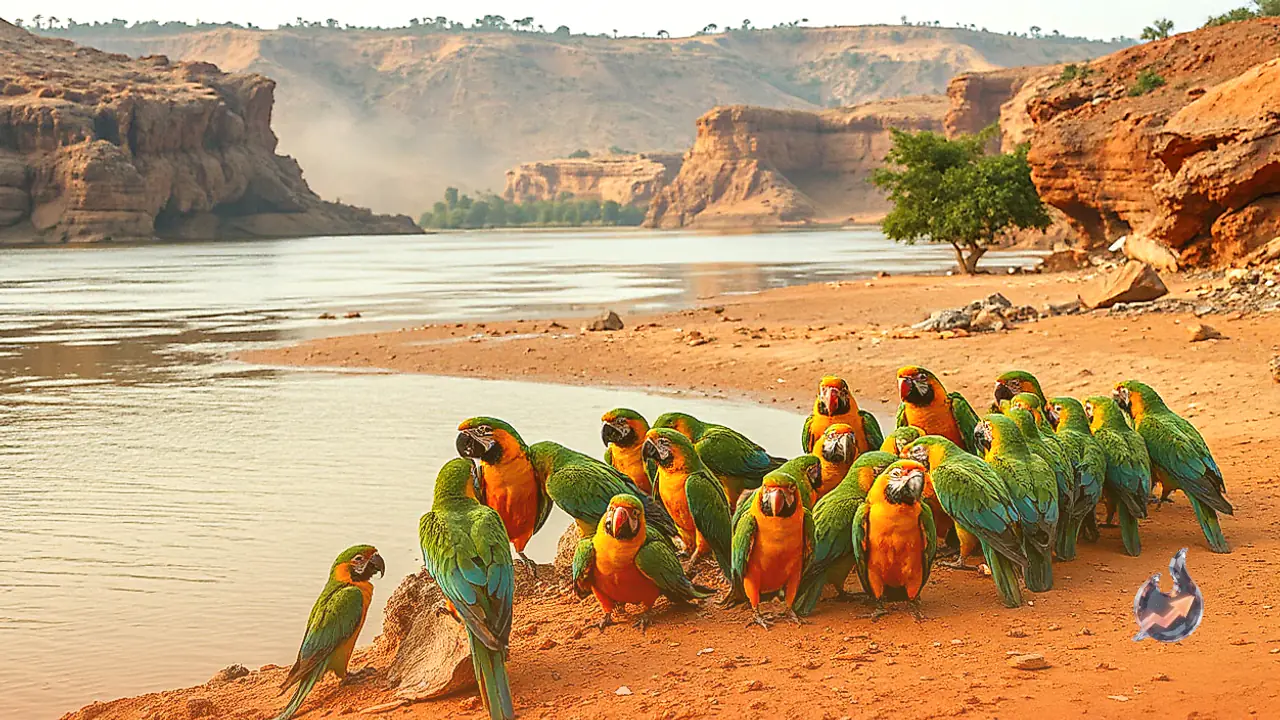

Dense canopies throughout South America's Amazon basin provide the backdrop for an extraordinary dawn spectacle along local river systems. Flocks numbering in the hundreds, comprising brilliant macaws, vivid parrots, and parakeets, descend upon steep clay cliffs flanking the water. Visitors and biologists travel from across the globe to observe these colorful birds scraping, biting, and licking the exposed earthen walls. For decades, observers wondered why creatures whose regular sustenance consists of canopy fruits and seeds would deliberately forage for plain dirt along exposed riverbanks.
The Long Legacy of Animal Geophagy
The practice of ingesting soil, mud, and mineral deposits is well recognized within biological sciences under the term geophagy. Animals seeking out earthy compounds is far from a modern development. As early as the second century AD, Greek physician Galen observed that ailing or injured beasts routinely sought out earth to facilitate their recovery. Parrots residing in the Amazon basin have engaged in this ritual across centuries, prompting naturalists to investigate the physiological motives behind the daily gathering.
Why Mechanical Digestion Theories Fell Flat
Early hypotheses suggested that parrots ingested pebbles and coarse sediment to aid mechanical digestion, similar to how domestic poultry swallow grit to grind tough food inside their gizzards. Others surmised that the birds were merely swallowing dirt to curb hunger pangs during seasonal shortages. These notions were eventually discarded after examining parrot anatomy. A parrot's bill is among the most powerful crushing apparatuses in the avian world, fully capable of splitting the densest tropical nuts and rigid seed casings without internal grinding stones. Because mechanical digestion was already handled before swallowing, researchers turned to biochemical explanations.
Neutralizing Forest Toxins and Plant Defenses
Around the year 2000, researcher James Gilardi proposed an alternative mechanism known as the detoxification theory. In their quest for sustenance, Amazonian parrots feed extensively on unripened fruits and seeds laden with bitter secondary compounds such as strychnine, quinine, and tannins. Trees utilize these compounds to deter herbivores from consuming their seeds prematurely. Gilardi highlighted that the fine particles present in the riverbank clay possess unique physical properties that bind directly to these caustic chemicals. In the bird's digestive tract, the ingested clay forms a shielding layer that traps the toxins, allowing them to pass harmlessly through the body without reaching vital organs.
Laboratory Experiments Confirm the Protective Shield
To evaluate the detoxifying attributes of the clay, scientists turned to controlled laboratory experiments. In one trial, brine shrimp placed in a concentrated bath of seed extracts perished rapidly from the heavy chemical load. However, when researchers blended riverbank clay into that identical toxic solution, the destructive impact dropped by as much as 70%, allowing the organisms to survive. Subsequent testing with parrots demonstrated similar physiological shielding. When birds were administered bitter compounds followed by a clay supplement, the concentration of absorbed poisons inside their bloodstream plummeted by 60%, verifying that the soil acts as an internal sponge against organic poisons.
An Evolutionary Arms Race in the Canopy
This dynamic illustrates a long-standing evolutionary contest between vegetation and canopy wildlife. Rainforest trees invest substantial metabolic energy into synthesizing harsh chemical deterrents to keep their reproductive seeds untouched. By incorporating clay into their morning routine, Amazon parrots bypassed that defensive perimeter entirely. Neutralizing these defenses afforded the birds access to an enormous, untapped dietary niche that poisoned competing herbivores, granting them a significant survival advantage across the dense wilderness.
The Critical Search for Dietary Sodium
Even with the detoxification findings confirmed, another geographical puzzle remained unsolved. Parrots in tropical regions worldwide regularly consume unripened fruits and toxic seeds, yet the vast daily clay licks are overwhelmingly concentrated in specific corridors of the Amazon basin. In 2017, researchers Elizabeth Hobson and Donald Brightsmith unraveled this mystery by analyzing soil chemistry. They discovered that the exposed clay deposits along Amazon riverbanks contain sodium levels 40 times higher than the surrounding forest vegetation. Because unrelenting tropical downpours wash away water-soluble salts from interior forest soils, herbivores face severe sodium shortages. Consuming this mineral-rich clay enables parrots to satisfy their sodium demands while simultaneously purging dietary toxins.