























Dalma Wildlife Sanctuary, located near Jamshedpur in Jharkhand, continues to showcase its ecological richness as recent scientific research reveals a thriving population of nocturnal avian species. Spanning approximately 193 square kilometers, the protected forest area features a vibrant landscape dominated by sal and mixed deciduous trees, dense undergrowth, natural water channels, and diverse wildlife. Comprehensive field surveys conducted in the sanctuary documented a total of 205 bird species, highlighted by the confirmed presence of seven distinct owl species that play critical roles in the forest food chain.
First Recorded Sighting of the Brown Wood Owl in Jharkhand
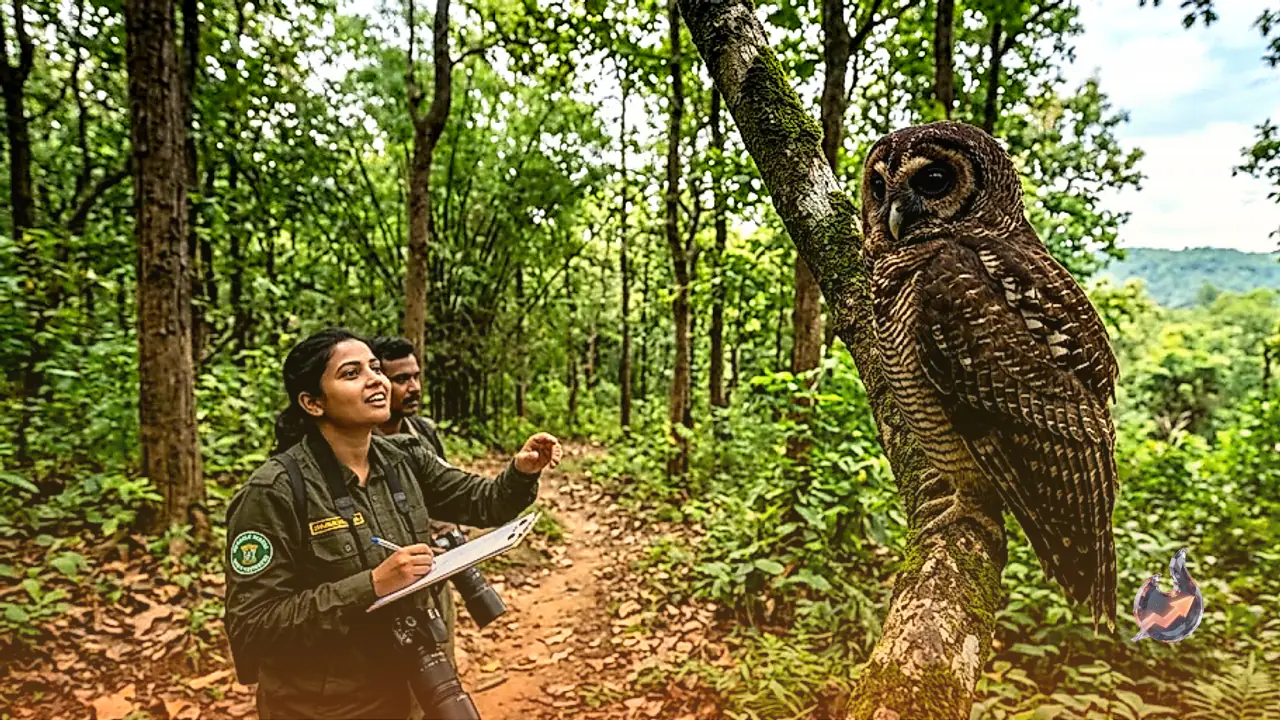
Among the seven owl species identified, the discovery of the Brown Wood Owl holds exceptional scientific significance. A study published in 2026 provided the first-ever confirmed record of this species within the boundaries of Jharkhand. Researchers validated its presence using high-resolution photographic evidence alongside bio-acoustic recordings of its calls inside Dalma Wildlife Sanctuary. This landmark documentation expands the known geographical distribution of the Brown Wood Owl and highlights Dalma as a crucial sanctuary for rare nocturnal fauna.
Dominant Predators and Specialized Canopy Inhabitants
The Indian Eagle-owl stands out as one of the largest and most impressive nocturnal predators residing in Dalma. Historical avian surveys have consistently recorded this species as a permanent and common resident of the sanctuary. Relying on its strong talons and keen night vision, it preys upon small mammals, birds, and other small forest creatures, occupying an authoritative position at the top of the nocturnal food web.
Another notable predator inhabiting dense tree canopies is the Brown Boobook. Highly active during night hours, this bird hunts from perches among thick foliage, targeting small birds, insects, and tiny forest organisms. The quiet environment, old-growth trees, and sheltered canopy layers of Dalma provide ideal micro-habitats necessary for nocturnal hunters like the Brown Boobook to survive and flourish.
Natural Pest Controllers and Small Owl Species
The Barn Owl is easily distinguished by its heart-shaped facial disc and pale white body structure. Functioning primarily as a night-time hunter, its primary diet consists of rodents, mice, and other small agricultural pests. By controlling rodent populations in and around the sanctuary margins, Barn Owls render a valuable ecological service to surrounding landscapes.
The Spotted Owlet is a comparatively smaller owl, recognizable by the white spots covering its body. Unlike strictly deep-forest birds, it frequents open wooded areas as well as natural forest interiors. Feeding largely on insects and tiny creatures, its steady population indicates an ample supply of small prey across Dalma's varied terrain.
Compact yet extremely agile, the Indian Scops-owl remains hidden inside dense tree foliage and thick shrubbery during the day. Under the cover of dark, it emerges to hunt insects and small animals. Forest officials credit Dalma's lush canopy, abundant vines, and dense shrub layers for providing the cover required by such secretive species.
Rich Insectivorous Diet and Ecosystem Vitality
The Jungle Owlet is another small owl whose life cycle is deeply tied to dense natural woodlands. It hunts insects alongside small birds and tiny vertebrates, reflecting the structural health of the forest interior.
Data from the 2025 scientific survey emphasized the broader ecosystem health of Dalma, recording 205 bird species in total. Significantly, 93 of these species were categorized as insectivorous, demonstrating an extraordinary abundance and diversity of insect life that sustains the sanctuary's food web.
While Dalma Wildlife Sanctuary is widely renowned as a haven for Asian elephants and large mammals, these findings prove that it is equally indispensable for nocturnal bird life. The availability of clean water, dense foliage, undisturbed habitats, and abundant prey ensures that Dalma remains a sanctuary of prime ecological importance in Eastern India.